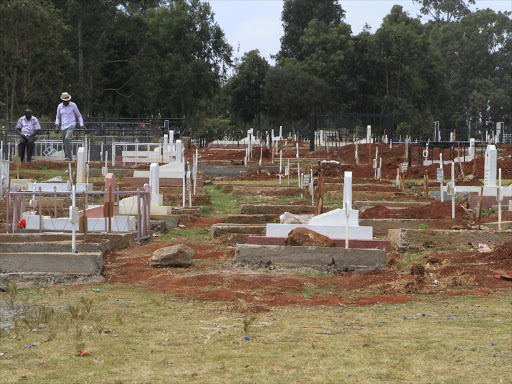
Every week, about 30 families in Nairobi bury their loved ones at Lang’ata Cemetery, a burial ground declared full nearly 25 years ago.
Graves crowd every inch of space, and at times, remains from earlier burials resurface, exposing a quiet but growing crisis in the city’s final resting places.
Now, Nairobi county has secured 150 acres of new burial land in a long-overdue move to ease pressure on Lang’ata and restore dignity to the city's burial process.
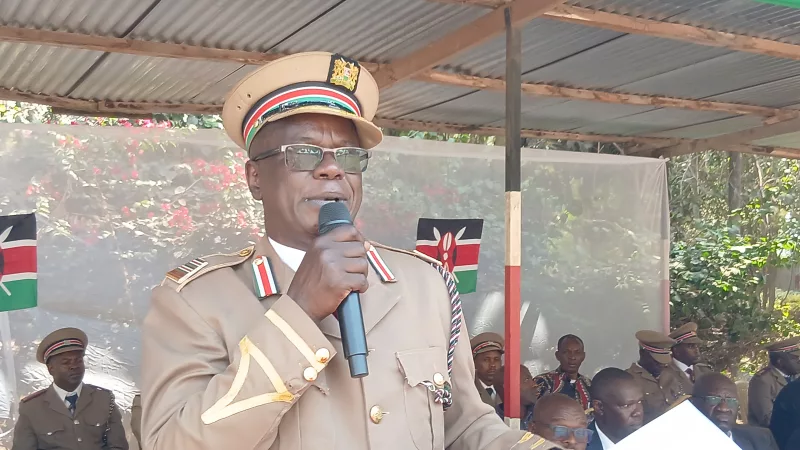
“We have secured 100 acres at Kamiti and 50 acres at Embakasi to serve as new burial sites,” said Public Health chief officer Tom Nyakaba, speaking to the Nairobi county assembly.
"These spaces are being prepared and will be ready for use shortly."
He also addressed the stalled use of a 48-acre parcel in Mavoko, Machakos county, saying Nairobi lacks legal control over the land due to post-devolution boundary changes.
“The Mavoko land was procured before devolution. Today, each county is responsible for burying its own residents. Since that land is outside Nairobi and the title isn’t under our name, it’s up to Governors Sakaja and Wavinya Ndeti to align,” he said.
Nyakaba dismissed claims of bias in burial space allocation, stating that Nairobi’s cemeteries are structured to reflect community needs.
“At Forest Road Cemetery, space is set aside for the Jewish community. At Lang’ata, the section under scrutiny is for Muslim burials, and that matter has already been addressed. The space is secured,” he said.
The county operates nine cemeteries, including Forest Road, Pangani, Mutuini, Uthiru, Southlands, Kariokor Christian, Ruai and land near the National Police Service. Many are community-run, but Nairobi is working to centralise management to reduce pressure on Lang’ata.
Nyakaba also flagged the absence of burial legislation, saying it has led to confusion and poor planning.
“There’s no written law requiring six-foot burials. It’s just a social assumption. Nairobi had to draft its own by-laws and burial policy to provide structure,” he said.
He confirmed that due to limited space, some graves are reused — a practice allowed under public health regulations.
“Multiple interments in one grave are permitted by law. It’s a practical solution that follows all health guidelines,” he said.
Relocating cemeteries remains difficult due to jurisdictional disputes, but the county hopes integrating community-run cemeteries into the county system will free up about 20,000 spaces and ease Lang’ata’s load.
Lang’ata’s appeal endures because of its location and ease of access. Opened in 1958, it has hosted more than 157,000 burials, including of national leaders.
Despite being declared full in 2001, it still handles weekly interments, largely because no viable alternative has been established.
Efforts to expand have repeatedly stalled. A 2009 scandal saw City Hall lose millions on overpriced land in Mavoko, triggering arrests of senior officials.
Other attempts, including buying land in Kajiado and converting nearby forest land, failed over legal and financial issues.
In 2023, Nairobi announced a plan to turn Lang’ata into a landscaped memorial park and sought 56 acres through a deal with the Kenya Forest Service. But progress halted due to encroachment by private homes, prompting calls for repossession.
Meanwhile, the cemetery is facing sanitation and safety issues, including illegal dumping and exposed remains.
Burial fees at Lang’ata remain in effect: permanent adult graves cost Sh30,500 for Kenyan citizens, with reduced rates for children and higher fees for non-citizens. Temporary graves are offered at lower rates.