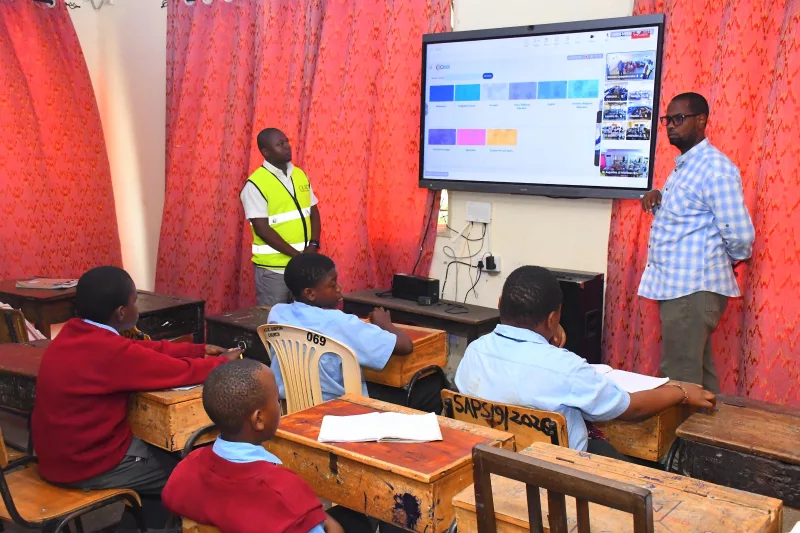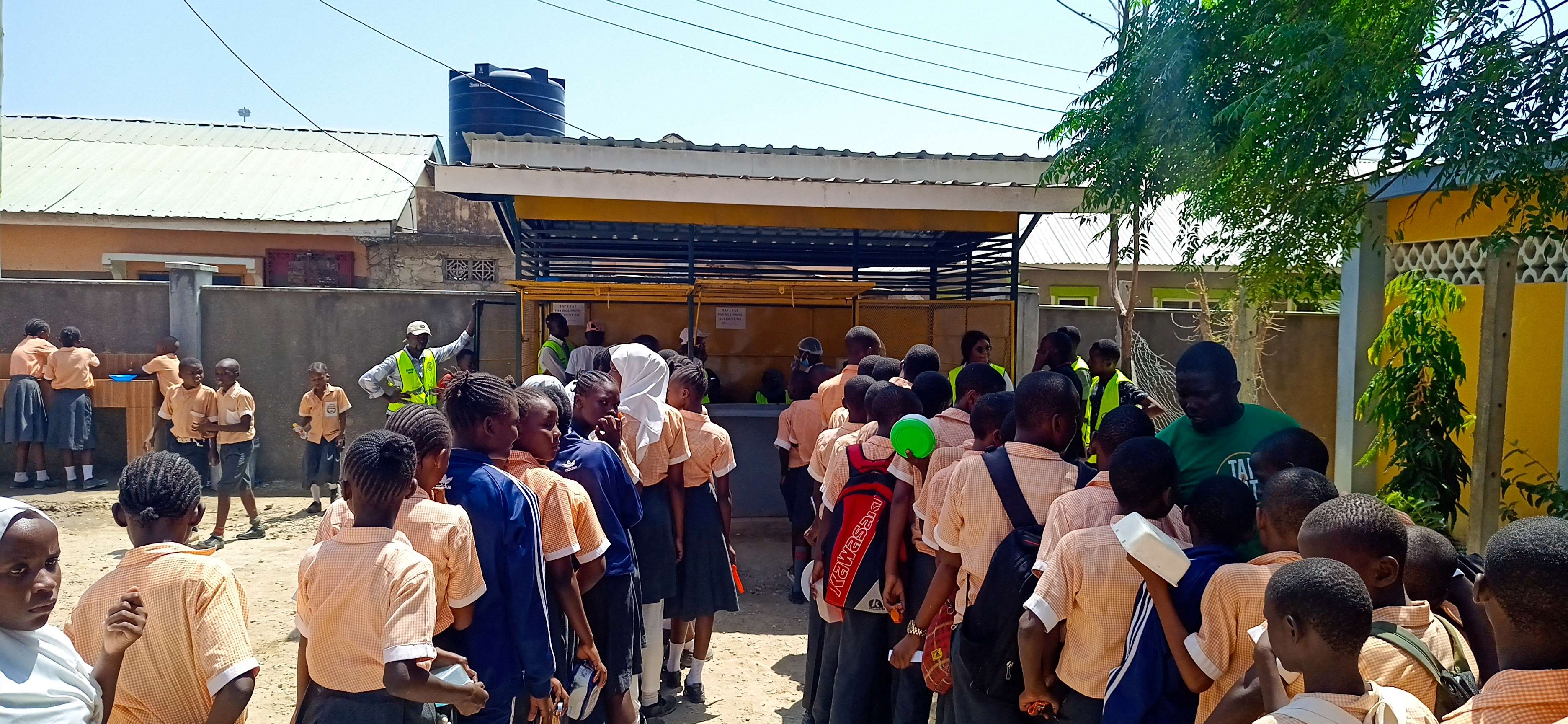
Kwa Bulo Primary School children during lunchtime / BRIAN OTIENO
That is why governors across the 47 counties have partnered with the Food 4 Education project to feed all ECDE learners
This follows the development of a harmonised policy that will see all pre-primary learners fed by their counties.
Food 4 Education director Shalom Ndiku said over 575,000 children across Kenya are currently receiving daily school meals through the initiative in partnership with the government, parents and well-wishers.
Ndiku said only 15 per cent of children in low-income countries receive school meals.
On Monday, Council of Governors chairman Ahmed Abdullahi said counties are expected to domesticate the policy to strengthen child nutrition, improve school attendance, and promote inclusive development across all regions.
The policy, he said, was developed through a collaborative process between the Council of Governors, the Senate, county governments, and key partners including the national government and Food 4 Education.
“This policy has been developed to provide a harmonised, sustainable, and scalable framework for delivering school meals to learners in Early Childhood Development Education centres,” Abdullahi said.
He said the CoG is currently deliberating on the proposed model policy on pre-primary school feeding.
The policy is expected to be officially launched during the upcoming devolution conference in Homa Bay County on August 12.
Ndiku said more than 54 per cent of the meals are subsidised by government funding, signalling a growing shift in how Kenya approaches child welfare and school retention.
“Thanks to Food 4 Education’s model in partnership with the government, parents and philanthropists, this initiative is rapidly transforming access to education, nutrition, and local economic growth,” Ndiku said.
He noted they are currently working with counties such as Murang’a, Nairobi, Mombasa, and Embu that have supported the allocation of county government funds over the last three financial years toward school feeding.
“This framework aims to guide counties in institutionalising and sustainably funding school feeding programmes by embedding them into local laws and budget processes,” Ndiku said.
He said school feeding must be embedded into laws, ring-fenced within budgets, and drilled into the consciousness of Kenyans as a national imperative and not just as an educational intervention, but as a strategic economic investment.
He explained that beyond nutrition, the ripple effect is already being felt across local economies, from farmers supplying fresh ingredients to boda boda riders earning stable income through meals distribution.