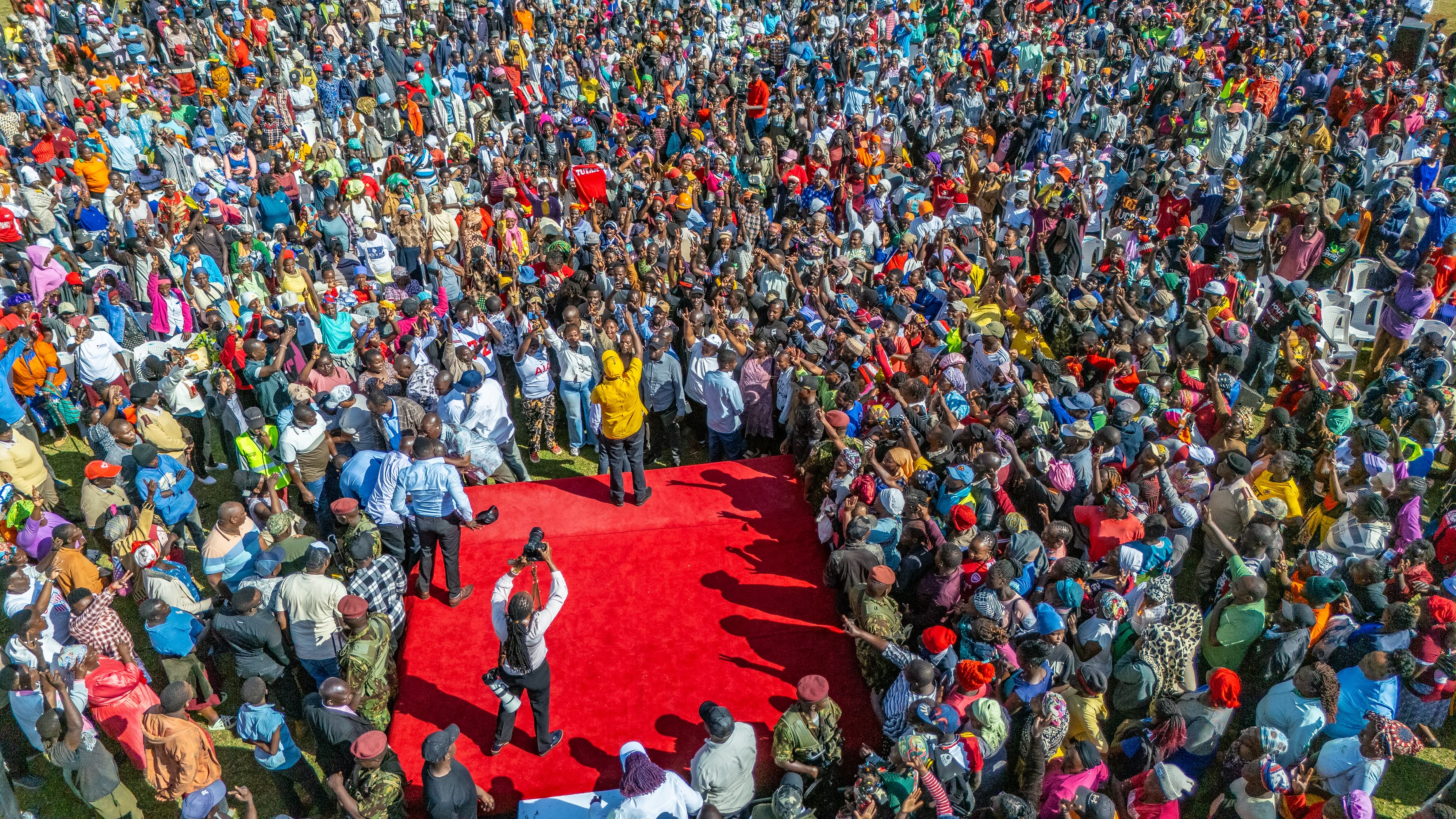
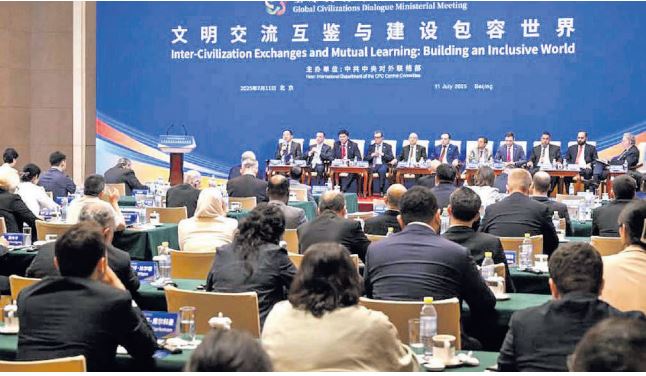
 The ‘Inter-Civilization Exchanges and Mutual Learning: Building an Inclusive World’ subforum held during the Global Civilisations Dialogue ministerial meeting in Beijing, capital of China. Six parallel subforums were held on Friday /XINHUA /CHEN YEHUA
Last week, leaders from around the world gathered in Beijing, China, for a ministerial conference on Global Civilisations Dialogue.
The meeting comes at a time when the world is increasingly confronted by political and economic tensions and conflict.
Today, more than ever, dialogues and cultural exchanges between nations are crucial as these interactions foster mutual understanding, reduce conflicts, and promote global stability.
Recent efforts by China to strengthen global exchanges as pathways to global unity, understanding and peace consolidation are laudable.
In 2023, Chinese President Xi Jinping introduced the Global Civilisation Initiative with the aim of promoting “people-to-people and cultural exchanges” and fostering mutual learning and respect for diverse national histories, cultures, and conditions.
A year later, the 78th Session of the UN General Assembly unanimously adopted a Chinese-proposed resolution to establish the International Day for Dialogue among Civilisations, signalling global recognition of the Global Civilisations Dialogue principles.
This diplomatic achievement underscores China’s ability to rally international support for its vision of inclusive global governance.
Political and economic disputes often arise from miscommunication or lack of trust. Regular diplomatic dialogues allowing countries to address grievances, clarify intentions and negotiate peacefully are important.
For instance, during the Cold War, cultural exchanges between the United States and the Union of Soviet Socialist Republics helped humanise each side, easing hostilities.
Today, open discussions can prevent minor disagreements from escalating into major confrontations.
Economic tensions, such as trade wars, harm global prosperity. Dialogue enables nations to negotiate fair trade policies and resolve disputes without resorting to sanctions or protectionism.
Cultural exchanges, like business collaborations and student programmes, build long-term economic relationships by fostering familiarity and trust between societies.
Furthermore, stereotypes and prejudices fuel international tensions. Cultural exchanges – through art, education and tourism—help people appreciate different perspectives.
When citizens experience another country’s traditions and values first-hand, they are less likely to support discriminatory policies.
Global issues such as climate change, pandemics and migration require international cooperation. Dialogues create frameworks for joint action, while cultural exchanges encourage shared responsibility.
Countries that engage in people-to-people exchanges are more likely to collaborate on solutions, as seen in global climate agreements, functional multilateralism and shared prosperity.
China's promotion of civilisational exchanges fully demonstrates its responsibility as a major country in the current era.
The Chinese government actively advocates for the principles of mutual respect, equality and mutual learning among civilisations, fostering dialogue and exchanges between different cultures.
This aligns with the core socialist values and the concept of building a community with a shared future for mankind, also put forward by China.
Such efforts not only enhance mutual understanding and friendship among peoples of different countries but also contribute to world peace and development, showcasing China's role as a responsible major country in the new era.
China’s emphasis on civilisational exchanges draws on its historical experience as a hub of cultural interaction.
The Silk Road, for instance, facilitated exchanges between ancient China and the rest of the world, contributing to the development of human civilisation.
Today, China leverages this legacy as a steward of global cultural diversity, contrasting its approach with the West’s historical imposition of cultural superiority upon developing countries.
Being a civilisation state with a history stretching 5,000 years, China has consolidated a formidable heritage of traditions, governance models, and cultural values that the rest of humanity can learn and draw from; collectively weaving a more responsive, inclusive and progressive worldview that promotes peace, harmony and prosperity.