A special audit has lifted the lid on the rot in the government’s schools capitation programme, unearthing a well-orchestrated high-level scheme to swindle taxpayers.
The interim special report exposes a deeply compromised system riddled with ghost schools, inflated enrolments, and institutions sharing bank accounts.
The report shows the government paid an extra Sh3.7 billion to students captured in the Nemis system but who do not exist in 270 primary schools.
Some 354 secondary schools received extra capitation amounting to Sh3,592,636,910 while 99 JSSs received over-funding to the tune of ShSh30.8 million.
Further, Sh28.5 million was wired as capitation to 33 schools that did not exist.
There have been speculations about top education officials working with school heads and lower cadre ministry officials to inflate student numbers to pocket the difference.
However, this puzzle has never been resolved by investigative agencies.
In 2023, the EACC recovered Sh11 million from a Ministry of Education employee who had established a ghost school in Kakamega county and allocated government funds meant for the free day secondary education.
The latest revelations emerged on Tuesday during a session between the National Assembly’s Public Accounts Committee and the Office of the Auditor General.
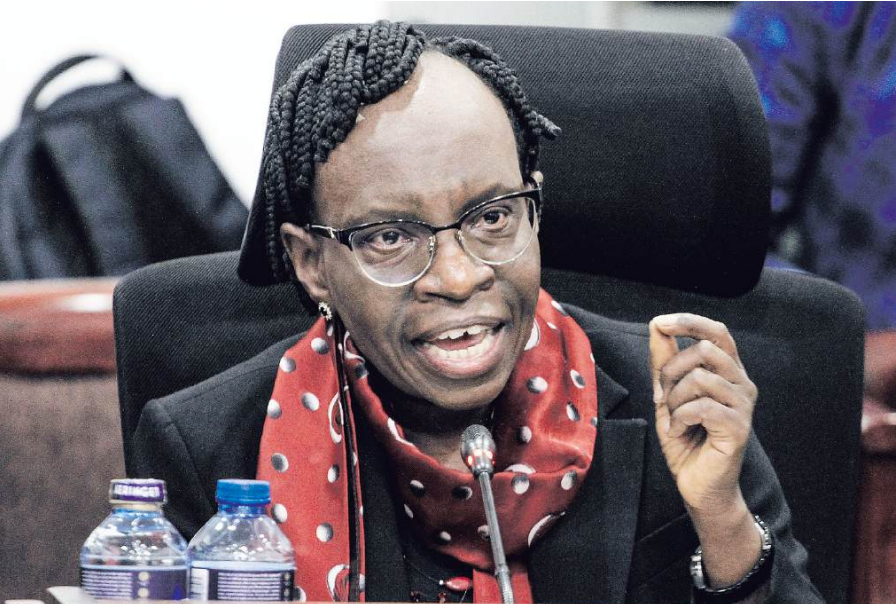
"We are going to move very fast and ask the accounting officer [PS Education] to respond,” committee chairperson Tindi Mwale vowed, as MPs reacted with outrage to the audit findings.
The special audit covers four financial years from 2020-2021 to 2023-2024.
The findings show that millions of shillings meant for needy learners have been lost to non-existent institutions — some only traceable on paper, while others operate without physical infrastructure, teachers or pupils.
Appearing before the committee chaired by Butere MP Mwale, director of audit Justus Okumu explained that in some cases the number of students in Nemis was more than the actual number in schools. The government relies on Nemis numbers to wire funds to schools.
“Comparison of the number of students registered in Nemis and the individual school students’ registers established instances where the number of students registered in Nemis varied,” Okumu said.
“The ghost schools are schools that are in the system but when we went to the ground we did not find them, so they are getting capitation but the education officers could not show us where they exist. This was contrary to the guidelines on the implementation of free basic education, which stipulates that allocation of capitation amounts should be based on the number of students registered by the school in Nemis and informed by the enrolment at the school.”
As a result of the inconsistencies, Okumu said that a number of schools received excess capitation running into millions of shillings while other schools were disadvantaged.
According to the report tabled before the committee, 354 secondary schools received extra capitation amounting to Sh3,592,636,910 while 99 JSSs received over-funding to the tune of ShSh30.8 million.
In the same audit, 270 primary schools were over-funded to the tune of Sh3.7 billion over a four-year period.
“Further, 334 secondary schools were under-funded by Sh1,909,823,514. Some 2444 JSSs were under-funded by Sh176,590,808 and 230 primary schools were underfunded by Sh58,587,548, all totaling Sh2,145,001,872 for the period under review,” the report says.
Another shocking revelation details how 33 ghost schools received capitation: the learning institutions could not be traced.
The 33 were out of the 83 public schools sampled by auditor to ascertain their existence.
In the report, 14 of the 33 schools did not appear in the County Director of Education's records but nonetheless received Sh16.6 million.
According to the special report, six schools that received Sh889,348 capitation had ceased operations while 13 schools, which had different names from those captured in Nemis, gobbled up Sh11 million.
In some cases, multiple schools received capitation funds using the same bank account — a blatant breach of public finance management rules and a tell-tale sign of collusion between ministry officials and school administrators.
“Review of capitation to schools shows that three secondary schools did not operate separate bank accounts during the 2020-2021, 2021-2022 and 2022-2023 financial years. Instead, the three schools each operated a single bank account and received capitation amounting to Sh107,316,175,” the report indicates.
“Comingling of funds diminishes the accountability derived from the segregation of the funds into tuition and operations bank accounts.”
The report sampled 438 secondary schools, 244 junior secondary schools and 357 primary schools.
The revelations have sparked outrage among education stakeholders, with MPs sitting in the oversight committee vowing to summon Education officials to appear before them and explain the inconsistencies found by the Auditor General.
“We shall write to the ministry and ask them to respond to the discrepancies that have been stated in the special report. The special reports are given precedence and so we are going to move very fast and ask the accounting officer to respond,” Mwale said.
Chepalungu MP Victor Koech termed the revelation a confirmation that some elements in the Ministry of Education are out to do business instead of serving Kenyans.
“It is noticeable that the ministry could be geared towards doing business than providing services. There is no way you fail to register schools and in the same way you give them facilities just because you want to get something out of it,” Koech said.
Funyula MP Wiberforce Oundo said the Nemis system was a conduit to siphon public funds, and demanded action against ministry officials who facilitated the irregular capitation payment.
“The very nature of Nemis was designed to disfranchise some sections of the country, and that is why you find in many cases the numbers of students in Nemis is half of what is in schools. We hope this historical injustice will be addressed when we consider this report,” Oundo said.
“We also to know the ghost schools, and know which heartless public officer pressed the button to send monies to the ghost schools. Action must be taken against that officer.”
The Auditor General recommends that the National Assembly tightens monitoring of how public schools use the funds advanced to them by the ministry.
“One of the critical issues arising from this audit is that the National Assembly needs to reinforce its oversight role in enhancing transparency and accountability in the funding of schools through the budget-making process and instituting mechanisms to ensure that the allocated capitation and infrastructure budgets are fully disbursed as and properly utilized by the schools,” the report recommends.
INSTANT ANALYSIS
The National Education Management Information System is web-based data management solution that collects data and information from educational institutions, processes it and reports the status of designed indicators. It provides the sector with a solid ground for effective management to ensure that every learner counts. The online platform tracks performance mobility of learners and teaching staff to ensure efficiency and effective utilisation of education resources