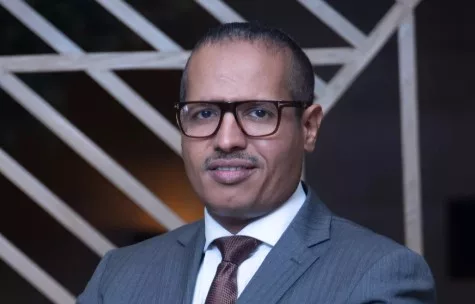
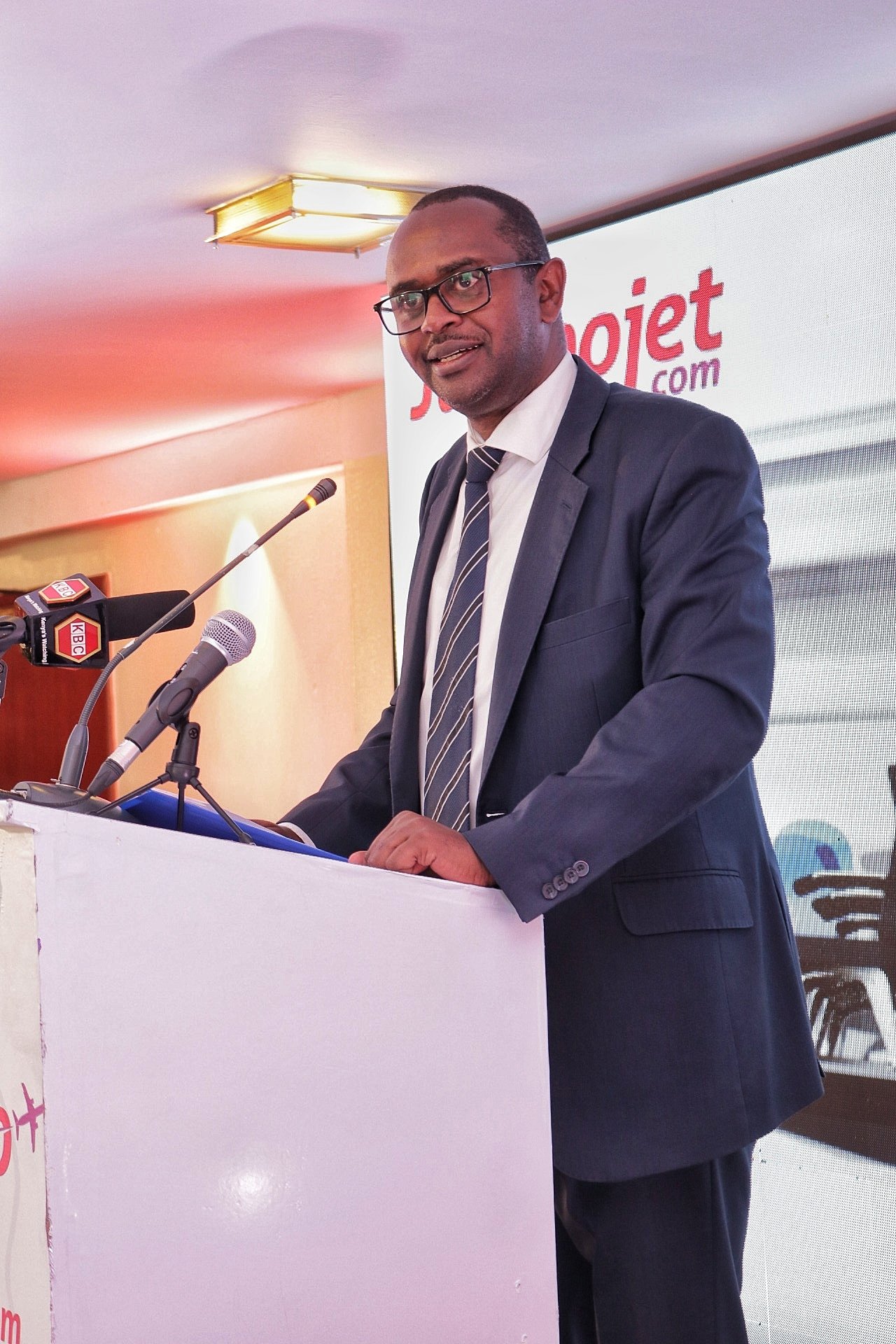
 Jambojet CEO Karanja Ndegwa /HANDOUT
Gone are the days that elderly businessmen and the rich were the ones who could catch flights for their business endeavours and it would cause a buzz.
Today, Kenya’s Generation Z and young millennials are reshaping societal perceptions, defying stereotypes that label them as entitled or apathetic.
Instead, these young Kenyans are driving innovation, activism, and economic change in a rapidly evolving digital landscape.
No one sees this better than Jambojet CEO Karanja Ndegwa.
Ndegwa has been part of the pioneering management team that steered the airline in penetrating the domestic market, where the passengers’ numbers have more than quadrupled since the carrier’s launch in 2014.
In an exclusive interview with The Star, Jambojet CEO Karanja Ndegwa speaks on the airline's growth strategy, infrastructure hurdles, passenger trends, safety standards, and sustainability goals.
Q: You plan to acquire two aircrafts next year. Given the global shortage, how likely is that?
A: The aircraft shortage is real and affects all categories. We’re in advanced stages of evaluating two or three aircraft. Our track record and reliability give us a competitive edge, even as we compete with European carriers. We’re hopeful we’ll secure at least one aircraft. This year we bought our ninth aircraft, and it's quite exciting.
Its main purpose is to increase capacity in our existing domestic routes—Mombasa, Eldoret, Kisumu, Malindi, and Ukunda. The market demand is rising, and this aircraft will help us respond by increasing flight frequencies.
Jambojet just marked a strategic fleet milestone—the return of JXA, its first-ever Dash 8-Q400 aircraft, now re-inducted as the airline’s ninth plane.
Originally leased in 2016 from Abu Dhabi, JXA’s return strengthens our ability to meet rising demand on key routes like Mombasa and Kisumu, while reinforcing our commitment to fleet reliability, customer satisfaction, and operational excellence.
Q: As you expand your fleet and flight schedule, how are you addressing challenges related to limited aviation infrastructure?
A: Indeed, infrastructure is a key issue, especially at JKIA where we operate from Terminal 1D, which is often congested in the morning. We're addressing this by increasing automation—self-check-in, mobile boarding passes—so that we reduce dependency on physical space. Definitely, we need more parking as you get more aircraft, but the Mombasa Hub comes in handy because you are able to manage it from different areas.
We’re also working closely with the Kenya Airports Authority (KAA) to manage space and improve customer experience. And for the routes that you are flying, are you also working with KEA as well? Yes, for each of the destinations, we work very closely with our station managers.
Q: Which passenger segment is driving the growth in numbers?
A: Our biggest customers of about 60 per cent of our customers are between the age of 24 and 35. That's a segment that is growing every other day. It's a very tech savvy age group. They book online on their phone. They check in online on their phone. All they do is that they appear at the boarding gate.
So, the thing is that even our innovations that we have to do, is how do we ensure that we are accommodating them to the point whereby every other innovation that we are doing just makes it easier.
Because the people who book from their desks, office desks or even the conference, they are not calling to book. So, the thing is that that's a group that we are seeing growing quite fast.
Q: How does the fleet expansion affect your financials?
A: All our aircraft are on operating leases—not loans. Under IFRS 16, we are required to report these leases as both assets and liabilities, which increases our lease obligations on paper. This is standard accounting practice, as we must recognise the full lease value over the contract term.
What matters most, however, is how efficiently we utilise these aircraft to generate revenue and strengthen the bottom line. Since none of our aircraft are financed through loans or finance leases, there’s no loan liability involved—just accounting treatment in line with international standards.
Q: What's the status of spare parts availability for airlines in Kenya?
A: Still slow, but improving. Engine turnaround times have gone from 45 days to about 150 days. That’s why we’ve begun investing in our own engine inventory to reduce downtime and maintain operational reliability.
So, currently it's still slow, we are not yet there. What that does, it forces us to invest in some of those assets, like purchase of engines, so as to mitigate and make sure that instead of leasing, because it's taking longer, you end up investing in some capital investments.
Q: What’s your outlook for the DRC route, especially after disruptions?
A: We suspended operations due to safety concerns and instability. Once the region stabilises and commercial activity resumes, we’ll reassess. Our return will depend on safety, airport readiness, and market demand.
With the airports inaccessible, cargo flights were also halted. We'll need to re-engage with customers there and evaluate whether their operations have resumed before restoring services.
Q: Budget airlines often face public scrutiny over safety. What reassures your passengers?
A: Safety is non-negotiable. Every aircraft goes through several layers of inspection—maintenance engineers, quality assurance, flight operations, the Kenya Civil Aviation Authority (KCAA), and also IOSA (IATA Operational Safety Audit) standards. We do not compromise.
Let me say first and foremost, you find any airline without a good safety record, I think you'd rather build something else. Because what we sell is that we sell safety.
Q: From an ESG standpoint, how are you managing environmental impact amid fleet expansion?
A: Sustainability is ongoing. We’re investing in fuel-efficient, low-emission aircraft. Additionally, we’re working with partners on CSR initiatives like tree planting—especially along the coast—with travel agents and community groups.
Q: Are there funding plans in place to support your sustainability projects?
A: Yes. Our strategy team is currently evaluating several funding avenues. Once plans are finalised, we’ll share more details publicly.
Q: Do you collaborate with KAA on all your routes?
A: Yes, we engage KAA at every destination. Our station managers coordinate closely with them to avoid congestion.
We space our flight schedules to ensure no more than one or two aircraft are on the ground at smaller stations at the same time.