In the wake of the Alliance Girls’ High School exposé on alleged sexual harassment by a teacher, the country has been jolted into confronting the subject, with questions floating around on what it is, how it manifests and the urgent need for awareness and accountability.
According to Jane Godia, Deputy Executive Director of WIN and a gender and inclusion expert, sexual harassment is not a grey area.
Speaking to the Star, Godia said it is defined by unwanted actions of a sexual nature, often accompanied by intimidation, threats and fear.
Its effects are profound as it violates a person’s dignity and deeply affects their psychological well-being.
“It affects someone's psychological composure. And in the light of Alliance Girls, it's done by someone who knows what they are doing,” she said.
She added that students faced with sexual harassment may keep quiet, “maybe out of fear and intimidation, because that is what sexual harassment is all about, they could not say no to the things that were happening to them.”
Recognising harassment in schools and workplaces
Godia noted that sexual harassment is not limited to schools and workplaces. It appears in homes and other settings where power dynamics are at play.
It can be verbal, physical or psychological. In the case of Alliance Girls, the imbalance of power between a teacher and students is glaring and dangerous.
“There is a need to create awareness. To conduct awareness training in terms of what constitutes sexual harassment,” she said.
“Schools must have open conversations with the students so that they can understand what sexual harassment is. And must have referral pathways in which they can report.”
She added that there is a need to answer some questions in school, including:
“If I’m touched or if a teacher approaches me in a way that I’m not happy about or I don’t like, who do I report to?
This question, she said, should be asked without fearing that the student will be punished or there will be retaliation for her action.
Godia also emphasised that awareness must not start and stop in schools.
“It should also start at the family level. Do parents talk to their children about being touched inappropriately? And what should they do if they are touched inappropriately?” she posed.
The law is clear, and so should be our responses
Godia made it clear that if allegations of inappropriate touching or sexual acts are proven true, justice must follow.
“Then there’s a need to go to court,” she said, pointing out that both the Employment Act and the Sexual Offenses Act in the Constitution address sexual harassment.
She cautioned against dismissing victims for lack of evidence.
“People should not say they are looking for evidence. Because it is not like when you are raped and somebody is getting semen,” she said.
“In sexual harassment, you believe the person who is speaking to you about what has been done to them. And then you start investigations.”
In connection with the Alliance Girls’ case, Godia added, “If quite a number of girls came up and said this same person did this to us, then action should be taken against that person.”
It’s not about age. It’s about consent
Godia stated that sexual harassment has nothing to do with age.
“Even if you are 50, and it is done against your will, that is sexual harassment,” she said.
“It can happen to anybody at any age. And even if it is a 50-year-old woman who is touched against their will, that is considered sexual harassment. And it is not about being below age. It is about consenting.”
She added, “If someone touches your private parts, I’m not happy about it, and I feel intimidated, I feel frightened, I feel offended, I feel humiliated. That is sexual harassment.”
Breaking the silence
To survivors who remain silent, Godia offered a powerful reminder. She advised against victim blaming, noting that sexual harassment should be confronted and punished.
“We always say we need to break the silence on sexual harassment. And never, never view yourself as being responsible for that person’s actions,” she said.
“Do not blame yourself when someone touches you inappropriately. You are not the one who is in the wrong. It is the person who is touching you inappropriately.”
What Does the Law Say?
Under the Sexual Offences Act, Section 24, addresses abuse of power in educational institutions.
It states: “Any person who being the head-teacher, teacher or employee in a primary or secondary school or special institution of learning whether formal or informal, takes advantage of his or her official position and induces or seduces a pupil or student to have sexual intercourse with him or her or commits any other offence under this Act, such sexual intercourse not amounting to the offence of rape or defilement, shall be guilty of an offence of abuse of position of authority and shall be liable upon conviction to imprisonment for a term of not less than ten years.”
This provision aims to protect students from being exploited by those in positions of authority, ensuring that schools and learning institutions remain safe spaces.
In addition, Section 6(1) of the Employment Act, sexual harassment is clearly defined and prohibited in the workplace.
The law states that an employee is considered to have been sexually harassed if the employer, a representative of the employer, or a co-worker engages in conduct of a sexual nature that undermines the employee’s dignity or creates a hostile working environment.
Specifically, the Act provides that an employee is sexually harassed if any person at work “directly or indirectly requests that employee for sexual intercourse, sexual contact or any other form of sexual activity” in a manner that includes an “implied or express—(i) promise of preferential treatment in employment; (ii) threat of detrimental treatment in employment; or (iii) threat about the present or future employment status of the employee.”
The law goes further to include non-physical forms of harassment.
It prohibits language, whether written or spoken, of a sexual nature, visual material of a sexual nature, and physical behaviour of a sexual nature which directly or indirectly subjects the employee to behaviour that is unwelcome or offensive.
Such behaviour is unlawful when it “has a detrimental effect on that employee’s employment, job performance, or job satisfaction.”
The law protects employees from both blatant and subtle forms of sexual harassment and places the duty on employers to maintain a safe, respectful, and harassment-free workplace.
Condemnation and call for justice
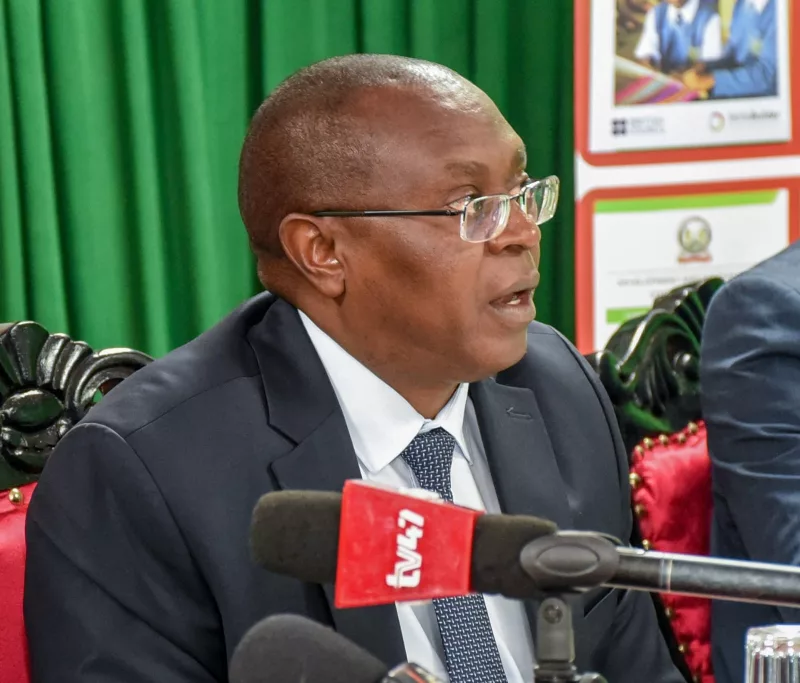
On Thursday, Principal Secretary for Education Julius Bitok condemned the alleged sexual misconduct by the teacher at Alliance Girls High School, describing the incident as both immoral and criminal.
“Such behaviour is not only unethical but constitutes a serious offence under our laws. It is a betrayal of trust, a violation of the Children’s Act, and an abuse of the sacred duty entrusted to educators,” he said.
The Ministry of Education, in coordination with the Teachers Service Commission (TSC) and the school’s administration, has taken what Bitok called “decisive action.”
Speaking during a thanksgiving ceremony at Kapkoros Barngetuny Secondary School in Nandi County, he confirmed that the teacher will be arrested and, if found culpable, will face both administrative and legal consequences.
“The teacher will be arrested, and if found culpable through due legal and administrative process, will be interdicted and prosecuted in accordance with the law,” Bitok stated, adding that the government is enforcing a zero-tolerance policy on teacher misconduct.
“Any educator found engaging in inappropriate relationships with learners will face immediate disciplinary and legal consequences without exception,” he said.
“This crackdown will extend to all learning institutions in the country.”
Bitok emphasised the government’s commitment to keeping schools safe and secure for all learners.
“We stand with learners, parents and the public in ensuring that every school remains a safe, secure, and dignified space for all children,” Bitok said.