Next week’s 17th BRICS Summit in Rio de Janeiro is not just another diplomatic gathering—it’s a geopolitical pivot point. What started as a loose economic alliance among five countries—Brazil, Russia, India, China, and South Africa—has evolved into a platform attempting to reshape the global order. And in 2025, that message is louder than ever.
The summit’s theme, ‘Inclusive and Sustainable Global South’, is not just a nod to solidarity—it’s a direct challenge to the current international system dominated by the West. The BRICS bloc is positioning itself as an alternative voice for emerging economies that are no longer content with mere participation—they want to help set the rules of the game.
Africa is no longer on the sidelines of this transformation. South Africa, a founding member of BRICS, has long served as the continent’s representative in the bloc.
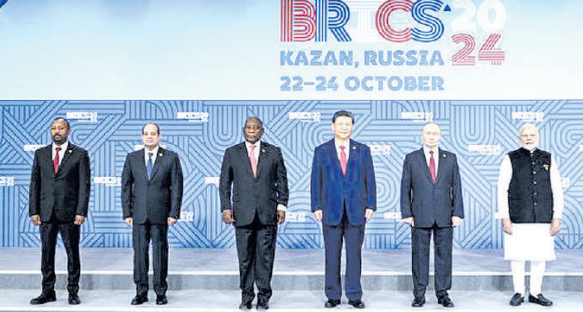
But it now shares that space with Egypt and Ethiopia, both of whom have joined the expanded BRICS formation. Their presence marks a growing recognition that Africa is indispensable to any credible effort at reshaping global economic governance.
With the world’s youngest population, vast natural resources and fast-growing markets, Africa brings both promise and leverage to BRICS. In return, African nations seek infrastructure investments, fairer trade terms and access to development financing free from the burdensome conditions often attached by traditional Western lenders.
The BRICS platform offers a model that many African leaders find appealing—one rooted in mutual respect, multipolarity and state sovereignty. The New Development Bank, BRICS' own financing arm, aims to serve these needs with fewer strings attached, funding infrastructure and social projects on terms more aligned with national priorities.
Still, Africa’s pivot towards BRICS must be handled with clarity and care. While the bloc offers a refreshing alternative to Western institutions, it is not without its power imbalances. China’s dominance in trade, investment and digital infrastructure is enormous, and Russia’s increasing political and military footprint in parts of the continent adds further complexity.
For African nations, the goal should not be to trade one form of dependency for another, but to leverage this moment to strengthen autonomy, regional integration and bargaining power.
The US and its allies may not be at the BRICS table, but they are certainly in the room—at least in spirit. Much of the bloc’s momentum is driven by a shared dissatisfaction with Western-led global systems, from the IMF and World Bank to the WTO.
Many in the Global South feel these institutions no longer reflect today’s realities. BRICS’ discussions around a shared payments system, alternatives to the US dollar, and expanding membership to include countries like Saudi Arabia and Iran are clear signs that a new economic architecture is being imagined—one not anchored in Washington or Brussels.
This is not posturing. It is a realignment of global economic flows, powered by demographic growth, digital innovation and political will across the South. It is also a warning shot: the current order is not untouchable, and countries long relegated to its margins are now demanding a redesign.
But for African countries, this is not a call to abandon partnerships with the West. The US and the European Union remain important actors—especially in health, education, climate finance, and democratic governance.
The point is not to choose sides, but to diversify alliances in ways that serve African priorities. The Africa of 2025 is not passive or peripheral. It is strategic, multi-aligned and assertive.
As new members like Ethiopia and Egypt join BRICS, there is also a growing need for African coordination within the bloc. The continent must avoid being fragmented by external interests and instead speak with a more unified voice. This includes pushing for reforms that make BRICS more transparent, inclusive and genuinely beneficial to smaller economies.
If BRICS wants to be taken seriously as an alternative to the West, it must move from statements to substance. Infrastructure financing must come without debt traps.
Trade must promote value addition in Africa, not just resource extraction. Climate commitments must support local adaptation, not just rhetoric. And institutions like the New Development Bank must prioritise accessibility for smaller African economies.
The BRICS Summit in Rio will be a defining moment—not just in geopolitical symbolism, but in real strategic outcomes. Whether it delivers on its promises will determine if the bloc matures into a genuine force for South-South cooperation or simply becomes a counterweight to Western dominance without offering a better deal.
What is certain is that a multipolar world is no longer theoretical. It is unfolding, summit by summit, speech by speech, deal by deal. And Africa is no longer a spectator—it is stepping up as a key player.
The world is watching Rio. And the message is clear: the future will not be dictated by one capital or one continent. It will be negotiated by many—and Africa intends to be heard.
The writer is a journalist and communication consultant