After the verdicts were delivered in Sean "Diddy" Combs' trial in New York on Wednesday, emotions boiled over outside court in heated confrontations between fans and protesters who voiced opposing views about the outcome.
Some thought the rap star should have been found guilty on the more serious counts, not just the two lesser charges on which he was convicted.
But they were outnumbered by pro-Diddy influencers and fans who were chanting "free Diddy" and "let him go" and spraying each other in baby oil in celebration.
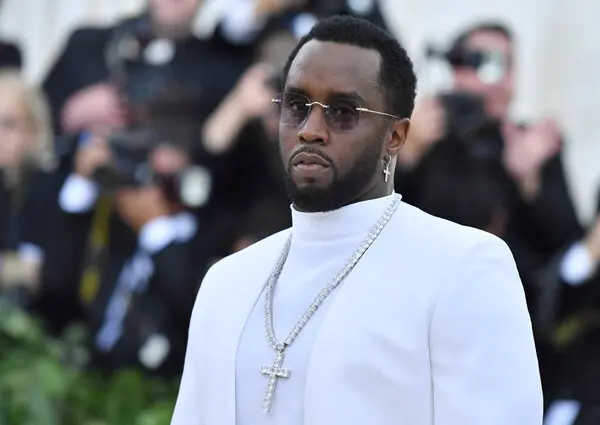
The jury's mixed verdicts did not present a clear-cut result - but it was seen as a better-than-expected outcome for the star.
He still faces significant jail time and dozens of civil legal cases, though. His reputation will forever be tarnished by months of ugly allegations and revelations - and the two convictions.
But some observers believe that's unlikely to stop him trying to mount a comeback.
Driving force of hip-hop
As a songwriter, rapper, producer and record label impresario, Combs - formerly known as Puff Daddy - was one of the driving forces in hip-hop and R&B in the 1990s.
He launched the careers of Notorious BIG and Mary J Blige, signed acts such as Faith Evans, 112, Mase and Janelle Monae to his Bad Boy Records label, and worked with stars including Mariah Carey, Usher and Busta Rhymes.
He won three Grammy Awards as an artist and scored his biggest pop hit with I'll Be Missing You, sampling The Police's Every Breath You Take, in 1997 - his tribute after BIG's murder.
Combs "was one of the most famous people in hip-hop", says Los Angeles Times music writer August Brown.
"He was an incredibly important figure in evolving both that genre and the music industry as a whole into a commercial juggernaut."
Dark side of Diddy's parties
Like many at the peak of the music industry, he also threw lavish parties. But sordid details emerged during the legal cases, revealing a darker side.
These so-called "freak offs" were hotel sex encounters which could last for days, involving multiple male escorts, routine violence and copious amounts of drugs and baby oil.
The question for the jury was whether this was a criminal enterprise designed to force two alleged victims into sex against their will or whether, as Combs claimed, the women willingly took part.
The defence argued that these orgies were "kinky" but consensual - and that organising them was not criminal.
In the end, the jury agreed and he was found not guilty of the most serious charge of racketeering conspiracy, as well as two charges of sex trafficking.
"The jury was just unpersuaded that what amounted to an extremely baroque and violent and drug-stoked sex life on Diddy's behalf amounted to a criminal organisation on the racketeering charge, or trafficking in the way that we understand it now," Mr Brown told the BBC World Service.
"This isn't to say that it wasn't possible, but they just didn't think it rose to 'beyond a shadow of a doubt'."
Jail then comeback?
Combs was, however, convicted on two counts of transporting two former girlfriends, including singer Cassie, to participate in sex acts and prostitution.
He will face up to 10 years in jail for each charge when he's sentenced in October. But the sentences are likely to be lower than the maximum and to run simultaneously, with the year he will have already spent in jail to be deducted. So it's quite possible he could be free in several years.
His supporters will be waiting - but most people will be unwilling to accept a comeback, Mr Brown says.
"I cannot imagine any kind of redemption arc as far as him [remaining] as an artist or a music mogul in light of this.
"I think the public will remember him as an important figure whose name is now permanently associated with this very-difficult-to-process range of charges, even if he's not been convicted on the worst of it."
Alvin Blanco, content director of Hiphopwired.com, agrees that Combs is too tarnished to make a successful comeback. "He's definitely going to try, but I think the damage is just too irreparable at this point."
Mark Anthony Neal, professor of African American Studies at Duke University in North Carolina, also believes there's "no doubt" the revelations have tarnished Combs' legacy as the man who helped take hip-hop "from the ghettos to the mainstream of America to the global mainstream".
However, his influence on music had diminished even before the allegations, says Jem Aswad, executive editor of music at Variety.
"He doesn't really have much of a music career any more, and he hasn't for about 15 years," Mr Aswad told BBC News.
"It's not that he was unpopular, although he wasn't enormously popular recently - he just moved on to other businesses. He got into beverages, he got into apparel, he got into lots of other businesses.
"Anything he did in music over the last 15 years was almost just for fun. I think he's released two, maybe three albums in that time period, and they just did OK, and frankly they just were OK."
By BBC.