
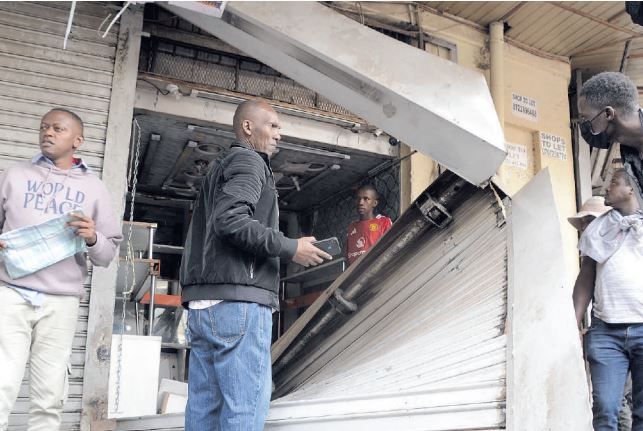
On Wednesday, Kenya once again found itself in a deeply unsettling moment. As has happened in previous episodes, what began as an expression of civic protest soon deteriorated into widespread disorder.
Groups, encouraged by online mobilisation and misinformed sympathisers, took to the streets with destructive intent. What followed went far beyond the bounds of democratic expression.
It was marked by targeted vandalism, extensive looting and a troubling escalation; the stormingof police stations. This must be called what it is.
The invasion of security installations cannot be construed as an appeal for reform. It is a direct challenge to the rule of law.
These were not spontaneous outbursts of frustration, but calculated and coordinated actions.
Those who orchestrated these incursions into the country’s security infrastructure must be identified and held accountable. This was not a protest. It was a deliberate attempt to destabilise the state under the guise of public mobilisation.
The economic fallout has been severe. In Nairobi’s commercial centres, businesses were looted and vandalised. Supermarkets, pharmacies, banks and eateries were damaged or destroyed.
Informal traders lost stock worth millions of shillings.
Youth-led enterprises, already navigating a fragile economy, were decimated within hours. Kenya has worked diligently to foster investor confi dence and nurture micro and small businesses.
That progress now stands at risk, undermined by a few days of orchestrated disorder. Amid this turmoil, certain political figures—some long absent from the centre of national discourse— have re-emerged, seeking to position themselves as champions of popular causes.
Significant power
Yet many of these individuals have held senior office, wielded significant power and enjoyed public resources. It is fair to ask what lasting reforms they implemented during their tenure.
What tangible outcomes can they point to in support of the very youth they now invoke? Some personalities are more remembered for their family legacies than for their own accomplishments. Others have held office across successive administrations, maintaining high profiles while avoiding difficult decisions.
Their current rhetoric, however passionate, rings hollow in the absence of a track record of reform, sacrifice or sustained service to national progress.
Former Deputy President Rigathi Gachagua once held an office that symbolised national unity.
Sadly, his recent rhetoric reflects a narrowing political vision, one increasingly focused on regional grievance and ethnic polarity.
Shaping the future
This inward turn undermines the very national cohesion that such a high office ought to embody. It is therefore legitimate to ask what contribution these leaders made when they had the opportunity to shape the future. What youth policies did they initiate? What reforms did they implement?
Their present appeals for justice and accountability would carry greater weight if underpinned by a demonstrable legacy of action. By contrast, President William Ruto has sought to promote a more inclusive and consultative style of governance.
His administration reflects regional, generational and political diversity and has prioritised structural reform from curbing public expenditure and addressing procurement inefficiencies to transforming higher education financing and expanding digital access.
While not without fault, this government has demonstrated a commitment to addressing national concerns through policy and dialogue.
Government remains open to constructive engagement, especially with the youth. Ministries and senior officials, including the Head of Public Service, have expressed a consistent willingness to engage with all legitimate voices. But such dialogue must occur within a framework of peace and order.
Violence and vandalism cannot and should not serve as instruments of negotiation. ere must be lawful boundaries and consequences. Young people must decide whether to be drivers of genuine change through civic engagement, innovation and political participation, or risk being used as tools for agendas not their own.
Looting and arson do not advance any cause. Vandalism is not a strategy. A legitimate movement must be guided by values and vision, not by destruction.
Those responsible for the violence, including those who looted, those who attacked law enforcement and those who facilitated or financed these activities, must be held accountable in accordance with the law.
The Constitution guarantees freedom of expression, but not destruction of public property. Kenya is not in collapse. It is undergoing difficult and necessary transitions. Now is the time to strengthen institutions, not tear them down.
To move forward, we must resist the temptation to look back with selective nostalgia. Let us reject those who seek to return to power through disorder rather than democratic legitimacy. Kenya must remain steadfast.
This country has overcome great trials in the past and it will overcome this one too. But doing so requires choosing order over anarchy, accountability over opportunism and truth over spectacle. The rule of law must be upheld. The government must show resolve.
And all citizens of goodwill must
speak up for the republic, for democracy, and for the generations to
come.







