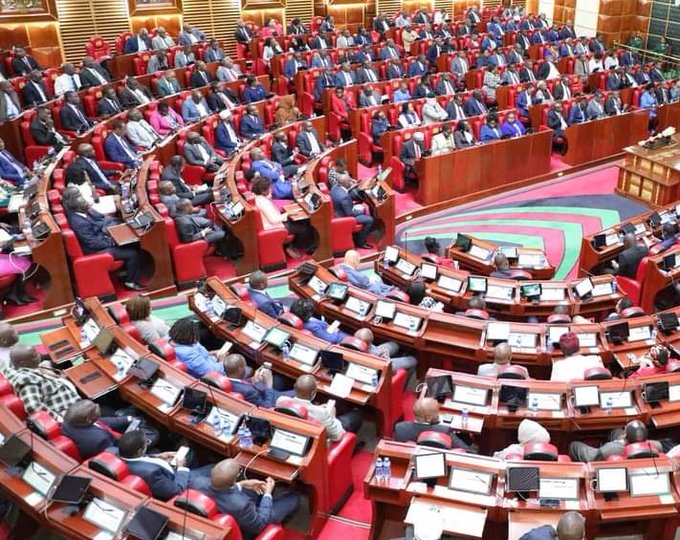
Kenyans may soon gain the power to recall their Senators, MPs, or MCAs more easily, following a renewed push to establish a legal framework for the repeal of elected and nominated lawmakers.
The Senate’s Justice, Legal Affairs and Human Rights committee has launched an initiative to develop legislation and a policy to guide the recall process.
In a report tabled in the Senate, the committee – chaired by Bomet Senator Hillary Sigei – urged state agencies, led by the Office of the Attorney General, to collaborate on the development of this framework.
“The Standing Committee on Justice, Legal Affairs and Human Rights should initiate amendments to the Elections Act (Cap 7) and the County Governments Act (Cap 256) to give effect to the right of recall for both directly elected and specially elected MPs and MCAs,” the report recommends.
The team has called on the OAG to work with the IEBC, the Kenya Law Reform Commission, the National Gender and Equality Commission, the Office of the Registrar of Political Parties, the Political Parties Liaison Committee and other stakeholders to draft the policy.
The proposed policy would outline the grounds and procedures for recalling both directly elected and specially elected lawmakers and would require public participation in its development.
“Submit the policy framework and any draft Bills thereon for consideration by Parliament,” the report adds.
The committee has given the relevant agencies six months to present their status reports – including a draft policy and accompanying Bill – to Parliament.
Legislation should be introduced in Parliament no later than February 26, 2026, whether or not the policy framework has been submitted.
This effort follows a petition by Nairobi-based activist Laban Omusundi, who called for a clear recall process for nominated MCAs.
Article 104 of the constitution gives the electorate the right to recall their elected representatives.
It states that the electorate, under Articles 97 and 98, can recall their MP before the end of the parliamentary term. It also mandates Parliament to enact legislation outlining the grounds and procedures for such a recall.
While the Elections Act and the County Governments Act contain provisions for the recall of MPs and MCAs, critics argue that the existing laws are overly restrictive.
Parliament had previously inserted strict conditions that made it impossible to recall an MP.
For instance, under the Elections Act, an MP can only be recalled at least two years after their election and not within 12 months of the next general election.
A voter seeking to initiate a recall must file a petition with the IEBC, provide a written submission outlining the grounds, gather sufficient signatures and pay the required petition fee.
Likewise, the County Governments Act allows for the recall of elected MCAs. However, it lacks provisions for recalling specially elected MCAs – those nominated to represent special interest groups.
This omission creates a gap in accountability, even though both categories of MCAs perform similar legislative, representative, budgetary and oversight functions.
“The absence of such provisions should not exempt nominated Members of County Assemblies from the constitutional values and principles that apply to all public officers,” the committee noted.
“Therefore, there should be a mechanism through which such leaders can also be held accountable, including through the recall process,” the report concluded.