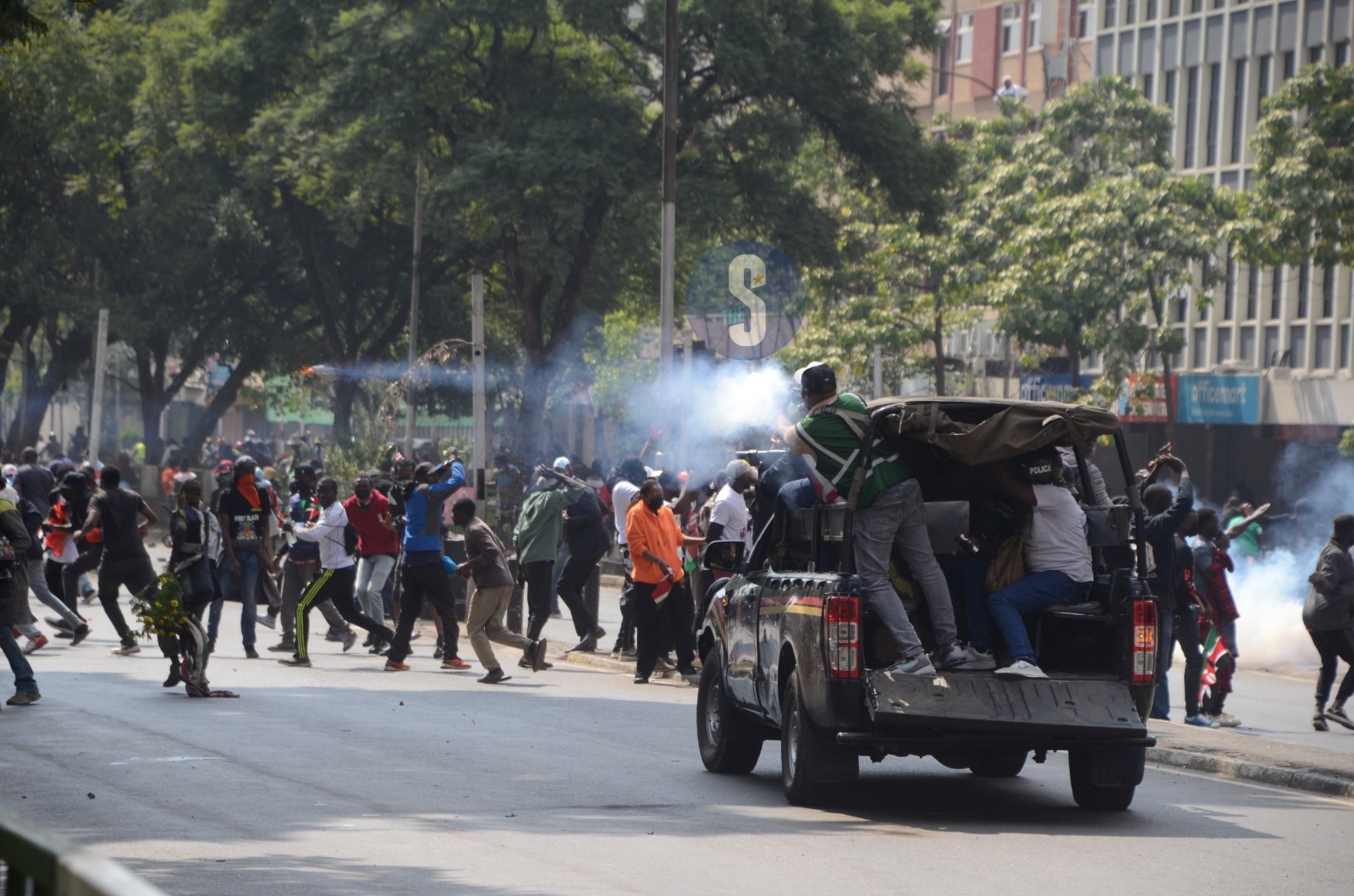
The first light of day revealed a capital on edge. In Nairobi’s Central Business District, a tense silence hung in the air, broken only by the sudden hiss of teargas canisters and the roar of approaching police trucks.
By 6 am, razor wire barricades cut off key routes to Parliament and State House, and the usual buzz of the city had been replaced by the rhythmic chants of protesters and the sharp echo of gunfire.
Across Kenya, widespread unrest unfolded in over 25 counties, as thousands took to the streets to commemorate the victims of the deadly June 2024 protests.
The nationwide demonstrations were held to commemorate the victims with thousands—mostly youth—flooding the streets demanding justice, reforms and accountability.
At least 60 youths were killed during last year’s protests that culminated in the protesters storming Parliament in an unprecedented show of defiance.
At least one person was confirmed dead in Matuu, Machakos county, after police opened fire on demonstrators attempting to storm a local police station.
Six others were injured, witnesses described the crowd as chanting anti-government slogans before bullets and teargas sent them scattering.
The protests, led largely by Kenya’s youth, were fuelled by calls for justice, government accountability and an end to what many view as a culture of impunity.
From Nairobi to Mombasa, Kisumu to Eldoret, scenes of running battles unfolded yesterday as police responded with what many described as excessive force.
Streets became battlegrounds filled with gunfire, tear gas, and stone-throwing, as officers clashed with determined demonstrators. In major towns like Nairobi, Nakuru, Kitengela (Kajiado), Nyeri, and Thika (Kiambu), business and transport ground to a halt.
Protesters barricaded roads, lit bonfires and engaged police in fierce confrontations.
Demonstrations were also reported in Kakamega, Busia, Lamu, Taita Taveta, Kericho, Mombasa, Kisii, Laikipia, Uasin Gishu, Narok, Embu, Nyandarua, Kisumu, Homa Bay, Meru and Makueni.
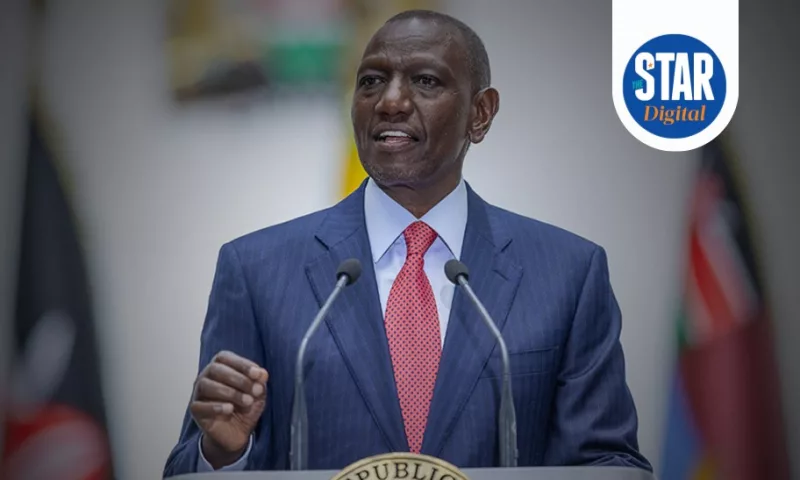
As the country degenerated into chaos, President William Ruto issued a stern warning to protesters, urging them to exercise their democratic rights within the confines of the law and avoid actions that threaten peace and stability in the country.
“Even those with different opinions and even in protests, let us ensure these protests are peaceful and not about destroying property or disturbing peace,” Ruto said yesterday.
“This is our country, and we have to protect its peace. We must operate within the law.”
He spoke during the burial of Kilifi Governor Gideon Mung’aro’s father in Kilifi County.
In Nairobi, the CBD was virtually shut down.
Police erected razor wire and roadblocks from as early as 6 am, sealing off routes to key sites such as State House and Parliament Buildings, believed to be key targets of the protests.
The normally bustling Thika highway was blocked at multiple locations. Public Service Vehicles were forced to drop passengers at Guru Nanak Hospital, leaving many to walk long distances.
Waiyaki Way, Ngong, Mombasa and Jogoo roads were either impassable or closed off entirely.
The situation turned violent when protesters overwhelmed police lines, leading to intense clashes marked by stone-throwing, teargas and deployment of water cannons.
In a controversial move, the Communications Authority of Kenya (CA) banned all live TV and radio coverage of the demonstrations. CA director general David Mugonyi cited violations of Articles 33(2) and 34(1) of the constitution, as well as Section 461 of the Kenya Information and Communications Act (1998), in justifying the blackout.
“The live coverage of the June 25, 2025, demonstrations is contrary to Articles 33(2) and 34(1) of the Constitution of Kenya and Section 461 of the Kenya Information and Communications Act,” a statement from the CA read.
The move triggered condemnation from the Law Society of Kenya, the Kenya Media Sector Working Group, and the Kenya Editors Guild, who termed the blackout an attack on press freedom and an attempt to suppress democratic expression.
The Kenya Media Sector Working Group called on media houses to defy a directive by the CA ordering the suspension of live coverage of ongoing protests.
“We remind the CA that, according to the recent High Court ruling, it lacks the mandate to regulate broadcast content. This authority has been constitutionally vested in the Media Council of Kenya,” the group said.
LSK threatened legal action against the government.
Opposition leader Kalonzo Musyoka, alongside other politicians, led a memorial march in Nairobi.
Dressed in national colours, they walked from Holy Family Basilica to Parliament Road, where they attempted to lay wreaths in honour of youths killed during last year’s protests.
“Even if we are denied access to Parliament today, this day must be properly commemorated as a national holiday in the future,” Kalonzo said.
Police, however, blocked them from accessing Parliament, forcing the leaders to hold a brief prayer outside the church.
In Nyeri and Karatina, protesters barricaded the Nyeri-Nairobi highway, cutting off traffic. In Eldoret (Uasin Gishu county), demonstrators torched a police lorry during riots in the Huruma area.
Uasin Gishu county police commander Benjamin Mwanthi confirmed the arson but could not verify reports of fatalities.
“The lorry was torched in the process of the riots near Pemugi area,” Mwanthi said, adding that several protesters were arrested and others injured during the unrest.
Tensions further escalated when a group of youth—armed with rungus (wooden clubs)—clashed with Gen Z protesters. Claiming to protect the town from looting, they overran police barricades and attacked protesters, resulting in running battles on the streets.
In a surprising twist, Kisumu, historically a protest hotspot, remained mostly calm.
However, tensions briefly flared when human rights activists and Gen Z youth were dispersed while giving a press briefing at Jamuhuri Park.
As they prepared to submit a petition, an unidentified group on motorbikes threatened them, forcing the activists to flee and seek refuge in the Deputy County Commissioner’s compound, which was guarded by police.
“It’s unfortunate that something like this can happen right in front of law enforcement,” said one female activist, calling the incident a violation of constitutional rights.
In Mombasa, police lobbed teargas canisters to disperse protesting youth, following a four-hour peaceful demonstration in memory of those killed during last year’s anti-Finance Bill protests. The demonstrators had peacefully marched through Moi Avenue, Digo Road, Jomo Kenyatta Avenue, Ronald Ngala Road, and Abdel Nasser Road, eventually returning to the town centre.
Tensions escalated when the group moved down Nkurumah Road toward the Mombasa county commissioner’s office, which also leads to State House, Mombasa, where tens of police officers had been stationed to block further access.
At the Mombasa Law Courts roundabout, County Commissioner Mohammed Noor briefly addressed the protesters.
“It was generally a peaceful demonstration, apart from a few criminal elements who tried to infiltrate and cause havoc. We will receive the petition, and the youth can now peacefully disperse,” Noor said.
However, soon after the police began pushing back the crowd, chaos erupted, leading to running battles between the youth and the police.
In Kisii, there were major disruptions as protestors lit bonfires and blocked key roads, paralysing daily activities.
Businesses remained disrupted, and public transport was brought to a standstill for hours as thick smoke filled parts of the town centre.
Earlier in the morning, demonstrations were largely peaceful, with protesters waving flags, blowing whistles and holding leafy branches as symbols of peace