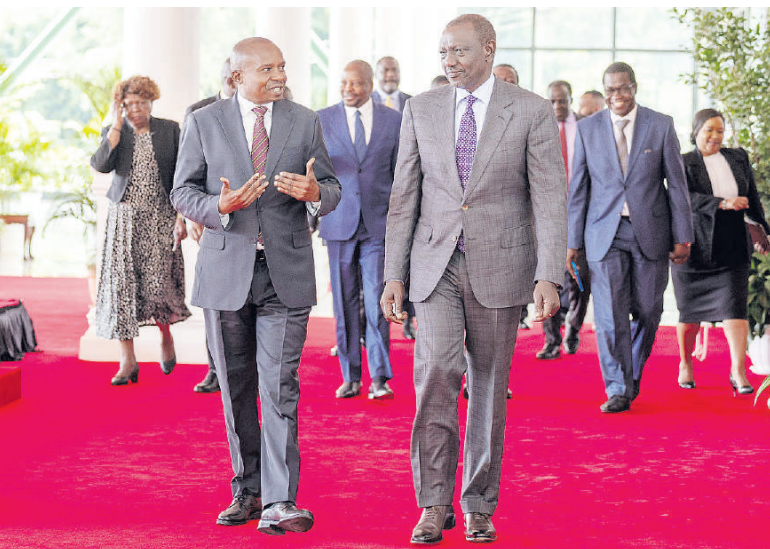
President William Ruto and top security officials are facing a major test as Gen Z and civil society groups prepare for nationwide demonstrations on Wednesday.
The demos will mark the first anniversary of the deadly June 25 protests, when demonstrators breached Parliament in an unprecedented show of defiance.
The planned protests come against a backdrop of mounting public anger over alleged systemic police brutality, extrajudicial killings and what many see as growing impunity among law enforcement officers.
“We are going to the streets to honour our fallen comrades, demand justice and seek compensation,” activist Boniface Mwangi said.
However, Inspector General of Police Douglas Kanja warned against an attempt to access unauthorised and protected places like Parliament and State House.
Last year’s protests – and the subsequent ones – were marred by shootings, teargas, destruction and widespread disruption of businesses and transport in major towns.
“We are doing business and so long as the government can assure us of security, we shall be on the road ferrying Kenyans,” said Matatu Owners Association's Albert Karakacha.
Today’s protests will test the police’s capacity to maintain order without escalating violence, especially with public scrutiny over alleged police excesses.
Recent incidents have heightened tensions; last week, a police officer shot 22-year-old face mask vendor Boniface Kariuki, known as Eli Joshua, at close range while dispersing crowds.
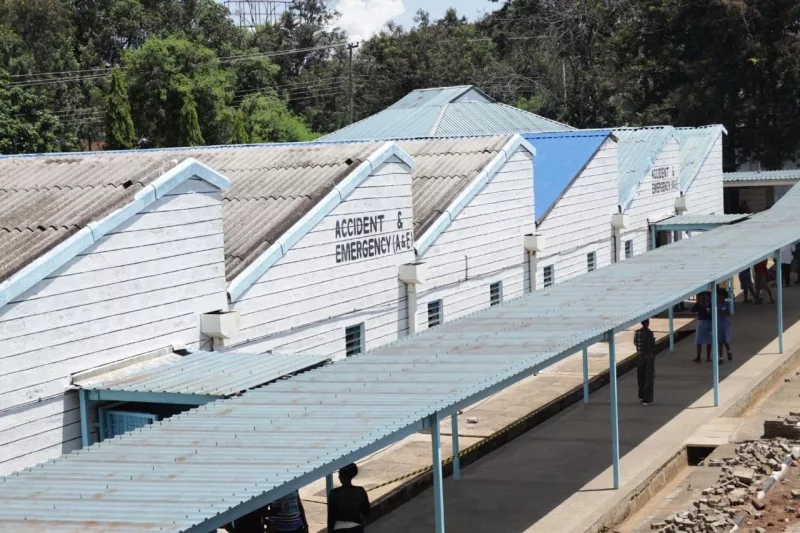
Kariuki was not involved in the protests and remains in critical condition at Kenyatta National Hospital after emergency surgery.
In another case, blogger and teacher Albert Ojwang' died while in police custody at Nairobi Central police station, with a postmortem revealing strangulation.
The Star has learned that police headquarters ordered all regional units to liaise with protest planners to coordinate peaceful demonstrations across the country, including in Mombasa, Nairobi, Kisumu, Narok and Nakuru.
In Nairobi, police and protest organisers met last Saturday to agree on protocols.
There is a likelihood that most businesses will be closed in major towns over fear of chaos.
This has prompted the police authorities to mobilise more personnel and send them to places where the protests are planned.
Many personnel in parts of central and eastern regions have been moved to Nairobi to help in managing the situation.
Social media has been buzzing with posters and hashtags calling on young Kenyans—especially those identifying as Gen Z—to turn out in large numbers.
“Justice 4 (sic) Mashujaa. June 25, we will never forget. Remembering our Gen Z Mashujaa…we shall march countrywide in all the 47 counties to remember our fallen heroes,” one of the posters read.
The "Rage & Courage" posters asked protesters to carry a flag, flowers and a placard.
“National remembrance day to honour our heroes and demand justice and compensation for innocent protesters murdered by the Kenyan state,” the poster adds.
Organisers are framing the demonstrations as a commemoration and renewed call for justice.
Gen Z activist Hanifa Adan said, “Let’s stand together as brothers and sisters tomorrow, united in solidarity. Let’s look out for one another and protect each other.”
Activist Shakira Wafula said they will be on the streets tomorrow, not just to light candles, but to carry the torch forward – a renewed call for justice.
“Not just to remember, but to reignite. Because our comrades who were felled did not die for us to fold our arms. They died demanding a Kenya that works for all; thus, we, the living, must make that demand louder, bolder and more strategic,” she said.
In Nairobi, activists issued bold calls to "occupy state house", the symbolic seat of power.
Such a move would be highly provocative and is likely to prompt a firm response from security forces. This is expected to widen the cracks between police officers and the masses.
Nairobi Regional Police Commander George Seda said security organs are ready for the planned demonstrations.
Last year, the protests took place in major towns ahead of the main one that took place in the city. More than 60 people were allegedly killed.
“We have the plan and we shall be there to provide enough and good security to ensure every person who is going to participate and those not going to participate will be safe, for that matter,” Seda said.
He urged demonstrators to conduct themselves peacefully and avoid provoking law enforcement agencies, which he said has resulted in violence, as seen in recent demonstrations.
“Let us restrict ourselves to what we call peaceful demonstrations. Let us not have demonstrations that are going to interfere with other people who may not be part of the demonstrators,” he appealed.
“Remember, it will be a working day and we shall be having people operating hotels, shops and other businesses. We are looking uncivilised when we start converging and then as we continue, it turns violent and beats the logic of conducting it, which makes the situation worse.”
Yesterday, pressure mounted on the government to listen rather than suppress the voices of young people.
In a powerful joint statement issued, the Kenya Conference of Catholic Bishops (KCCB) warned that ignoring or violently responding to peaceful protests risks plunging the country into deeper instability and moral crisis.
“Young people deserve listening and support, not suppression,” the bishops said, reflecting on the youth-led protests that rocked the nation last year.
“These youth-led demonstrations reminded us of the power of civic consciousness and the rightful place of young people in shaping the country's direction.”
The bishops condemned what they termed a “disturbing pattern” of abductions, harassment and extrajudicial killings of youth activists.
“These incidents have left families in mourning and communities in a state of fear,” they said.
“Our young people are not enemies of the state. They are citizens with valid concerns who should be heard and supported in building a better future for all.”
In Kisumu, one of the regions known for severe protests, a section of youth leaders distanced themselves from planned demonstrations, urging fellow young people across the Nyanza region to avoid the protests and instead engage in peaceful, productive activities.
Speaking during a press briefing, the youth representatives expressed concern over what they termed as a shift from the original intentions of the protests, saying the cause had been influenced by political and commercial interests.
Philip Kai, one of the youth voices, criticised the current direction of the demonstrations, stating the initial idea of peaceful advocacy for youth welfare had been diluted.
“What began as a noble cause with a clear agenda for youth empowerment has now taken a different path,” he said.
“We are not part of the planned demonstrations. We urge all young people from this region to stay away from the streets and go about their normal business.”
Separately, the Political Parties Liaison Committee called for political restraint, constitutional adherence and national dialogue as Kenya braces for widespread Gen Z protests set for June 25.
“Young Kenyans need to be listened to, not suppressed,” said PPLC in the statement signed by its chairperson, Evans Misati, echoing mounting calls for government accountability.