Are you planning to become a Public Service Vehicle driver?
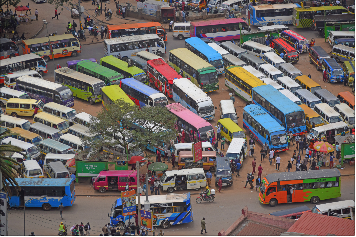
You might want to brush up on your customer care, first aid, emergency response and defensive driving skills—because a new law proposes that these will be mandatory qualifications for anyone seeking a PSV license.
This is part of the Traffic Laws (Universal Design) (Amendment) Bill, 2025, which seeks to rein in rogue operators and make the public transport system safer and more inclusive, especially for persons living with disabilities.
The Bill introduces the concept of universal design in transport and infrastructure—ensuring systems are accessible and usable by all, regardless of age, size, ability or disability.
“Universal design means the design and composition of buildings, roads, technologies, products or services in a way that they can be accessed, understood and used to the greatest extent possible by all people, without the need for adaptation or specialized design,” the Bill explains
The Bill, sponsored by Nominated Senator Crystal Asige, has already been published and is set for its first reading in the Senate.
“The Bill amends the Traffic Act (Cap 407) to provide for testing of specific skills in persons applying for licenses to drive public service vehicles,” the draft law states.
"Where an applicant applies for a license to drive a public service vehicle, the Authority shall, in addition to the driving test administered, test the applicant's” knowledge of basic customer care principles, first aid skills and emergency response procedures and defensive driving skills," the Bill states.
In addition, matatu operators are mandated to have dedicated seats for PWDs in PSVs.
PSV drivers will also be required to stop their vehicles and give way to persons with disability.
The Bill also provides for controlled ‘noise’ in the vehicles to impair navigation or communication of persons who utilise sound to navigate or communicate.
“The amendments to the National Transport Authority Act aim to ensure accessibility and ease of use of public transport by persons with disability,” the Bill reads.
Furthermore, the Bill seeks to encourage the use of cashless fare collection systems by giving the Cabinet Secretary the power to introduce incentives to operators who adopt such systems.
The omnibus Bill amends at least four Acts of Parliament, including the Traffic Act, the Kenya Roads Act, the National Transport and Safety Authority Act and the National Construction Authority Act.
It mandates the national highways authority to erect traffic signs that are easily accessible, simple and easy to use by all persons, including persons with disability.
Further, the roads authority is tasked to ensure all roads in the county are dedicated lanes for non-motorised transport – pedestrians, cyclists and wheelchair users.
It enhances fines for authorised use of non-motorised transport lanes from the current Sh30,000 to Sh50,000.
The Bill amends section 5 of the NCA Act to ensure buildings are designed in a manner that facilitates continuous access and use of facilities by persons with disability.
“Without prejudice to the generality, the Authority shall ensure all buildings— are accessible by a person with a disability; and have parking spaces reserved at least two parking spaces or five per cent of all the parking spaces, whichever is more, to persons with disability,” the Bill states.
It provides for the reservation of parking spaces for persons with disability, and also ensures that facilities such as washrooms, lifts and walkways can be easily used by such persons.
“The Bill also amends section 7 of the National Construction Authority Act to provide for one of the representatives appointed in the board of the National Construction Authority to represent special interests in the construction industry to be a person with disability,” the Bill states.
It mandates the CS in charge of roads to ensure that roads designated to the National Government are designed and constructed to include lanes and tracks reserved for the exclusive use by non-motorised transport and slip-resistant walkways for the exclusive use by pedestrians.
The roads would also have slip-resistant tracks for the exclusive use of wheelchairs and lanes for the exclusive use by cyclists.
“All pedestrian walkways, wheelchair tracks and cycling lanes are physically separated from lanes used for motorised transport,” the Bill says.
Where there is a change in level , all relevant pedestrian walkways and pedestrian crossings are designed and constructed to include dropped kerbs.
All relevant bus stops will also be designed and constructed in conformity with the principles of universal design.
“ The cabinet secretary shall, within one year of the commencement of this Act, develop and publish standards for the design, construction and equipping of pedestrian walkways, wheelchair tracks and cycling,” the Bill states.
For county roads, road executives shall ensure the pathways have Lanes and tracks reserved for the exclusive use by non-motorised transport.
“A person shall not use facilities designated for exclusive use of pedestrians, wheelchair users or cyclists for non-designated purpose,” the Bill says.