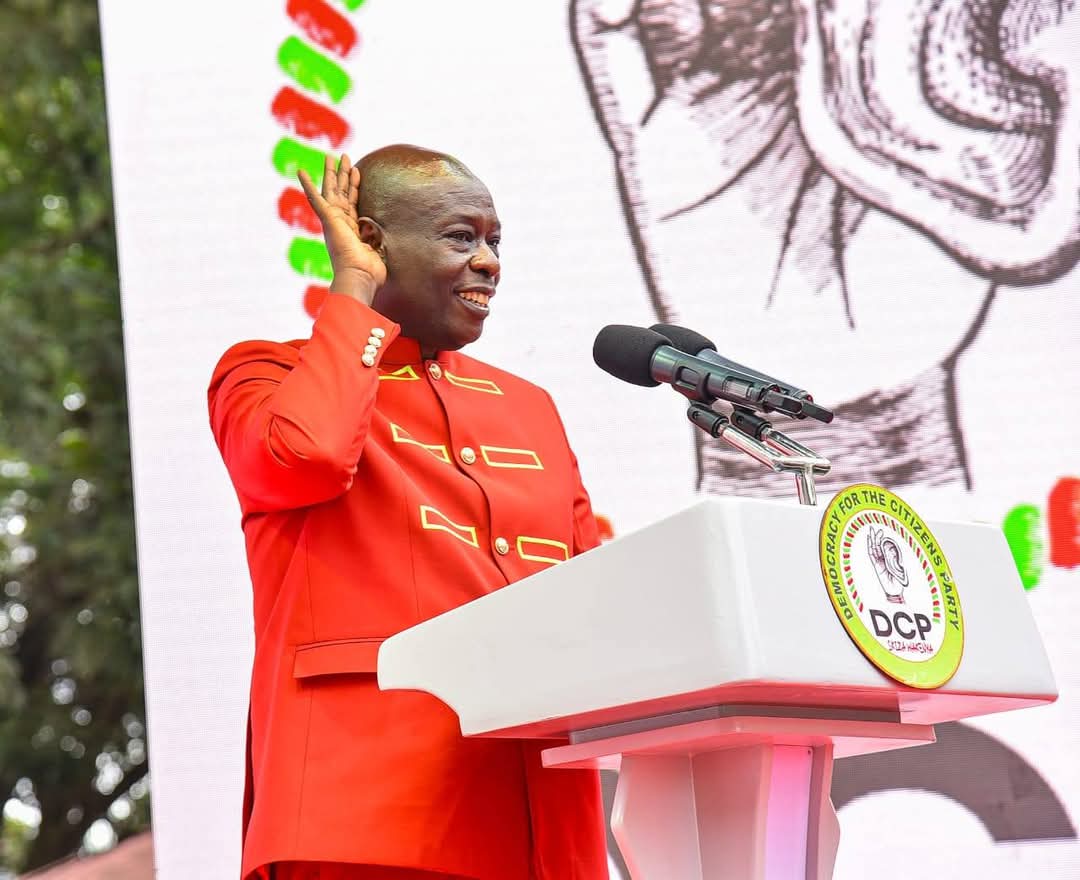
 Former Deputy President Rigathi Gachagua / FILE
In the heart of Kenya’s political theater, one name has often echoed louder than most: former Deputy President Rigathi Gachagua.
He carved a niche for himself not only through policies but also through the sheer force of his words.
Gachagua is a political showman, a master of sensational slogans that have pierced through the noise, resonating on social media and public spaces.
With phrases that dance on tongues through social media, Gachagua wielded slogans like political machetes, cutting straight to the heart of public emotion.
From accepting a branded nickname "Riggy G", Gachagua transformed from a stiff bureaucrat into a cultural phenomenon.
He has mastered the power of a sound bite. His slogans are not mere speech but are strategic bombs, dropped to shift narratives, deflect scrutiny, and ignite loyalty.
He has stood as a reminder that in the battle for the ballot, sensational words can win the hearts and minds of the people.
The former DP has recently been a social media sensation, with Kenyans expecting a new slogan anytime he speaks.
Early this month, Gachagua coined the word “Cuzo” while addressing crowds during a campaign blitz along the Coast. The term, a playful twist on “cousin,” took the internet by storm.
Gachagua likened the new political alliance—featuring Wiper Party leader Kalonzo Musyoka and DAP-K boss Eugene Wamalwa—to a family reunion.
Kenyan content creators and social media users embraced “Cuzo” in memes, captions, and street talk.
It became a cheeky way to refer to friends, political allies, or just about anyone, especially when talking about unity, common interests, or humour.
However, a section of leaders took issue with the catchphrase, saying the former DP should not associate himself with their community.
While on a tour in Meru, Gachagua referred to the residents as brothers and sisters.
He greeted them, “Hi, brothers, his brothers, hi, sisters. Mabrathe na masiste mko? He asked.
This not only signified closeness with the Meru community but also a family you can count on.
Kenyans have adopted the phrases, imitating him and referring to each other to signify closeness and family.
On Monday, Gachagua yet again hit leaders from the Maa community with a “hi mashemeji, hi mashemeji, shemeji hi.”
This loosely translates to (In-laws). The former DP was referring to the close ties and relationship between the communities.
In the context of the Mashemeji Derby, a football rivalry in Kenya, it refers to the close relationship between the Luhya and Luo communities, whose members are known to support AFC Leopards and Gor Mahia.
Gachagua spoke when he interacted with over 500 Maa grassroots mobilizers in his Wamunyoro residence.
The Maa community holds a special and vital place in our nation's liberation history, and their leadership is crucial in shaping a brighter future for Kenya
He preached the gospel of unity for a collective strength to build a Kenya where every citizen’s voice is heard and valued.