Twelve smaller counties that receive minimal allocations from the equitable share have scored a major win after the Senate approved a new revenue-sharing formula that includes a dedicated Sh4.46 billion affirmative fund.
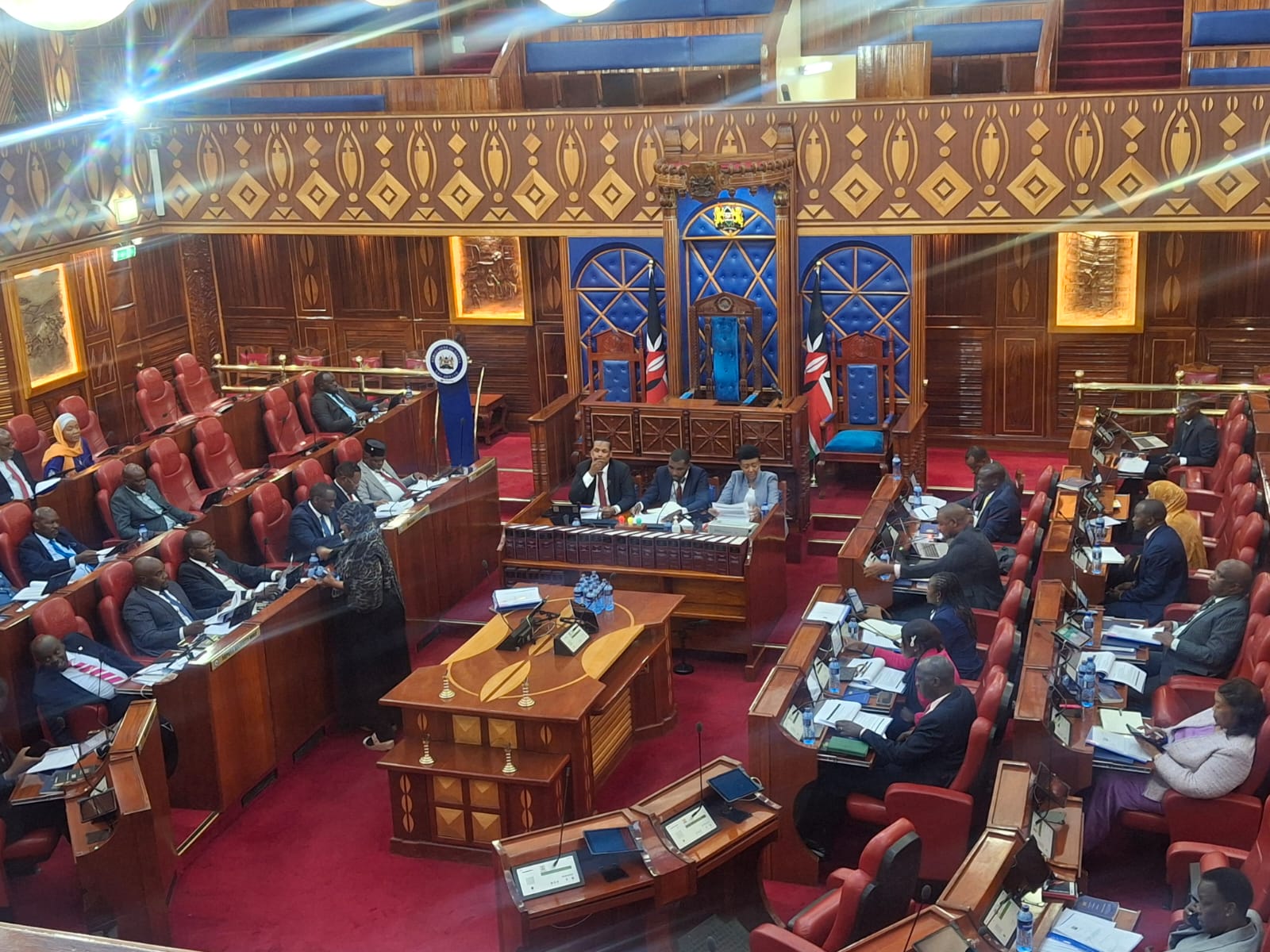
In a unanimous vote last Thursday, senators approved the fund, which will be shared among the 12 counties – Elgeyo-Marakwet, Embu, Isiolo, Kirinyaga, Laikipia, Lamu, Nyamira, Nyandarua, Samburu, Taita-Taveta, Tharaka-Nithi and Vihiga.
According to the lawmakers, the devolved units received less than Sh6 billion in equitable share every year, which went entirely into recurrent expenses, leaving nothing for development.
Yesterday, members of the Senate and the National Assembly were in negotiations to determine the final county revenue allocation for the next fiscal year and agreed to allocate the 47 counties Sh415 billion.
"The House stands for the protection of devolution. The devolved family comprises 47 counties. The 47 counties have to function properly with some aspects of development," Budget and Finance Committee chairman Ali Roba said.
In the new formula, the senators have allocated the current year’s allocation of Sh387.42 billion as the baseline, meaning no county will receive less than what it got in subsequent financial years.
The baseline is the minimum amount the 47 counties can receive from the national share of revenue.
"The formula of the committee is a hybrid formula where at Sh387.425 billion and above, we have applied the Third Basis of revenue sharing to hold each county harmless," Roba said.
"The first Sh387.42 billion (being county equitable share for FY 2024-25) be shared among counties based on the baseline allocation factor derived from each county’s allocation for FY 2024-25," Roba said.
The House approved that any extra allocation, beyond the baseline and the Sh3 billion affirmative fund, be subjected to the new formula.
The formula entails: basic (equal) share, which has been weighted at 35 per cent, up from 22 per cent proposed by the Commission on Revenue Allocation.
The poverty index, which the commission had given a weight of 14 per cent, has been reduced to 12 per cent.
The lawmakers allocated geographical size a weight of eight per cent, capped at 10 per cent, down from nine per cent proposed by the commission.
Population, which has been the most controversial index in the political scene, has been retained at 45 per cent.
The senators dropped the ‘income distance’ index, which the commission had assigned a weight of 13 per cent.
"The data used to generate the Income Distance index is not directly derived from each county. The KNBS applies a top-down approach to determine each county’s contribution to GDP," the report says.
In addition, the House dismissed ‘a stabilising factor’ introduced by the commission to caution the counties from losing revenue.
The new framework will dictate revenue sharing among the counties for five years, from 2025-26 to 2029-30.
Roba, whose committee was tasked with formulating the new framework, said they arrived at the formula after extensive consultations.
This was to avoid the tension and grandstanding that dominated the formula ending at the end of the current financial year.
"The import of the amendment that I am pushing is that we should have a situation where no county loses any money using this formula, irrespective of the amount of money that is given for us to share among the counties," Kitui Senator Enoch Wambua said.
Wambua moved the amendment to the Finance Committee’s proposal, allocating the ‘disadvantaged’ counties Sh2 billion. He enhanced it to Sh3 billion.
Nyamira Senator Okong’o Omogeni, on the other hand, pushed for an allocation of Sh4 billion for the smaller counties.
Article 217 of the constitution says the revenue-sharing formula should be reviewed every five years.
However, the Sixth Schedule of the constitution further provides that the first and second determinations of the basis of the division of revenue among the counties be made at three-year intervals.
ANALYSIS
In the first framework, there were five parameters, with the population given the heaviest weight. The population was weighted at 45 per cent, equitable share at 25 per cent, poverty level at 20 per cent, land area at eight per cent and fiscal effort at two per cent. In the second-generation formula, the population was weighted at 45 per cent, the basic share at 26 per cent and the poverty level at 16 per cent. Others are land area at eight per cent, fiscal responsibility at two per cent and development index at one per cent.