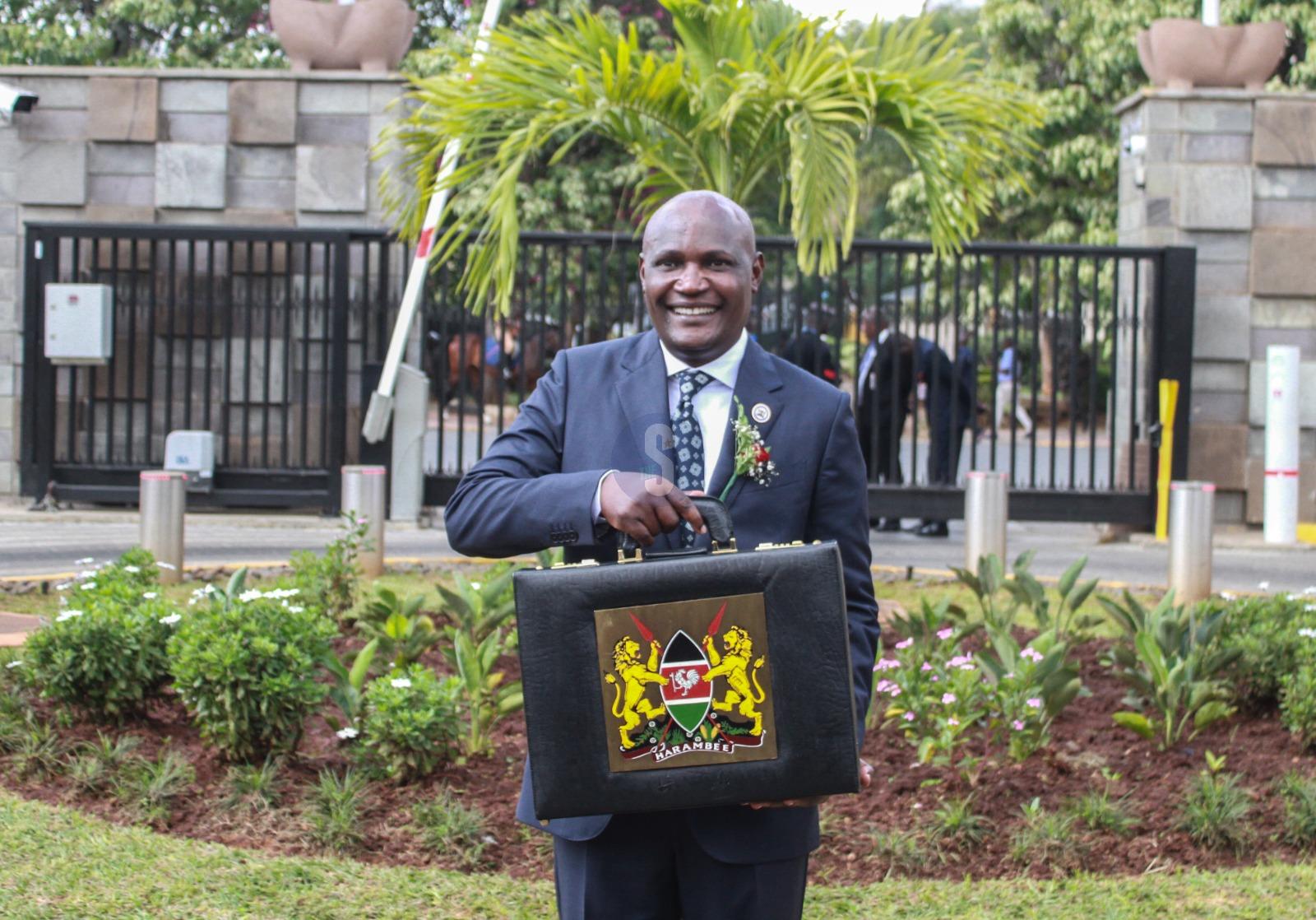
The 2025-26 national budget has revealed how political actors within the Executive are working in tandem with Treasury officials to direct significant allocations toward sectors that not only spur economic development but also bolster political influence in the run-up to the 2027 general election.
President William Ruto, Deputy President Kithure Kindiki and Prime Cabinet Secretary Musalia Mudavadi stand out as major beneficiaries of the new fiscal plan.
The budget, which takes effect on July 1, is widely seen as the most politically consequential financial blueprint of the Kenya Kwanza administration, coming at a time when the President is under pressure to complete flagship projects central to his reelection strategy.
Caught between political ambition and economic constraints, Ruto is walking a tightrope.
Having narrowly won the 2022 presidential election on a “bottom-up” economic platform that promised to uplift ordinary Kenyans, dubbed hustlers, Ruto now faces growing criticism over unmet expectations.
Despite his pledges, his administration’s first 1,000 days have been marred by economic turbulence, with inflation, high youth unemployment and discontent taking root.
A May 28 Tifa survey revealed that 75 per cent of Kenyans believe the country is headed in the wrong direction, with only 14 per cent optimistic about its trajectory.
The focus on infrastructure, healthcare, education and electricity mirrors past administrations, but Ruto faces tighter constraints with the national government's revenue projected to be Sh3.3 trillion against a budget of Sh4.2 trillion.
With limited space for borrowing and sluggish revenue growth, his administration must balance an ambitious development agenda with fiscal prudence.
Analysts describe the 2025-26 budget as overtly political, designed to calm public frustration while supporting strategic constituencies vital to the president’s 2027 prospects.
This is also the first budget to be formulated following Ruto’s political truce with opposition leader Raila Odinga, an arrangement that stabilised the administration after the disruptive anti-government protests in June last year.
That rapprochement has reshaped the political terrain, further heightening the stakes of the budget as a tool of both governance and survival, with Raila’s ally, Alego Usonga MP Samuel Atandi, serving as the chairperson of the Budget and Appropriations Committee.
Ruto ascended to power in 2022 on a platform rooted in the Bottom-Up Economic Transformation Agenda, which promised to elevate the fortunes of ordinary Kenyans, particularly those in the informal sector, dubbed the hustlers.
Yet, three years into his term, many of those promises remain unmet, and the economy continues to test the patience of an increasingly disillusioned populace.
Despite global and regional economic headwinds, the frustrations have landed squarely on the head of state doorstep.
“I look at the 2025 budget as one laden with deep currents of political connotations, especially those geared towards not just appeasing Kenyans but restoring hope ahead of the 2027 polls,” Lamech Ogembo, an economist, said.
According to a Tifa survey published on May 28, an overwhelming 75 per cent of Kenyans believe the country is headed in the wrong direction, while only 14 per cent express optimism.
Still, President Ruto has dismissed his critics, reiterating his commitment to the country’s long-term development. “I am committed, I am determined, I am focused, and no amount of intimidation or name-calling is going to change my course,” he said.
The 2025-26 budget is pegged on the continued execution of Beta, which is designed to stimulate inclusive economic growth and enhance livelihoods.
The plan targets investments in five sectors: agriculture, healthcare, education, the digital economy and micro, small and medium-sized enterprises. A total of Sh338.3 billion has been allocated to these priorities in the upcoming fiscal year.
However, critics argue the budget serves more as a political tool than a developmental roadmap.
Kitui Central MP and economist Makali Mulu argued that the Treasury failed to prioritise critical sectors like health and education, instead channelling funds towards offices that are more political than service-oriented.
He maintained that the allocations reveal a budget crafted with re-election in mind rather than the urgent needs of ordinary citizens.
“From my analysis, this budget is more of an Executive budget. Most of the programmes will be supporting the government to get re-elected,” Mulu said.
Indeed, the Office of the President received an increased allocation of Sh5.37 billion, up from Sh5.34 billion in the previous estimates.
Within this amount, Sh1.06 billion will be used for government printing services, while Sh2.03 billion is set aside for general administration, planning, and support services.
An additional Sh1.37 billion has been allocated to the President’s advisory team, and Sh910.8 million is directed toward leadership and coordination of government functions.
The DP’s office saw its allocation rise to Sh3.07 billion from Sh2.92 billion, funds intended to support its general operations.
The Office of the Prime Cabinet Secretary will receive Sh866.3 million during the same period, while State House will be allocated Sh8.57 billion. Parliamentary Affairs will receive Sh363.5 million.
In an unusual inclusion, the government has also allocated Sh150 million to procure and operate a social media tracking system.
The three leaders, the top dogs of the Kenya Kwanza administration, are expected to intensify their grassroots engagements with Kenyans, including hosting key meetings as part of the broader agenda to assuage public anger.
Over the last couple of months, Kindiki and Ruto have held meetings across the country and at their Karen residences in what is seen as a strategy to woo Kenyans ahead of the 2027 polls.
Security services are another area of increased funding. The National Police Service is expected to receive up to Sh1.8 billion in new recurrent expenditures.
The Office of the Inspector General will receive an additional Sh800 million, while the Deputy IG in charge of the Administration Police will receive Sh60 million more.
Meanwhile, social sectors like education and healthcare have suffered deep cuts.
The Teachers Service Commission lost Sh570 million, including Sh620 million removed from the teachers’ capacity-building budget.
Junior secondary school intern teachers were allocated Sh7.2 billion, which falls short of what is needed for full absorption.
Education funding reductions are also stark. University education lost Sh920 million, while Sh405 million was cut from primary education, including capitation.
Secondary education suffered a net loss of Sh4 billion, with Sh3 billion cut from senior secondary schools and Sh2 billion from junior secondary.
Primary schools lost Sh900 million. These cuts were reportedly made to cover the cost of administering and invigilating national examinations, expenses that were not included in earlier budget drafts.
The school feeding programme saw a reduction of Sh600 million from its initial allocation of Sh3.6 billion.
ICT integration in secondary schools lost Sh250 million, and teacher capacity-building efforts were further slashed by Sh620 million.
In the health sector, more than Sh4.7 billion has been slashed. The universal health coverage programme lost Sh2.5 billion from the Strategic Response to Public Initiatives and Sh2 billion from the Emergency, Chronic and Critical Illness Fund.
Primary health care lost Sh100 million, and disease surveillance lost Sh20 million.
Other reductions included Sh100 million from the Health Insurance Subsidy Programme for orphans and vulnerable children and Sh1 billion from the Equalisation Fund.