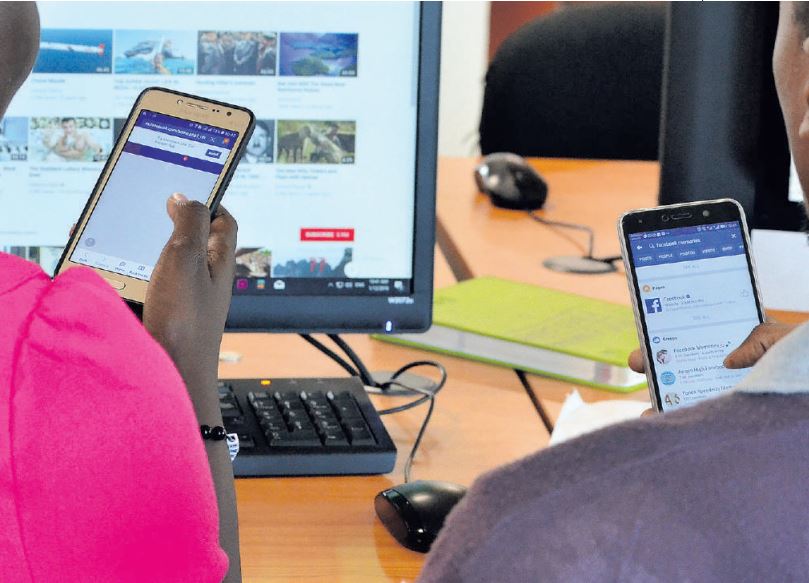
Spend a few minutes scrolling through any trending topic on X, watch a viral TikTok rant, or observe a Facebook exchange on matters of public interest, and you are confronted, not with thoughtful engagement or deliberation, but with a flood of abuse, ridicule, tribal baiting and deliberate distortion.
The Kenyan social media space has long descended from what it promised to be, a democratic frontier for openness, civic participation and informed expression. It has become a hostile arena where digital lynchings are routine and facts are expendable. This downturn, which began quietly around the 2013 general election, grew visibly malignant by 2017. What the creators of social media originally conceived of as a tool for connection, transparency and the democratisation of voices has, in our context, morphed into a mechanism for polarisation, intimidation and reputational destruction. We are not simply witnessing the degradation of online conduct; we are observing the corrosion of the public mind.
It is in this increasingly corrosive environment that the idea of a Social Media Ethics Authority has re-entered public debate, provoking both caution and curiosity. The case for such an institution is not without merit. As I argued in my commentary, “Kenya faces urgent need to regulate social media to protect its democracy”, the unchecked disorder of our digital platforms is now threatening not only individual dignity but also to democratic integrity. Online platforms have made it possible for citizens to speak up, yes, but they have also normalised contempt, insult and the kind of unfiltered cruelty once reserved for anonymous graffiti. Today, influence is not earned by reason or principle, but by outrage and provocation.
Kenya’s historical association with speech regulation offers sobering lessons. The 2008 Communications Amendment Act was widely perceived as a veiled attempt at state intrusion into media freedoms. The Computer Misuse and Cybercrimes Act of 2018, though noble in intention, has at times been deployed to intimidate whistle-blowers, critics and dissidents. These experiences serve as a reminder that regulation, if not grounded in law, transparency and restraint, can quickly descend into coercion. Any attempt to create a Social Media Ethics Authority must be anchored in constitutionalism, public participation and genuine independence.
The necessity, however, is undeniable. Our online spaces are in a state of moral disrepair. Citizens no longer merely disagree; they destroy. Politicians, journalists, civil servants and ordinary Kenyans alike are subjected to torrents of invective, much of it tribal, sexist or patently false. Women are disproportionately targeted, with character assassination cloaked as political critique. Entire ethnic communities are routinely ridiculed. Verified accounts, some of them held by public personalities, lead or amplify these assaults. The algorithm rewards this behaviour, disorder draws more attention, and attention is the commodity of digital capitalism.
Perhaps the gravest tragedy lies in the treatment of those who lack public platforms or legal means to defend themselves. A simple misstep or unverified accusation can condemn an innocent teacher, civil servant, student or small businessperson to the court of public opinion with no right of reply. Their names become hashtags, their faces, memes, their stories raw material for entertainment. Reputations painstakingly built over years are obliterated within hours. A photograph taken out of context, a doctored screenshot, or a malicious rumour can cost a person employment, social standing, mental health and in some cases, life itself. These are not just unfortunate incidents; they are structural injustices committed in plain sight. And too often, those responsible for fuelling the damage, particularly influencers and pseudo-journalists who thrive on virality, suffer no consequences. This is the unregulated tyranny of the digital age.
A Social Media Ethics Authority, if established, must not be a tool of repression or censorship. It must be a guidepost. It ought to be instituted through an open and accountable parliamentary process, its mandate focused not on censorship or criminal enforcement, but on setting and promoting normative standards. Its composition should reflect Kenya’s diversity and include digital rights experts, legal scholars, civil society voices, educators and communication practitioners. The authority should receive complaints, issue ethical advisories and offer interpretive guidance, not punitive decrees. If it is captured by partisan interests or allowed to drift towards surveillance, it will be neither ethical nor authoritative.
Still, no institutional solution will suffice in the absence of public responsibility. We are facing a cultural crisis as much as a regulatory one. Civic virtue and digital citizenship must be taught, encouraged and modelled. Schools, religious institutions, community organisations and professional bodies have a role to play. Our youth must be equipped to discern fact from fiction and to understand that every post, every comment, every share carries consequences. Freedom of speech is not freedom from consequence.
The consequences of inaction are already manifest. Social trust is eroding. The quality of national conversation is diminishing. The reputations of individuals are ruined in minutes. Facts are twisted beyond recognition. Outrage has become a sport. If this trend is not arrested, the very foundation of democratic discourse may collapse. Yet the alternative, unchecked state regulation, would be equally destructive if it silences dissent under the guise of decency. This is why the idea of a Social Media Ethics Authority must be approached not as a governmental project, but as a civic one.
Kenya is neither short of intellect, nor of citizens capable of engaging with complexity and difference. But if we continue to allow the digital space to be ruled by those who shout the loudest or insult the most viciously, we will lose far more than civility, we will lose the possibility of shared truth. A non-punitive and properly constituted Social Media Ethics Authority help us rediscover the ethical foundations of public life. It could remind us that freedom is not only the right to speak but also the duty to listen, to think and to speak responsibly.
This is not about censorship. It is about decency. It is about refusing to let our democracy be defined by venomous hashtags and algorithmic manipulation. Kenya deserves better. The digital republic must be reclaimed.