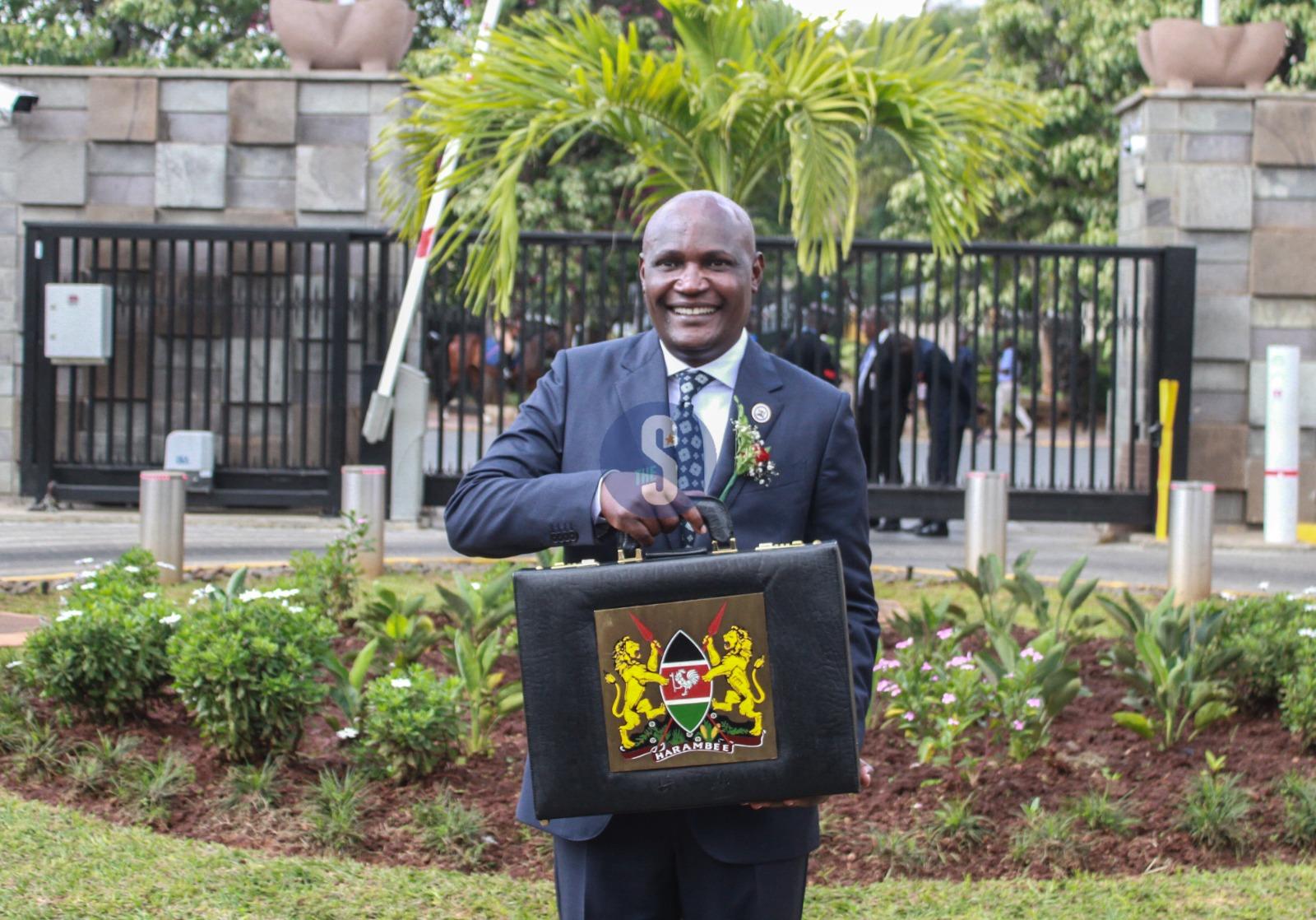
 Education CS John Mbadi holds the briefcase containing the 2025-26 budget estimates ahead of presentation before the National Assembly, June 12, 2025. /ENOS TECHE
Kenya’s education sector has once again claimed the largest share of the national budget, but a closer look reveals winners and losers within its Sh702.7 billion allocation for the 2025–26 financial year.
The sector received an increase of Sh44.5 billion from last year’s Sh656.6 billion, continuing a steady upward trend.
Though education’s share of the budget remains high at 28 per cent of Sh4.29 trillion, internal reallocations reflect emerging government priorities, favouring teacher staffing and student financing over infrastructure and classroom support.
Gainers
The Teachers Service Commission (TSC) emerged as the biggest beneficiary, with its budget rising to Sh387.2 billion — a Sh29 billion increase from Sh358.2 billion last year.
This includes Sh7.2 billion for the recruitment of intern teachers and Sh980 million for the training of tutors on the Competency-Based Education.
Helb also received a significant boost, up from Sh35.9 billion to Sh41.5 billion, to support loans for university and TVET students.
The budget for the Kenya Primary Education Equity in Learning Programme grew by Sh2.2 billion to Sh13.3 billion, while the Secondary School Quality Improvement Project rose from Sh1.5 billion to Sh2.3 billion.
Last year, Treasury allocated Sh5 billion as exam waiver fees, but Mbadi proposed the allocation of Sh5.9 billion for the administration of national examinations in the forthcoming fiscal year.
However, the amount could only be for invigilation as the CS hinted at a shift to cost-sharing in future, citing a projected Sh970 billion revenue shortfall.
"While we are cognizant that examinations are to be conducted as scheduled this year, there's need to undertake a critical evaluation of the costing of examination and asses the sustainability of the programme in view of prevailing fiscal constraints," he said.
"To this end, the National Treasury is in consultations with the Ministry of Education on how best to achieve this at a minimal cost possible, including evaluating cost-sharing mechanisms."
Whereas there was no mention of allocation to the school feeding last year, the programme received Sh3 billion in this year's budget.
Losers
Despite the overall increase, key basic education programmes saw reduced allocations.
Free primary education dropped from Sh9.1 billion to Sh7 billion, while capitation for Junior Secondary Schools fell from Sh30.7 billion to Sh28.9 billion.
Free day secondary education also saw a cut, from Sh61.9 billion to Sh51.9 billion — a Sh10 billion drop.
Spending on infrastructure development for primary and secondary schools was nearly halved, down from Sh3.2 billion to Sh1.7 billion.
Similarly, the allocation for TVET infrastructure declined from Sh2.3 billion to Sh1.4 billion.
The Research, Science and Technology Innovation budget was also trimmed from Sh1.1 billion to Sh993 million, and the construction of integrated learning resource centres — allocated Sh1.8 billion last year — was not mentioned in this year's plan.
The internship programme also suffered a blow, with its budget slashed by half from Sh13.4 billion in the 2024-25 budget to Sh7.2 billion.
The budget for retooling CBE teachers was also slashed from Sh1.3 billion last year to Sh980 million.
In the 2023-24 financial year, TVET institutions got Sh30.7 billion.
In this year’s budget, Sh4 billion was allocated for the TVETs and Entrepreneurship project.
Allocation for TVET scholarships was allocated Sh7.7 billion as was last year.
Another Sh1.4 billion will go towards the construction and equipping of TVET institutions and vocational training centres.
Last year, the amount was Sh2.3 billion.
Additionally, no funds were allocated for the Digital Literacy Programme or ICT integration in schools, which had received Sh360 million in the previous budget.