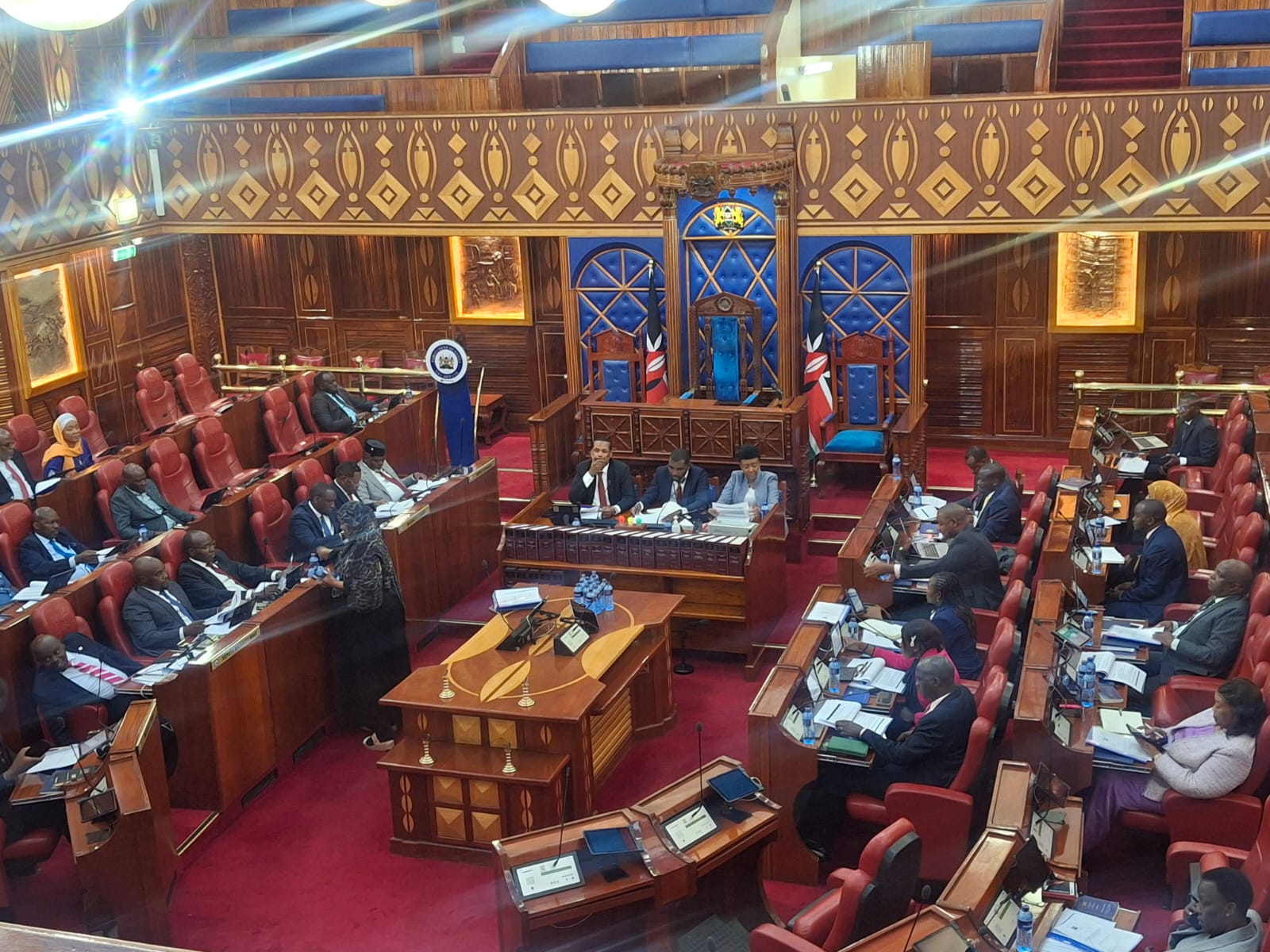
The National Assembly’s Justice and Legal Affairs Committee has overturned a Senate decision and reinstated a provision that criminalises holding elections in ungazetted polling stations.
The original Election Offences (Amendment) Bill had proposed making it illegal for the IEBC to conduct votes in polling stations not officially published in the Kenya Gazette and publicised.
It also disallowed the declaration of election results outside the polling station, as well as the alteration of the results.
The bill was recommended by the National Dialogue Committee, which pushed for tighter electoral integrity measures.
However, the Senate scrapped the clause restricting elections to a polling station before passing the Bill to the National Assembly.
JLAC has now reversed that deletion, arguing that ungazetted polling stations could open the door to electoral fraud.
The House team cited Regulation 7 of the Elections (General) Regulations, which mandates the IEBC to publicly declare all polling stations in advance.
Without this provision, the Committee warned, elections could be manipulated through unauthorised voting locations.
“There is a need to create an offence against IEBC staff to deter the conduct of an election in polling stations which are not in the gazette notice issued for that purpose,” the Tharaka MP Gitonga Murugara-led committee recommends in its report to the House.
“In addition, the offence of destroying or concealing election material by a member or staff of IEBC may be reintroduced separately from the offence of interfering with or altering results of an election,” the report reads in part.
IEBC officers would thus be restricted to polling stations as published in electronic, print media or any other accessible medium.
Those who intentionally interfere with or alter declared results or knowingly cause another person to interfere with or alter declared results would also be in for it.
Poll offences generally attract a fine of Sh1 million or three years in jail and a five-year ban from elective or nominated seats for those convicted.
Should the National Assembly plenary agree with the committee, the decision would be communicated to the Senate, which is to vote on the same. If they agree, the legislation is sent to the President for assent, or subject to mediation if otherwise.
Civil society groups, including Kituo cha Sheria, had backed the clause, while the IEBC itself opposed some amendments, citing potential operational challenges.
IEBC proposed that the changes be dropped, arguing that the "offences as amended are overly prescriptive and that external factors outside the control of the commission may occasion delay in declaration of election results”.
The constitution requires the IEBC to declare presidential election results within seven days after voting concludes.
JLAC has dropped amendments which would have enhanced punishments for the use of technology to compromise an election.
The House team held that the legislative proposal, in its suggested format after their review, would suffice.
It will strengthen the legal framework governing election offences by expanding the list of offences which have undermined public trust in the electoral systems and compromised the credibility of election outcomes, the committee observed.
As was the case in previous election management bodies, IEBC has been fighting allegations of voter manipulation. The matter played out in court petitions filed by ODM leader Raila Odinga after he disputed the 2013, 2017 and 2022 presidential elections result.
Among the contentions in the cases has been whether the results as declared at the polling station are final, or whether commissioners or IEBC officers have room to alter the results.