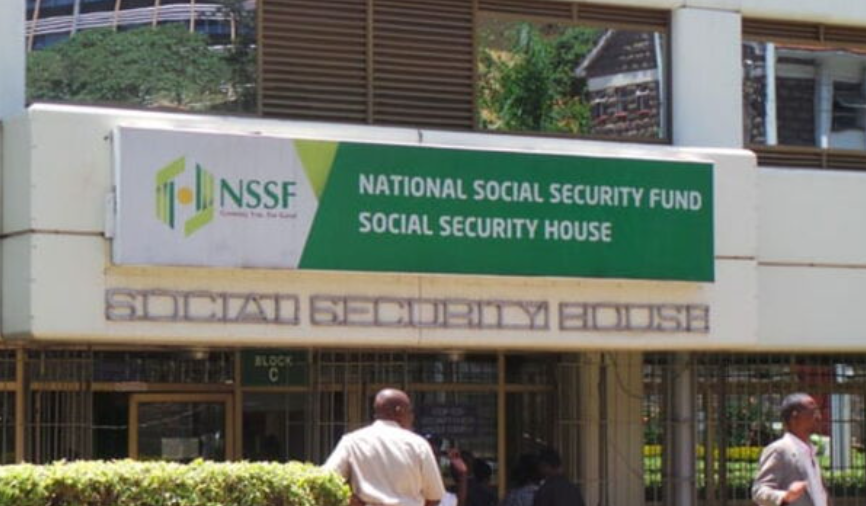
Recently, former Deputy President Rigathi Gachagua clashed with Cotu Secretary General Francis Atwoli over the use of NSSF funds to finance the government’s infrastructural development projects.
Gachagua questioned Atwoli’s silence on the matter and called on the Cotu boss to stand firm and defend billions of Kenyan workers’ savings, warning that workers might resort to withdrawing their contributions.
Atwoli then accused Gachagua of allegedly inciting Kenyans to withdraw their savings from the fund, saying such a move amounted to economic sabotage.
“Atwoli has been quiet for a long time, but now we can see he can see clearly. At NSSF, where he serves as one of the trustees, workers’ savings have been diverted to build the Bomas of Kenya and the Rironi–Mau Summit Road,” Gachagua claimed.
“This means retirees may not be able to access their money when they need it. We want Atwoli to speak about this NSSF money just as he has talked about the housing levy.”
In response, Atwoli issued a scathing statement on Saturday, June 8, 2025, condemning Gachagua for what he termed as spreading misinformation and misleading Kenyan workers.
“Mr. Gachagua’s claim that NSSF funds are being misappropriated is not only a distortion of facts but also a dangerous attempt to politicise a critical institution that safeguards the future of millions of Kenyan workers,” Atwoli said.
COTU warned that Gachagua’s suggestion for workers to withdraw their NSSF contributions amounted to economic sabotage and called on the government to consider taking legal action against him.
“It is reckless and outrightly malicious for Mr. Gachagua to encourage Kenyans to destabilise the NSSF. Such utterances border on economic sabotage,” Atwoli stated.
The exchange triggered a national debate on Kenyan workers’ savings, with many people asking how one can access NSSF savings before reaching retirement age.
NSSF savings are governed by the National Social Security Fund (NSSF) Act, 2013, and accompanying regulations gazetted by the Cabinet Secretary for Labour.
Here is how one can withdraw NSSF benefits:
The law provides that an individual must meet specific conditions before withdrawing NSSF benefits, including leaving employment, immigration, or permanent incapacitation.
Those eligible can receive the accumulated amounts based on their contributions to the fund and interest earned over time.
There are five categories of benefit withdrawals offered by the NSSF: retirement age benefit, withdrawal benefit, invalidity benefit, emigration benefit, and survivor’s benefit.
Age retirement benefit
This is arguably the most common benefit. You become eligible upon reaching 55 years of age or upon retiring from regular employment.
To apply, visit the nearest NSSF office with a certified copy of your retirement letter, certificate of service, or termination letter. You will also need your NSSF membership card, national ID/passport/alien ID, and bank details for Electronic Fund Transfers (EFT).
You will be issued the necessary application forms and guided through the process.
Withdrawal benefit
If you retire at 50 years old, you may apply for a withdrawal benefit.
The required documents are the same: a certified copy of your retirement letter or termination letter, your NSSF card, identification documents, and bank details.
You will receive application forms and instructions at the NSSF office.
Invalidity benefit
This applies to members certified as permanently incapable of working due to physical or mental disability.
It also applies to those aged 50 and above with a partial permanent incapacity that prevents them from working.
Applicants must provide standard identification documents along with a medical or treatment report from the hospital attended.
After submitting the application, the Fund’s appointed doctor will examine the applicant to confirm the invalidity.
This benefit may also apply where the Managing Trustee is satisfied that the applicant is of unsound mind or otherwise unfit to manage their affairs.
Emigration benefit
This benefit applies to Kenyans emigrating to a country outside the East African Community (EAC) with no intention of returning to reside in Kenya.
Applicants must submit the usual identification documents along with proof of emigration, such as a visa, sworn affidavit declaring permanent immigration (for Kenyan citizens), and a travel ticket.
Once verified, they will receive the necessary application forms and guidance.
Survivor’s Benefit
This benefit is paid to the dependents or relatives of a deceased NSSF member.
Priority is given to the spouse, followed by the children. If there is no spouse or children, the deceased’s parents may claim the benefit, followed by siblings.
If both parents are deceased and the children are minors, the guardian of the children may apply.
Finally, a person holding letters of administration may claim the benefit once all dependents are accounted for.