The Egyptian regime—dominated by a militarised elite entrenched in a tight alliance with crony capitalism—has long regarded Sudan not as a sovereign neighbour but as a subordinate backyard. This imperial mindset, rooted in colonial legacies and geopolitical anxiety, continues to define Cairo’s posture toward Sudan. As Sudan grapples with war and fragmentation, Egypt’s role in deepening the crisis has grown more visible and troubling.
Since the outbreak of the Sudanese conflict in April 2023, Egypt has abandoned any pretence of neutrality. Instead of playing the part of a regional peacemaker, Cairo has actively supported the Sudanese Armed Forces and remnants of the former Islamist regime. Despite public claims of promoting "stability," Egypt’s real actions suggest a covert, self-interested strategy.
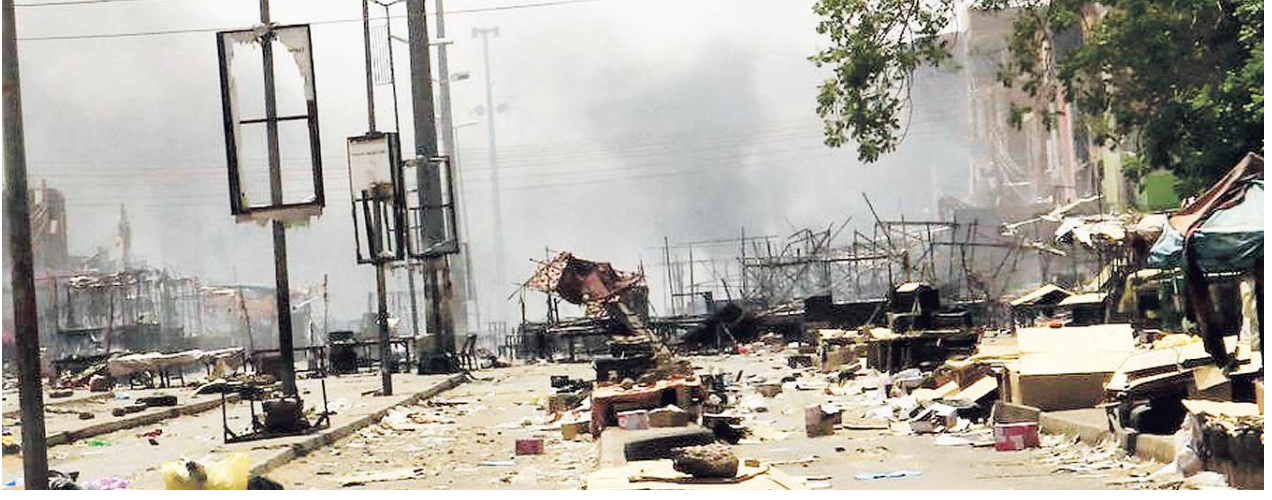
Investigations by sources such as Africa Intelligence (2023) and Middle East Eye (2024) document Egypt’s provision of military and logistical aid to SAF, including permission for arms shipments through its airspace and hosting strategic consultations with Sudanese generals. In some cases, Egypt reportedly conducted direct airstrikes on targets in Khartoum, White Nile State and other conflict zones—clear violations of Sudanese sovereignty and international law. These strikes reportedly destroyed key infrastructure, including bridges vital to civilian mobility and humanitarian access.
Economically, Cairo has exploited the chaos. According to Sudan’s Emergency Economic Committee (2024), more than 15 tonnes of gold were smuggled into Egypt during the early phases of the war—gold crucial to Sudan’s collapsed economy. These illegal transactions occur via cross-border smuggling routes protected by formal and informal networks, often with the involvement of state actors.
Meanwhile, Egypt’s access to Sudanese agricultural products—including peanuts, gum arabic, sesame and livestock—has deepened. These are bought cheaply in wartime conditions and re-exported as Egyptian products, boosting Cairo’s trade profile at Sudan’s expense. This wartime profiteering underscores the predatory nature of Egypt’s engagement.
Worse still, Sudan’s financial system has been undermined through counterfeit currency. Reports have confirmed the circulation of fake 1,000-pound Sudanese notes originating from Egypt. This deliberate sabotage has further accelerated inflation and eroded trust in the national currency.
But Egypt’s fear of Sudan is not primarily about economics or gold. It is existential and political. The true threat to the Egyptian regime lies in the possibility of a successful, democratic Sudan—one built on civilian leadership, federalism, inclusion, and equitable development. Such a Sudan would present a radical contrast to Egypt’s own authoritarian model and might serve as inspiration for Egyptians demanding reform.
To pre-empt this, Egypt seeks to prevent Sudan’s transformation. It fears an independent Sudanese foreign policy, especially around Nile water rights. Egypt’s control over Nile discourse—a policy doctrine going back decades—rests on denying upstream nations, including Sudan, their equitable share of Nile waters. A Sudanese government demanding renegotiation of these allocations threatens Egypt’s national security narrative.
Cairo’s dominance over Sudanese politics is not new. Since Sudan’s independence in 1956, Egypt has supported every authoritarian regime in Khartoum—from General Abboud and Jaafar Nimeiry to Omar al-Bashir and now General Abdel Fattah al-Burhan. These alliances weren’t forged out of solidarity, but as strategies to block democratic movements in Sudan that could embolden similar shifts in Egypt.
The fragility of this relationship was exposed in October last year when the Rapid Support Forces blocked exports of peanuts, gum arabic, sesame, livestock and gold from regions under its control. While the blockade’s geographic impact was limited, it symbolised a serious rupture in Egypt’s assumed access to Sudanese resources—a challenge to the extractive status quo.
Sudan’s vulnerability is compounded by the complicity of segments of its own elite. For decades, military and Islamist factions in Khartoum enabled Egyptian exploitation in exchange for external legitimacy, investment, or political refuge. This Faustian bargain not only enriched a few but also entrenched dependency and fostered a distorted narrative of Egypt as a “big brother.”
This narrative must be dismantled. Sudan is not a junior partner in an Arab nationalist vision. It is a sovereign nation: African by geography, Nubian in heritage, Black Hamite in blood, Arabic in language and spiritually diverse. Its identity cannot be confined by Cairo’s shadow.
The Sudanese people must confront the illusions of subordination: illusions of Arab superiority, of Egyptian protection and of inevitable dependency. Sudan’s renewal will require a bold political vision rooted in its pluralism, its struggles, and its pan-African future.
To rise, Sudan must assert its sovereignty—not as rhetoric but in policy. It must reject the role of raw-material exporter to other economies. It must fight for equity in Nile water allocations. It must forge new alliances across Africa and the Global South rather than clinging to outdated hierarchies.
Ultimately, Sudan’s greatest enemy is not a neighbouring regime—it is internalised fear, indifference and political paralysis. The future cannot be outsourced. It must be claimed through national unity, institutional rebuilding and a break from the habits of subservience.
Time is short, but the cause is just. Sudan must rise—not to please Cairo or any foreign capital, but to reclaim its dignity and secure a place in the community of free and equal nations.
The writer is a Sudanese-American-Italian scholar, published author and a member of the Sudanese Founding Alliance