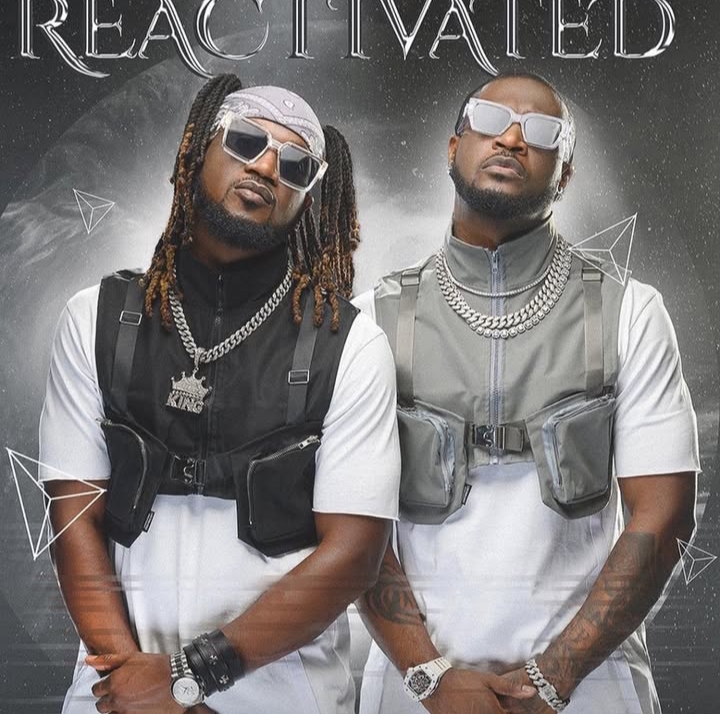
P-Square member Paul Okoye, also known as Rude Boy, has narrated how the renowned Nigerian band rose to fame from its humble origins.
Rude Boy told Classic 105 FM's Maina Kageni that after years of singing hymns in church, he and his twin brother Peter decided to compete in a music competition, a decision that propelled them to a global gem.
Although originally from Anambra, Peter and Paul were born in Jos on November 18, 1981, to pastor Josephine Okoye and businessman Pa Moses Okoye.
Along with their siblings Jude, Mary, Tony, Lilian, and Ifeanyi Okoye, Peter and Paul were raised in a devout Catholic family and upheld strong Christian principles.
Rude Boy said he and Peter honed their musical skills singing hymns in a Catholic church in Jos, Nigeria.
This early foundation, imbued with spiritual fervor, would later inform their unique blend of soulful vocals and infectious beats.
They formed an A cappella quartet while they were in school, which later evolved into a pop-oriented dance crew that came up with choreographed routines.
They quickly gained widespread recognition in the city of Jos thanks to their artistic ability and precise dance routine, which they showcased at school events and other gatherings.
Their musical journey wasn't a straight path, however. Rude Boy candidly recounts early struggles, performing jingles for meager payment (or sometimes just a Coke!), navigating the cutthroat music scene, and even facing initial reluctance to perform in clubs.
"I actually began by performing jingles for films in Nigeria. I once composed the music for films in Nigeria. Mama Sunday was the name of one I could recall. I think I can recall about four or five," he remarked.
"Money was not involved. I was just trying to hustle. They were not making any payments. Actually, you have to be the one searching for them during any filming. You must seek them out, approach them, and invite them to listen to your music.
"They would say, okay, nice, we'll put in a movie and let's see how it goes bro. I do not recall anyone making a payment. Perhaps I should just mention that they offered transportation and possibly a bottle of Coke," he said.
While enrolled in Jos's St. Murumba College, a Catholic institution, they developed an interest in the performing arts. Inspired by artists such as MC Hammer, Michael Jackson, and Bobby Brown, they started dancing and singing as part of the school's music and drama club.
"I discovered I had musical ability while I was in church. I used to perform at my mother's church. Even though I was playing music in the church, I was not thinking about it because I kept asking myself, "Do I belong here?"
Rude Boy initially struggled in the music industry, earning little and facing significant challenges before gaining recognition.
An encounter with a budding artiste ushered him into the glitzy world of showbiz, far different from the sobre surroundings of a church building which he was accustomed to.
"Then I was taken in by this friend of mine. He is also a musician, but I will refer to him as a failed musician. Then he was always playing in a club and I refused to go to the club because my spirit wasn't there.
"When we talk about the club, it is a club that has to do with prostitution. You know that kind of club where they drink. So one day, he just told me just go there, just don't worry about what's around you, just go there ,you'll feel something. And guess what, I went there and performed with him and my whole mindset changed."
Inspired by the recognition he received from ebullient partygoers, Rude Boy immersed himself more into live performance, bellowing out tunes in dinghy clubs.
"I was like,"Okay yeah I'm in the church but the love I get here is different for the love I get in church."
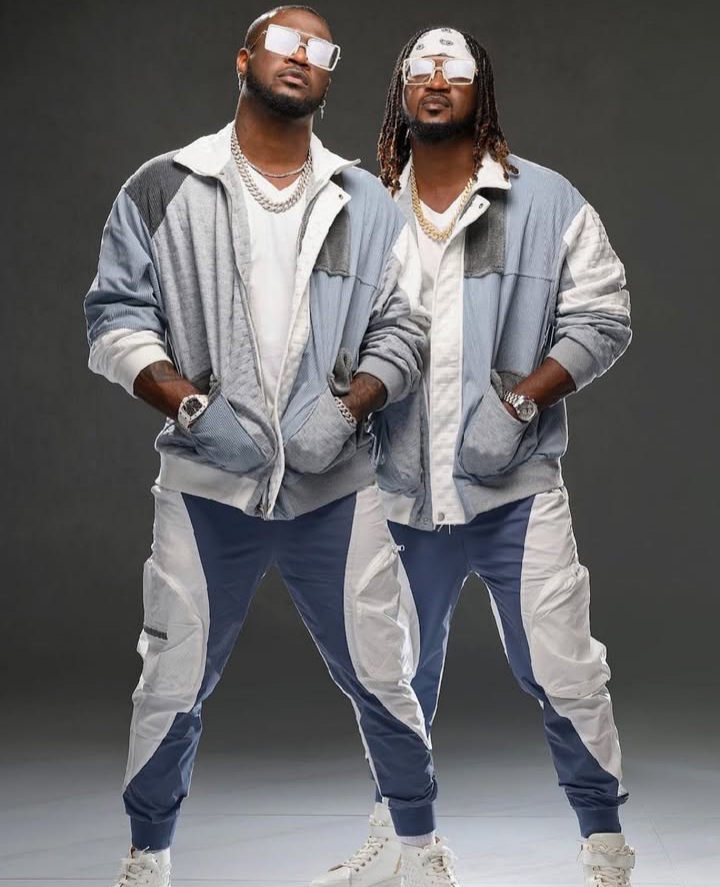
"Yes, because the love in the church is spiritual, you know, everybody is singing, everybody is happy, everybody is singing along. But in that club, it was like even if somebody just came and just look at me and just pay a tiny sum of money, l felt it like this person appreciated what I'm doing anytime.
"So from there, I started hanging out with this guy, hanging out with him in the studio. I started recording then the guy went to a particular music competition and I joined him and that was when I became famous."
This period of hustle, however, proved crucial, shaping their resilience and refining their craft. A pivotal moment arrived with a local music competition.
"That was back then in the Platue state in Nigeria. I was not even in university. I was still in secondary school when I started going for those competitions. Then at the grand finale, we lost and took second position," he said.
Despite losing initially, this setback became a springboard. The brothers recognized their weaknesses, integrating dance into their performances, a move inspired by icons like Michael Jackson.
Their significant breakthrough came when they used the heart-wrenching experience to refine their act before achieving success in subsequent competitions.
"I began writing songs for my brother and me when we were in secondary school. We got together because my brother was a popular dancer in school. I wrote three or four songs when we formed the P Square thing.
"As the competition drew near, someone suggested that my brother and I team up because, although I was good at singing, he was a very good dancer.
In 2001, they won a talent contest, leading to a record deal with Timbuk2 Label, and the release of their debut album "Last Niter" in 2003.
Their musical style, which fuses genres like R&B, Hip Hop, and Afropop, helped them gain rapid fame and success, including international performances. A consistent flow of revenue began to pour in.
"I will be honest with you. . I handled my first sizable sum of money when we performed internationally for the first time at a stadium in Sierre Leon. We received $2,500 in payment. That was insane. They would give us as much as $2–300 back home in Nigeria."
Their sophomore album, “Get Squared” (2005), and subsequent albums like “Gameover” (2007) solidified their status as Afropop stars, with “Gameover” selling over 8 million copies globally.
They have received numerous prestigious awards, including the “Artistes of the Decade” at the MTV Africa Music Awards in 2015, and have been featured in Forbes’ lists of impactful African celebrities.
P-Square were among the first African acts to gain significant traction in international markets, evidenced by their accolades in Europe and collaborations with artists like Akon and Rick Ross.
In 2017, the duo split to pursue solo careers but maintained individual commercial success under the names Mr. P (Peter) and Rudeboy (Paul).
After a prolonged hiatus, P-Square reunited in 2021 and hinted at a new album and global tour, reconnecting with their fan base.
They are credited with reshaping the African music landscape and setting benchmarks for future artists, influencing a generation of musicians across Africa.
P-Square’s journey has not been without challenges, including disputes regarding their collaboration dynamics, leading to their split and subsequent reconciliation.
Their contributions have left a lasting impact on both the music industry and popular culture in Africa and beyond, positioning them as legends in the entertainment world.
They have composed the music for several movies, including Evas River, Mama Sunday, Tobi, and Moment of Bitterness. Despite their parents' desire for them to pursue an academic career, Peter and Paul stayed dedicated to their musical endeavors.
They later founded their own label and released the following albums: Get Squared, Gameover, Danger, Invasion and Double Trouble."Gameover" album which explored multiple societal themes such as Love, Regret, Assurance and Political Criticism, reportedly sold over 8 Million copies worldwide.