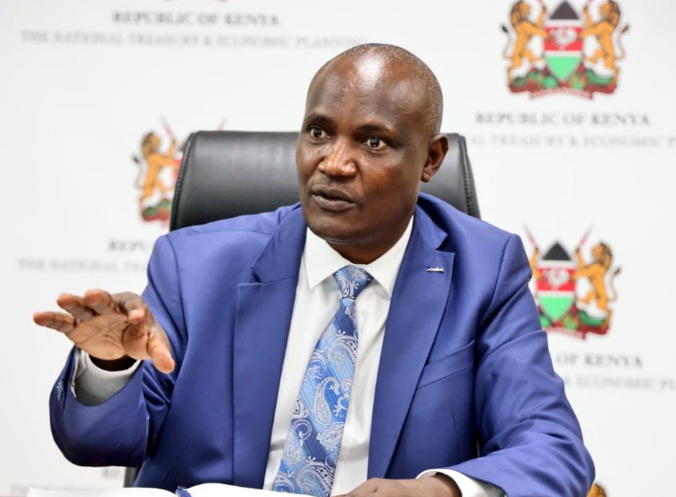
Treasury Cabinet Secretary John Mbadi has announced that the government will begin automating the pension system from July, in a major reform aimed at eliminating delays and inefficiencies in pension processing.
Speaking on Wednesday when he appeared in the Senate plenary, Mbadi said the automation will replace paper-based systems with a digital platform that enables faster approvals and self-service access for pensioners.
He added that this enhances security and accuracy in processing payments.
“Once the pension system is automated, many of the challenges we have been facing will be resolved. We are set to onboard this system starting in July,” Mbadi stated.
Mbadi was responding to a question by Majority Leader Aaron Cheruiyot, who had raised concerns about the lengthy delays retirees face in accessing their pension.
“I have received messages from constituents asking why retirees spend 2–3 years chasing pension files at Bima House. While I see the Treasury is introducing blockchain and biometric systems, the critical question is: When?” Cheruiyot asked.
Mbadi acknowledged the concern, noting that the delays stem not only from system limitations but also from bureaucratic inefficiencies within ministries and agencies.
“Files get lost, processing is slow, and unfortunately, there have even been cases of corruption. This is precisely why automation is necessary,” he added.
He, however, outlined several initiatives the Treasury has rolled out as part of the broader pension reforms.
These include the implementation of strict verification protocols to prevent fraudulent or unauthorised payments and collaboration with commercial banks to monitor dormant pension accounts and flag suspicious activity.
According to the CS, Treasury is also integrating its systems with the national civil registry to enable real-time biometric identification and detect deceased pensioners to curb payments to ineligible recipients.
Apart from this, he stated, they are decentralising pension services through Huduma Centres, enhancing nationwide access as well as collaborating with investigative agencies to address corruption.
While addressing a separate question from Kisumu Senator Tom Ojienda on persistent funding carryovers, Mbadi noted that they are prioritising pension payments in the national budget as a first-charge obligation.
Ojienda had sought clarity on how the government intends to ensure consistent and adequate funding for pension obligations, which have historically faced shortfalls and cash flow constraints.
Mbadi revealed that the Treasury carried forward Sh23 billion in unpaid pension obligations from the 2023/24 financial year.
“I am pleased to report that between April 30 and May 21, we disbursed Sh17.4 billion to pensioners. We now have a balance of Sh16.9 billion, which we are working to clear,” he said.
“We are determined to do much better this year.”