Kenya has changed its stance on the Russia-Ukraine war, now taking a neutral position, and on Western Sahara in its revised foreign policy.
Through the Sessional Paper No. 1 2025 on the reviewed Kenya Foreign Policy, the Ministry of Foreign and Diaspora Affairs says Kenya aligns itself with the positions of the G77 (a bloc of developing nations in the UN) and the African Group, which tend to be neutral.
“Kenya advocates for the pacific resolution of conflict and the equitable applicability of international doctrines, norms and customs, as well as the respect for fundamental freedoms guaranteed by sovereignty and territorial integrity,” the sessional paper says.
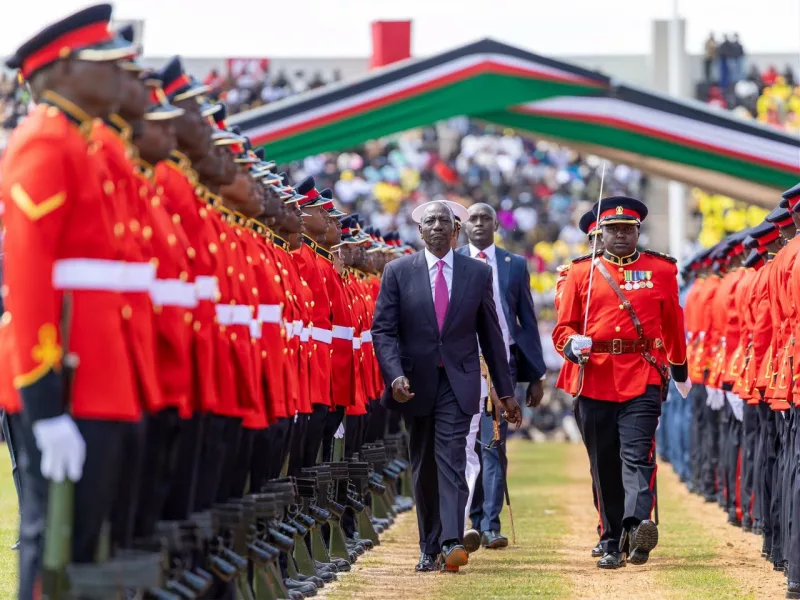
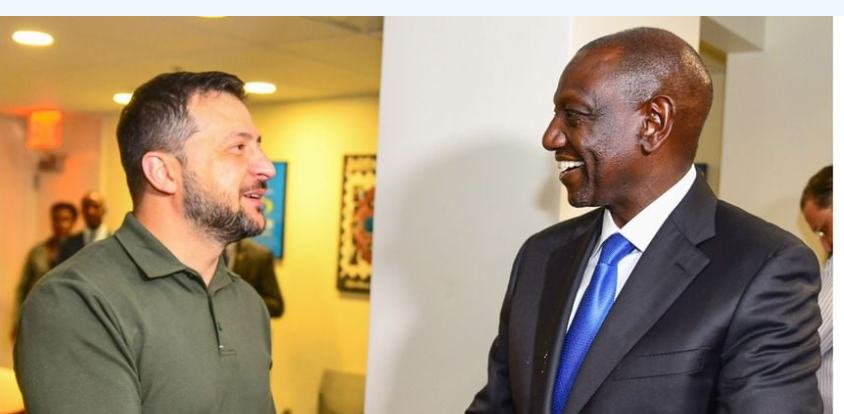
President William Ruto has in the past appeared to support Ukraine, adopting a position widely held by the US-led West.
Last June, Ruto joined Western leaders in condemning Russia for invading Ukraine at the inaugural Summit on Peace in Ukraine in Bürgenstock, Switzerland. The President termed the aggression as unlawful, unjust and against international law.
Kenya is also the only African member of the Ukraine Defence Contact Group, an alliance of more than 50 states that gives military aid to Ukraine and coordinates meetings to assess the Ukraine-Russian conflict.
In the administration of President Uhuru Kenyatta, Kenya also took a strong position at the UN Security Council, condemning Russia for the invasion.
The stance on the Russia-Ukraine conflict is part of the strategic country positions on sensitive global issues the ministry has set in the revised Foreign Policy document.
Kenya last week officially backed Morocco's autonomy plan over Western Sahara, which has been pushing for sovereignty. This was during Prime Cabinet Secretary Musalia Mudavadi’s visit to Rabat.
Kenya termed the move as "the only credible and realistic solution" and "the only sustainable approach to resolving the Sahara issue”.
The revised policy explains this shift as “adapting to emerging and evolving issues, such as Morocco’s readmission to the African Union and Kenya’s position on the Sahrawi Republic”.
On the Israel-Palestine crisis, the policy says Kenya aligns itself to the AU position, which pushes for a two-state solution through negotiations founded on relevant UN resolutions. The ministry further says Kenya supports homegrown solutions based on sociocultural tolerance in the Middle East region’s conflict system.
Kenya has also entrenched the One China Policy in the revised document, saying Nairobi enjoys cordial bilateral relations with Beijing and espouses the policy.
As at May 2024, the multi-Island territory of Taiwan was recognised by 11 out of 193 members of the UN, including only one African country, the policy notes.
“Nominally, in practice, to be considered a country in contemporary global arena, a territory must be diplomatically recognised by two-thirds of the 193 members states of the UN,” the policy says.
“Including all five permanent members of the UN Security Council and at least four of the 10 non-permanent members of the UNSC.”
The sessional paper adds that Kenya’s country positions will align with the AU and UN collective positions and decisions, and Nairobi’s national interest to maintain mutually beneficial bilateral relations with as many states as possible.
“The country positions should be guided by the spirit and letter of the Foreign Policy principles, namely to promote resolution of conflicts by peaceful means, ensure good neighbourliness and non-interference, ensure peaceful coexistence with other nations, promotion of Pan-Africanism, adhere to non-alignment, and practice reciprocity.”
The policy comes at a time Kenya has been caught up in rather embarrassing diplomatic gaffes on certain foreign policy decisions, departing from long-held positions.
For, instance, President Ruto in September 2022 withdrew Kenya’s recognition of Western Sahara in a tweet soon after assuming power.
Although Ruto had indicated a different stance on the issue as Deputy President, his sudden decision and later retraction pointed to a non-informed move. The tweet was deleted.
In another instance, Kenya was involved in yet another diplomatic firefighting with Somalia after Nairobi invited the president of Somaliland, a breakaway region of Somalia, for a visit.
As soon as President Abdirahman Abdillahi arrived for what his office called a “strategic diplomatic visit”, Kenya’s Foreign Affairs ministry fired a statement, clarifying the nature of the trip and restating its one-Somalia policy.
Somaliland remains a hot diplomatic potato as, while the autonomous region in northern Somalia broke away and declared independence from Somalia in 1991, Mogadishu maintains its claim over it.
Kenya has also recognised Kosovo as a republic, to the chagrin of Serbia, which considers the breakaway region as its own territory.
Generally, the outcomes of the new policy country positions are expected to include authoritative articulation of country’s position by the President and other policymakers, and defending the country’s irreducible minimum such as sovereignty and territorial integrity.
Other outcomes are robust response to contending issues at bilateral or multilateral level, and adapting to emerging and evolving issues.
Additionally, the country positions will also help in balancing Kenya’s interests vis-a-vis other regional and global players, and ensuring a consistent country position articulated by key interlocutors at both bilateral and multilateral levels.
It will also advance strategic national interests, promote solutions to challenges Kenya may face, and align national interests to those of regional groups and other like-minded partners at the global level.