Every year on June 3, the world observes World Clubfoot Day.
This day is dedicated to raising awareness about clubfoot, a common birth condition, and celebrating the children and families whose lives have been transformed by treatment.
The date was chosen to commemorate the birthdate of Dr. Ignacio Ponseti (1914-2009), the developer of the Ponseti Method to treat clubfoot.
What is Clubfoot?
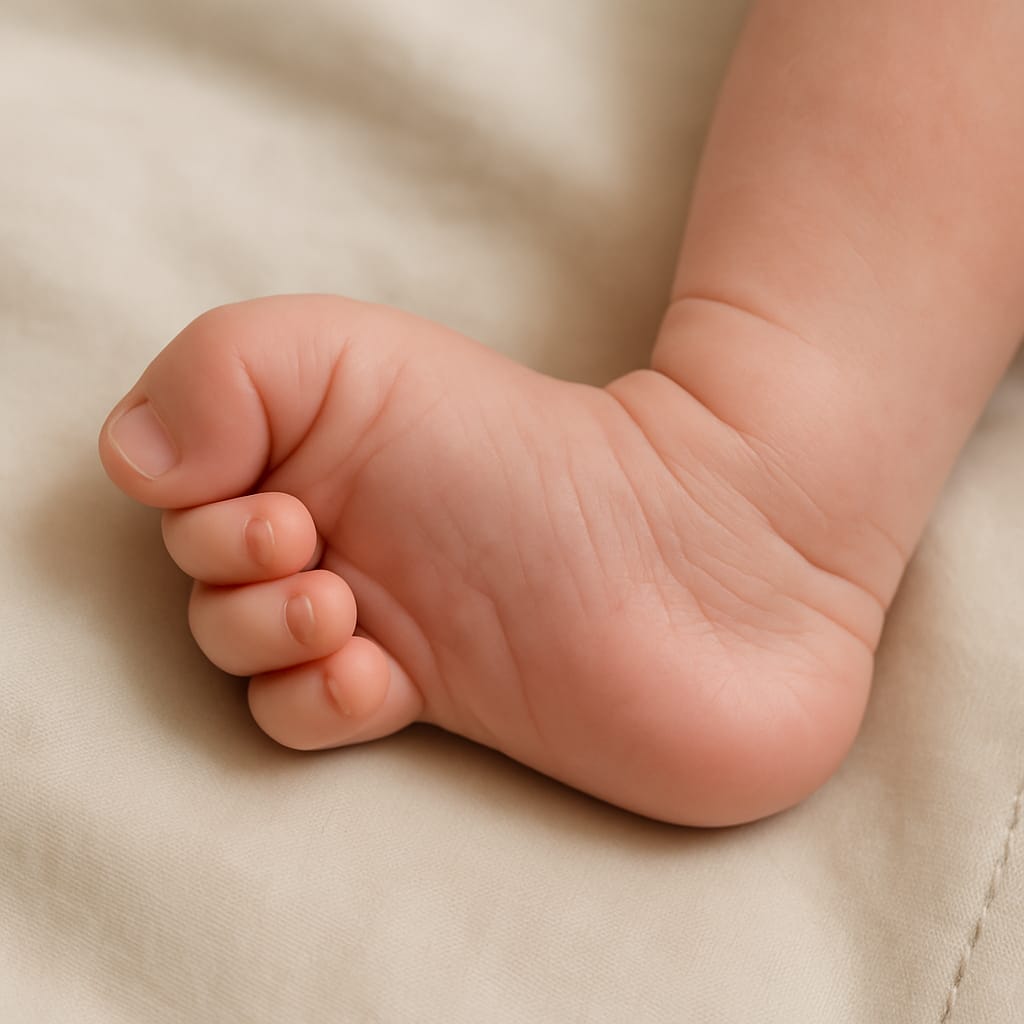
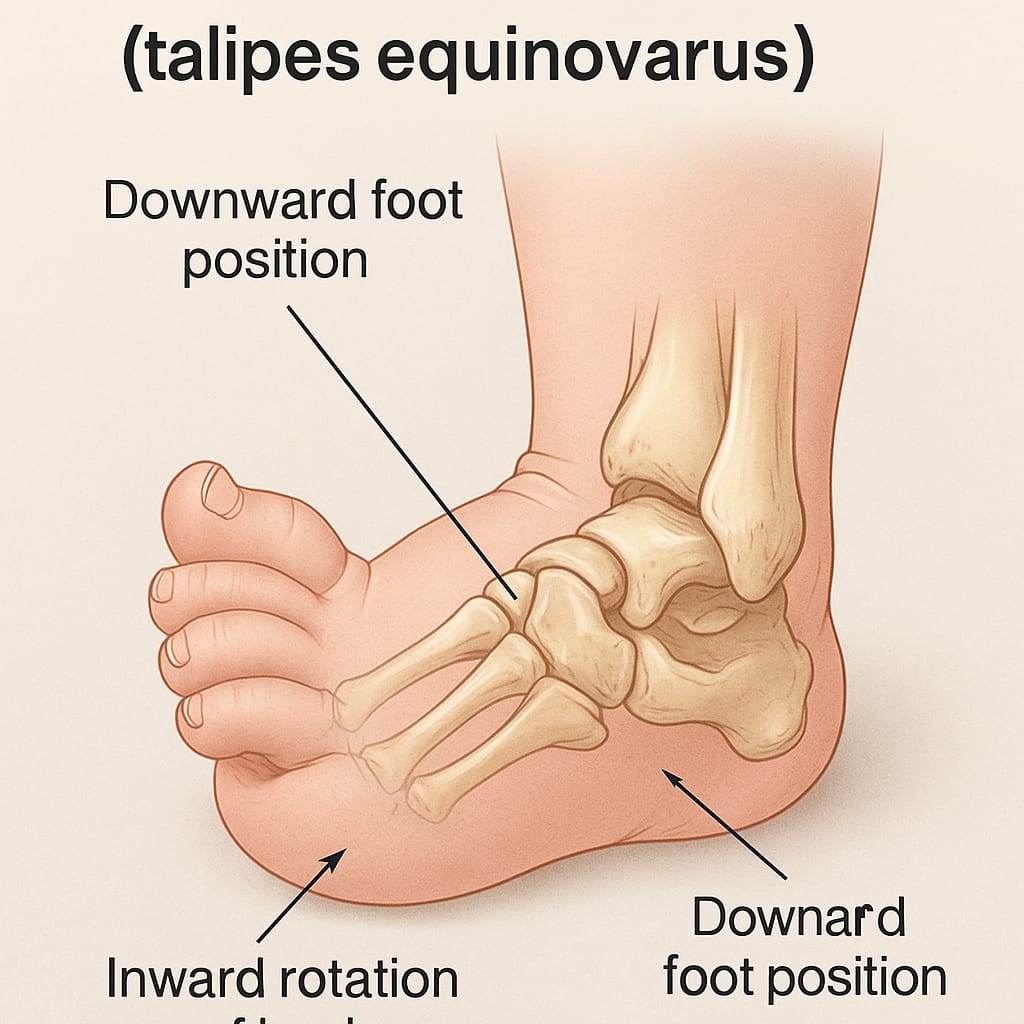
Clubfoot, also known as congenital talipes equinovarus (CTEV), is a birth defect where one or both feet are turned inward and downward.
The foot may appear twisted, with the sole facing sideways or even upwards. This happens because the tendons connecting muscles to bones in the leg and foot are shorter than normal.
Clubfoot is the most common musculoskeletal birth deformity, affecting 200,000 newborn children each year, 80 per cent in developing countries.
There are also hundreds of thousands of children and young adults who are living with this debilitating condition worldwide.
The Ponseti Method is nearly 100 per cent effective when properly applied by a trained health care provider and is considered the "gold standard" treatment, leading to a normal, productive life.
If clubfoot is left untreated, it can lead to permanent physical disability, making walking difficult and causing long-term social and economic challenges.
Dr. Jose Morcuende, CEO and Medical Director of Ponseti International, says this day is an important step in furthering global awareness that clubfoot is a treatable deformity.
“By designating June 3 as World Clubfoot Day, not only do we celebrate the life and contributions of Dr. Ponseti, but we help further his belief that every child born with clubfoot is entitled to treatment using this low-cost, non-surgical approach.”
Symptoms
According to the Mayo Clinic, if a child has clubfoot, here's what it might look like:
- The top of the foot is usually pointed in and down. This raises the arch and turns the heel inward.
- The foot may be turned so severely that it looks like it is upside down.
- The foot or big toe may be slightly shorter than the other foot.
- The calf muscles in the leg with clubfoot are usually smaller.
At birth, clubfoot doesn't cause any discomfort or pain.
What causes the club foot
According to the Mayo Clinic, the cause of clubfoot is not known, but it may be due to genetics and environmental factors.
Is clubfoot treatable?
Clubfoot is highly treatable, especially when intervention begins early, ideally within the first few weeks after birth.
Global prevalence
The global prevalence of clubfoot is estimated at approximately 1 in every 800 to 1,000 live births.
A striking disparity exists in the global burden of clubfoot: 80% to 90% of all cases occur in low- and middle-income countries (LMICs).
In Kenya, approximately 1,653 to close to 2,000 infants are born with clubfoot annually.
Eastern Africa alone accounts for an estimated 10% of global clubfoot cases, with prevalence rates around 1.11 per 1000 live births.
Specific countries in the region also report significant numbers, such as Uganda with 1.2 per 1000 live births and Malawi with 2 per 1000 live births.
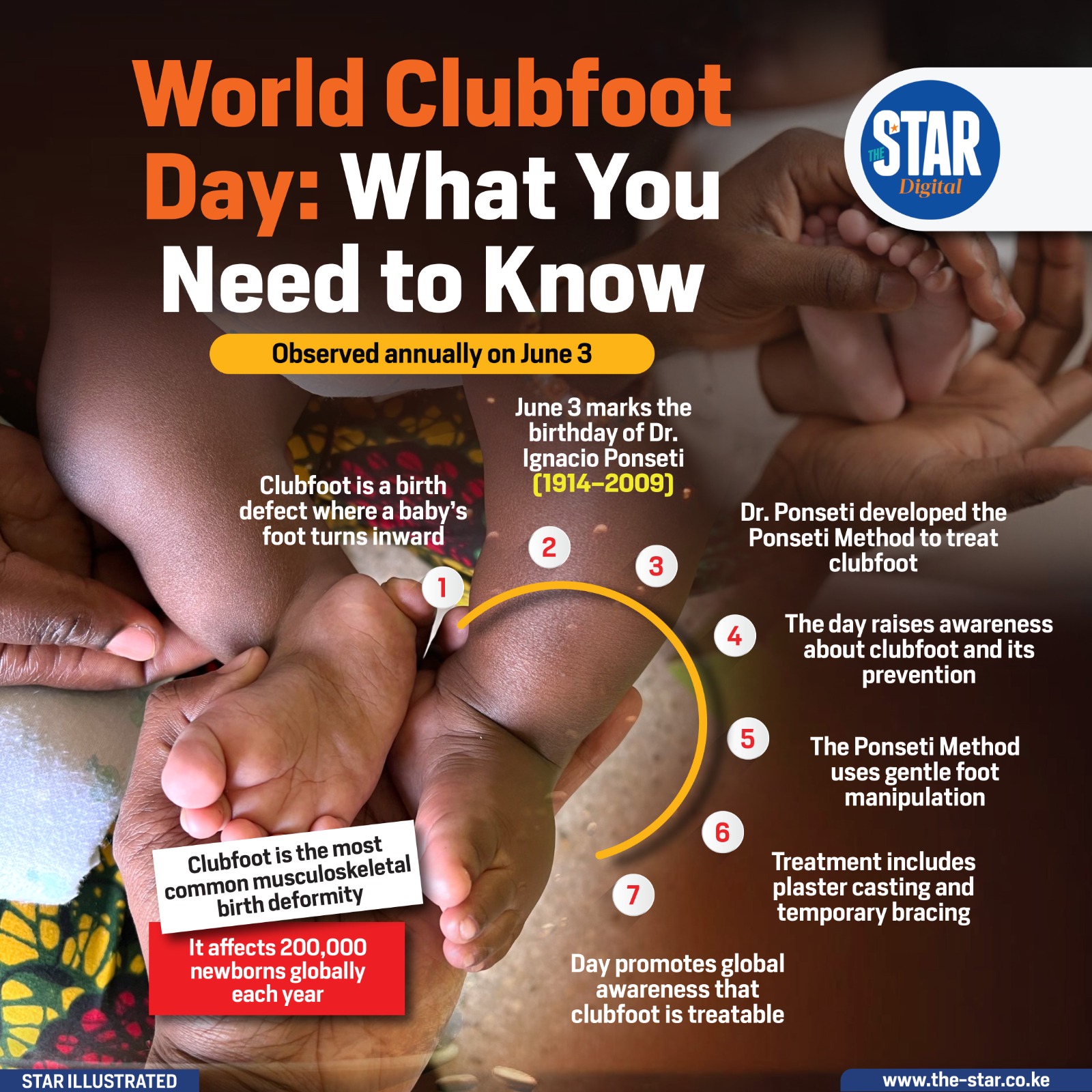 World Clubfoot Day: What you need to know
Untreated clubfoot
Without timely and proper treatment, clubfoot does not improve with growth; instead, its symptoms often worsen, leading to permanent physical disability.
Children with untreated clubfoot may walk on the outer edge or even the top of their foot, which causes painful calluses, significant difficulty finding appropriate shoes, and a pronounced limp.
This can result in chronic pain and stiffness, substantially impacting mobility and overall quality of life, particularly in adolescence and adulthood.
The consequences of untreated clubfoot extend far beyond the physical realm, creating profound social and economic challenges, especially in low and middle-income countries, where access to care is severely limited.
Affected individuals often face stigma, exclusion from educational and employment opportunities, and limited prospects for marriage.
In many African countries, the condition is tragically blamed on witchcraft, curses, or karma, leading to the ostracisation of both the child and their mother.
Rose, a mother from Kisumu, shared, "In rural areas, people think it's because the child has been bewitched or cursed, or that it's a punishment from ancestors because the mother has been promiscuous".
Dr. Philip Kirwa, Senior Director of Clinical Services at Moi Teaching and Referral Hospital (MTRH), noted, "In terms of misconception, a lot of parents hide these children as they feel embarrassed as they believe it might be witchcraft or a curse in the family, but this is just a condition like any other, and it is curable".
“MTRH, in collaboration with Clubfoot Care for Kenya (CCK) and the Ministry of Health, seeks to eradicate disabilities caused by clubfoot in Kenya,” he said in an event in 2023.
“Our work entails advocacy, that is, talking to the parents and communities to ensure they come for treatment as early as possible, as the treatment given to the child can be corrected before he or she takes their first step by using the ponseti method of treatment,” said Kirwa.
The Ponseti Method: Step by Step
The Ponseti method has emerged as the globally recognised gold standard for the non-surgical treatment of clubfoot.
Casting phase: This initial phase involves weekly cast changes. During each visit, a trained healthcare provider gently manipulates the baby’s foot, stretching the ligaments and tendons to gradually guide it into a more corrected position.
A new plaster cast is then applied from the toes to the thigh to hold the foot in its new alignment.
This process typically spans 4 to 8 weeks, requiring 5 to 7 casts, depending on the severity of the deformity.
Percutaneous Achilles Tenotomy: Following the casting phase, approximately 73-90% of cases require a minor outpatient procedure known as a percutaneous Achilles tenotomy.
This simple procedure, performed under local anaesthetic, involves a small incision to lengthen the Achilles tendon, which is often too tight to allow full correction.
A final cast is then applied for an additional 2-3 weeks to allow the tendon to heal in its lengthened position.
Bracing Phase: This is the most crucial phase for long-term success. After the casts are removed, a foot abduction brace (consisting of special boots attached to a bar) is essential to maintain the corrected position and prevent relapse.
Initially, the brace is worn for 22-23 hours per day for the first three months.
Subsequently, it is worn only during naps and at night until the child reaches 4 to 5 years of age.
World Clubfoot Day serves as a powerful annual reminder that clubfoot is not a life sentence but a condition that is treatable and correctable.
The Ponseti Method offers a proven, cost-effective pathway to mobility, empowering children to walk, play, and run free, and ultimately to live full, productive lives.