Read Also
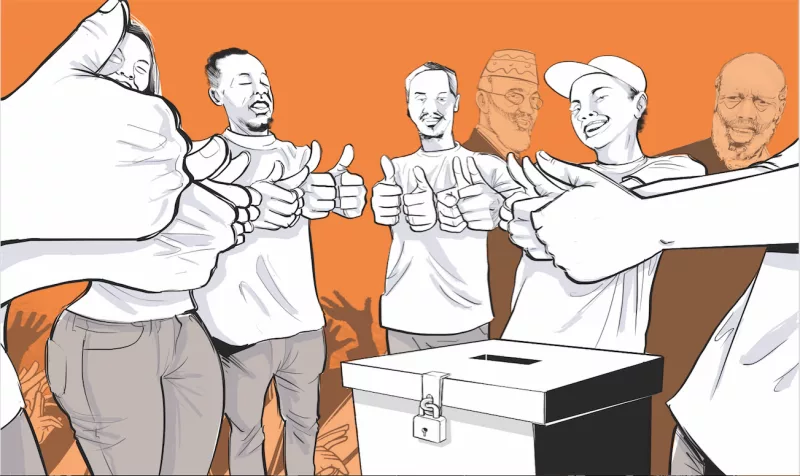
A fresh battle is emerging in the country’s regions as political heavyweights flex their muscles to consolidate influence ahead of the 2027 elections.
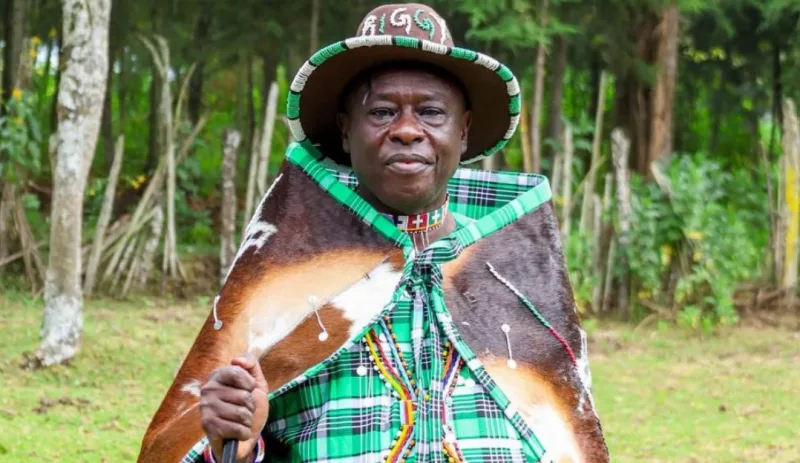
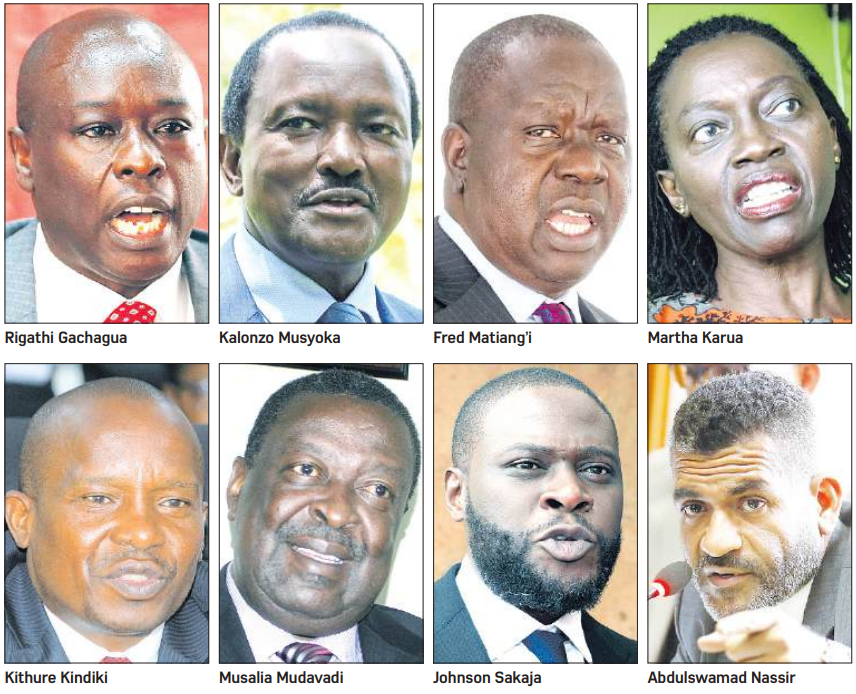
Two years to the general elections, a cut-throat supremacy competition has unfolded in the regions, pitting political luminaries against fresh blood threatening to unseat the old guard. Some of the leaders eyeing the influential regions’ kingpin positions have already expressed interest in the country’s top seat. Apart from the Rift Valley and Luo Nyanza, which are under the firm grip of President William Ruto and veteran opposition leader Raila Odinga respectively, other parts of the country are witnessing intense political maneuvering. Western, Kisii, Nairobi, Central, Eastern, Coast, and even Northeastern regions are all hotbeds of shifting alliances and power plays. With retired President Uhuru Kenyatta stepping back from Central Kenya’s politics, the vote-rich region has been plunged into uncertainty, sparking fierce competition among potential successors. Among those vying for dominance are ex-Deputy President Rigathi Gachagua, National Liberation Party leader Martha Karua, and Deputy President Kithure Kindiki. Also in the mix are Kiharu MP Ndindi Nyoro and former National Assembly Speaker Justin Muturi. Gachagua, positioning himself as the region’s central figure, has even threatened to decampaign leaders still loyal to President Ruto—a clear sign of his bid to consolidate power. Opinion is, however, divided on who among them has the charisma and gravitas to galvanise the bloc in 2027. In Western Kenya, the dominance of Prime Cabinet Secretary Musalia Mudavadi and National Assembly Speaker Moses Wetang’ula is being tested like never before. The emergence of Trans Nzoia Governor George Natembeya is proving to be a challenge to the two titans. “My politics goes beyond tribalism,” a charged Natembeya said recently. “I talk about the unity of the Luhya community for the purpose of the community getting its rightful share in government, just like other communities in the country.”As communities demand greater representation and development, local politicians are branding themselves as champions of their people’s interests.
Yet, critics argue that many are merely exploiting ethnic loyalties to secure personal power. With 2027 on the horizon, Kenya’s political map is being redrawn, but whether this will lead to meaningful change or merely a reshuffling of the same players remains uncertain. Governance expert Javas Bigambo says the trend is not new and that most of the so-called kingpins are using the positions to serve their interests. “To evaluate the significance of the regional kingpins, we have to give them historical value. From post-independence Kenya even to the period of the new constitution in 2010, we have seen the emergence and sustenance of regional kingpins who position themselves as enablers and determinants of the political directions of their regions,” Bigambo said on the phone. He, however, warned that the trend doesn’t end well in all cases. “Progressively, we all objectively noted that these kingpins in the end are tribal chieftains. Secondly, they sustain political self-preservation by hoarding their communities at the national table of negotiations,” Bigambo said. “Very crafty politicians position themselves as regional kingpins. These regions are largely tribal conglomerates, so they use that as a ladder to the national table, because without riding the horse of regional kingship, one will not find an easy path to national politics.” Mukurweini MP John Kaguchia said the tribal kingpin is a part of the country’s political history and is unlikely to change anytime soon. “That is how our politics has played all these years,” Kaguchia told the Star. According to Bigambo, some of those positioning themselves are doing so for self-preservation, citing the case of Natembeya’s claim to Luhya kingship, rather than championing broader regional interests. “If you look at the emergence of Natembeya as the voice of the Luhya community, when he speaks, does he speak for the people of Busia or Vihiga? Has he appreciated the socio-economic needs of the five counties?"Is it possible that, aware there is a serious opponent against him in 2027, he hoists his flag as a kingpin so that if he wants to retain his seat, there is no competition?" the pundit said.
Democracy for Citizens deputy leader Cleophas Malala is also threatening to make things messy for the current establishment. The former Kakamega senator staged a big homecoming celebration last week before police dispersed the procession he had organised in the populous county. Mumias East MP Peter Salasyia has also been traversing the region, mounting quiet but strategic campaigns targeting the youth to become a regional giant. In Kisii, the battle involves former Chief Justice David Maraga, National Assembly Chief Whip Silvanus Osoro, ex-CS Fred Matiang’i, and Governor Simba Arati, with Matiang’i and Maraga nursing presidential ambitions. Ukambani’s long-standing kingpin, Wiper leader Kalonzo Musyoka, faces a new challenge from government-backed Labour CS Alfred Mutua, who is courting Eastern voters to bolster Ruto’s re-election bid. The former Machakos governor has been holding meetings in the region with various stakeholders, something that has rattled the Kalonzo camp.He led a team of Kamba MPs to plan for Ruto’s tour of the region this week.
In the Coast region, Mombasa Governor Abdulswamad Nassir, his Kilifi counterpart Gideon Mung’aro and Senate Speaker Amason Kingi are seen as working to consolidate the region behind their respective parties. Both Nassir and Mung’aro are in Raila Odinga’s ODM, with Mombasa county holding the deputy party leader post, while Kingi has his party, PAA, which signed a political deal with Ruto’s Kenya Kwanza coalition. Governor Johnson Sakaja is not sitting pretty in Nairobi, with constant pressure from both within Kenya Kwanza and opposition quarters. MPs Babu Owino (Embakasi East) and James Gakuya (Embakasi Central) are all being mentioned as potential kingpins of the city county. Both Babu and Gakuya have expressed interest in the county’s top seat in the 2027 contest. Whoever becomes the Nairobi county boss is seen as the automatic voice for the over three million voters spread across the 17 constituencies. Amid the manoeuvres, activist Morara Kebaso is warning that those positioning themselves to take over the running of the country are not any better, and Kenyans must be ready for a paradigm shift. “We support the call to send Ruto home without breaks. But we do not support the call to replace Ruto with corrupt individuals who have no alternative vision or have been in leadership for years without any change,” he said. “We seek a better future for the people of Kenya. That is the position of the youth of Kenya.” As the race for 2027 intensifies, Kenya stands at a crossroads where regional power struggles could either deepen divisions or forge new political alliances. While the kingpins position themselves as champions of local interests, their true test will be whether they can move beyond ethnic mobilisation to address the pressing economic and governance challenges facing ordinary Kenyans.