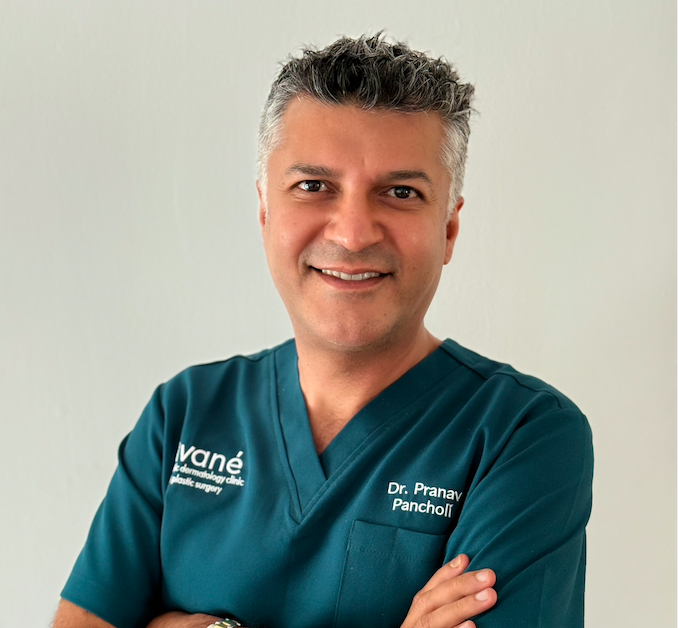
 Dr Pranav Pancholi, one of Kenya’s top cosmetic dermatologists /HANDOUT
Something facial, not fishy, is happening in the quiet hallways of government buildings.
Kenya’s politicians and cabinet secretaries are going under the knife, not for life-saving interventions but for cosmetic enhancements aimed at rolling back the years and refining their public image.
Behind closed doors, Botox, liposuction and non-surgical facelifts are becoming political tools.
And, according to one of Kenya’s top cosmetic dermatologists, the number of high-profile clients seeking these procedures is only growing.
“Oh, yes,” he says. “If you follow us on Instagram you may have seen some,” Dr Pranav Pancholi said.
“Even so, the powerful personalities prefer lots of privacy. In many occasions, we take the services to their homes.”
Pancholi, who founded Avane Clinic at Nairobi’s Yaya Centre in 2011, is one of the most sought-after names in Nairobi’s aesthetic medicine scene.
His clinic, now the largest medical aesthetic centre in East and Central Africa, receives at least 50 patients a day.
What’s driving this silent cosmetic revolution?
“Power is visual,” Pancholi explains. “Politicians are constantly on TV, on social media,” he said.
“Looking tired is seen as looking weak. Wrinkles, eye bags, sagging skin — these things undermine the image of energy and leadership.”
But the issue, he says, goes much deeper than vanity.
“Society underestimates the emotional and psychological toll of not liking how you look,” he said.
“There’s real suffering behind some of these decisions. People have lost confidence. Some are even suicidal.
“I always tell families, if you have a relative who constantly complains about their looks, listen to them. It might just save a life.”
Still, the conversation is taboo. Politicians do not want their constituents to know they’re spending loads of money to appear younger.
Most enhancements are carefully concealed behind vague ‘medical leaves’ or sudden disappearances from public view.
But Pancholi doesn’t need names. He sees the trend firsthand.
“There’s a study I read during my training. Babies were shown two faces, one traditionally beautiful, the other not. They stared longer at the beautiful face,” he recalls.
“We may say don’t judge a book by its cover, but we all do. A more attractive person will often get the job, the vote, the trust.”
Many of the procedures he offers are medically justified, such as treating acne, stretchmarks and skin tags.
However, demand for purely aesthetic improvements is rising: Botox injections, dermal fillers, facial balancing, non-surgical weight loss, laser rejuvenation and even vaginal tightening.
“When we started in 2011, people did not even know what cosmetic dermatology was. Laser treatment sounded like science fiction,” he says.
“We were the first in Kenya to import a medical-grade laser. Today, we’re booked out. And most of our growth has come from word of mouth.”
Still, Pancholi is concerned by the growing number of Kenyans turning to unlicensed clinics for cheap procedures.
“There is so much demand that people go to backstreet operators who inject God-knows-what. I’ve seen patients come in with botched lips, dead skin. It’s heartbreaking,” he says.
The risks are real. In late 2024, a young woman died during a botched breast procedure in Nairobi, prompting a government crackdown on unregulated cosmetic clinics. For Pancholi, this was a wake-up call.
“Skin is the body’s largest organ. It deserves proper care,” he stresses. “We can’t treat it like some afterthought.”
His own path to cosmetic medicine is deeply personal. Growing up, Pancholi was bullied and struggled with a low self-esteem.
“I was a nerd, not very social. That feeling of being judged for your appearance never left me,” he says.
“So I chose a field where I could help others feel better about themselves.”
Today, he is a fellow of Harvard Medical School, a member of several global dermatology academies and a vocal advocate for holistic wellness.
“I tell all my patients eat well, exercise, drink water. If everyone followed that advice, my client base would shrink by 30 per cent,” he says with a laugh.
“But the reality is, our lifestyles are more toxic than our grandparents’. So yes, Avane will keep seeing hundreds daily.”
What does it all say about Kenya’s future?