The second-in-command set aside his usual measured tone as he accused Gachagua of inciting division and attempting to police loyalty through intimidation.
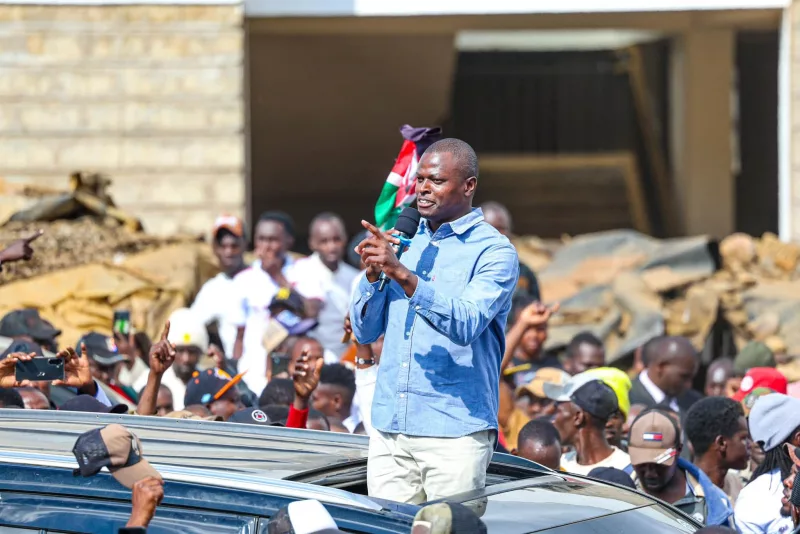
Speaking in Murang’a on Tuesday, May 27, an uncharacteristically blunt Kindiki took the gloves off, directly addressing the uproar surrounding his recent meeting with a group of Mt Kenya musicians at his Karen residence.
"So if they don’t go to the Deputy President, who will they go to? Where will they go? Who will help them? The Deputy President has the governmental power to force the brokers to disappear. Brokers who have exploited musicians, your time is up. We are coming for you. And this is not an empty threat. We mean business," an agitated Kindiki said.
On May 29, Kindiki mourned renowned Kenyan author, playwright, and post-colonial theorist Ngũgĩ wa Thiong’o, who died on Wednesday, May 28, 2025.
In his message of condolence, Kindiki said Ngũgĩ’s death has left the world of academia poorer.
He described the professor as one of the country’s finest intellectuals, admired by many across the world.
The Deputy President noted that even those who disagreed with Ngũgĩ’s views on fundamental issues did so with respect.
“Profoundly sad to learn of the demise of the distinguished Prof. Ngũgĩ wa Thiong’o," Kindiki said on Thursday.
“One of Kenya’s finest public intellectuals, Prof. Ngũgĩ was admired by many across the globe. Even those who disagreed with his views respected him. The world’s academia is left poorer without this great son of Kenya."
On the same day, Kindiki intensified the government’s economic empowerment drive, pledging comprehensive support for thousands of small and medium enterprises (SMEs) to boost growth and increase household incomes.
He attended the Empowerment Forum for Micro and Small Enterprises SACCOs at Nyanturago Sports Ground in Nyaribari Chache Constituency, Kisii County.
Kindiki assured small-scale traders of the government’s commitment to their growth and outlined the administration’s strategic interventions to uplift the sector.
“To revitalise MSEs, the government is implementing several programmes—notably NYOTA and KJET. Support for these enterprises remains a priority to ensure their expansion and sustainability,” he stated.
He emphasised that Kenya cannot achieve inclusive prosperity without bringing everyone on board, especially those at the base of the economic pyramid.
“The national government is working for all Kenyans, regardless of how they voted. Those who used to advocate for development based on voting patterns should understand that it is unconstitutional,” he said.
On Wednesday, May 28, Kindiki received a status update on the government’s jobs and income opportunity programmes across different state departments and agencies, and the roadmap for the 2025–2027 period.
He said the government is recalibrating the system for qualification, certification, and recognition of skills through a new industry-driven curriculum for Technical and Vocational Education and Training (TVET), Recognition of Prior Learning (RPL), and the newly introduced dual training policy to match the supply of labour with local and international demand.
He also held a joint meeting of the Cabinet Committees on Governance, Social Sector and Public Administration, and Finance, Infrastructure, Land and Production Economy at the Official Residence in Karen, Nairobi City County.
On the same day, Kindiki attended the National Prayer Breakfast at Safari Park Hotel, Nairobi.
He said the national prayer breakfast is a valuable tradition that helps “us reflect on our common destiny and take stock of our journey as a nation; evaluate what we have achieved, the missed opportunities, and the outstanding tasks in the socio-economic transformation of our country.”
“We have an opportunity to reconcile and build better relationships as citizens, neighbours, and across generations in the midst of all the challenges that face us, and realise a more cohesive, united, and equitable country, continent, and globe.”
On Tuesday, May 27, Kindiki received a status update from the State Department for Livestock on progress made and steps to ensure better incomes for livestock keepers.
He said earnings from Kenya’s milk and dairy products have significantly increased over the last three years: from Sh4.9 billion in 2022, to Sh7.5 billion in 2023, and Sh9.5 billion in 2024.
“The national livestock vaccination programme, the Kenya Leather Industrial Park (KLIP), and the enhancement of farmer earnings from milk are some of the interventions currently being implemented,” Kindiki said.
On the same day, he presided over a meeting with relevant government agency heads to coordinate the availability of roads, water, electricity, and other utilities necessary for the operationalisation of key projects.
He said the Kenya Kwanza manifesto, The Plan, envisages the operationalisation of Dongo Kundu and Naivasha Special Economic Zones, and the establishment of new Special Economic Zones in Samburu, Murang’a, Sagana, Nakuru, Eldoret, and Busia.
Other projects include the Kenya Leather Industrial Park (KLIP) at Kenanie, Athi River, and the creation of 47 County Aggregation and Industrial Parks (CAIPs)—one per county.
“These flagship projects require enabling utilities: roads, electricity, ICT connectivity, and water reticulation,” he said.
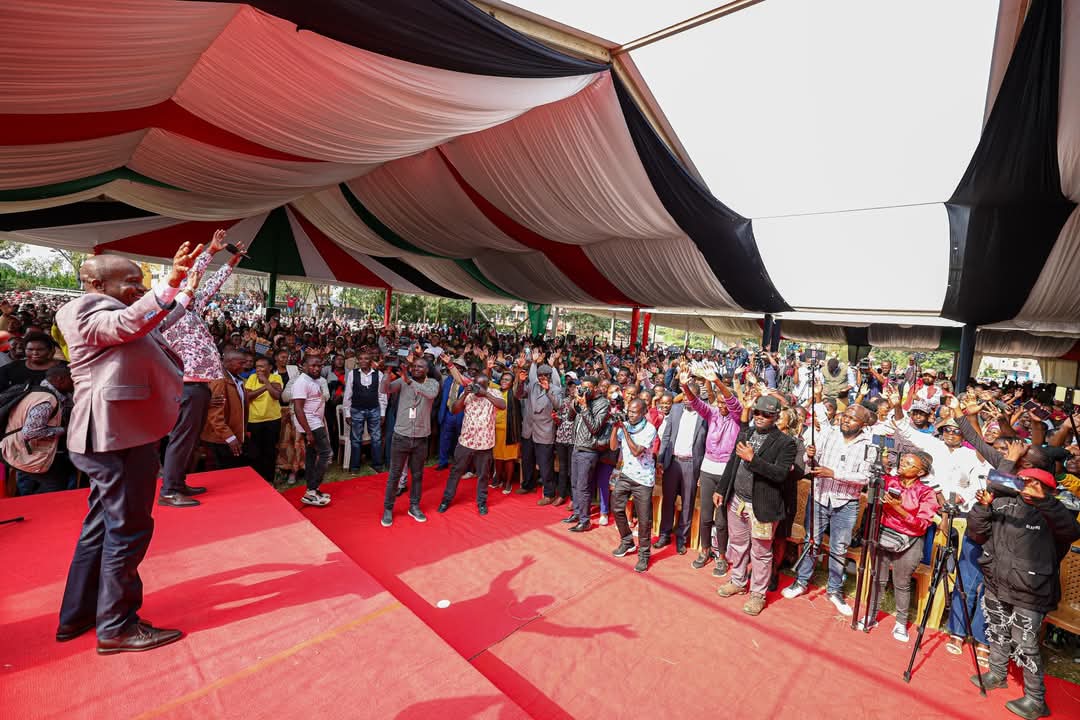
On the same day, Kindiki also took part in a micro and small-scale traders’ aggregation, sensitisation, and economic empowerment event involving 90 cooperatives and SACCOs in Mathioya Constituency, Murang’a County.
He said the government is currently implementing a Sh1.2 billion last-mile connectivity programme to connect an additional 16,000 households to electricity across all constituencies in Murang’a County.
“In the meantime, micro and small-scale traders are being empowered through the upcoming National Youth Opportunities Towards Advancement (NYOTA) and the Kenya Jobs and Economic Transformation (KJET) programme being rolled out across all 1,450 wards in Kenya,” Kindiki said.
The DP also toured the construction of the 750-kilometre Isiolo–Mandera Highway, which is finally underway after decades of pledges by successive governments.
The road connecting Isiolo, Kula Mawe, Modogashe, Samatar, Wajir, Tarbaj, Kotulo, Kobo, Elwak, Garre, Rhamu, and Mandera towns has been split into 11 sections and awarded to seven different contractors to ensure completion within two years.
“Pleased to do an impromptu spot check on progress of the ongoing construction works of the 77-kilometre Kula Mawe–Isiolo section, being built at a cost of Sh8.3 billion,” he said.
On Monday, May 26, Kindiki held an Economic Empowerment Programme for Small-Scale Traders SACCOs in Kabete Constituency, Kiambu County.