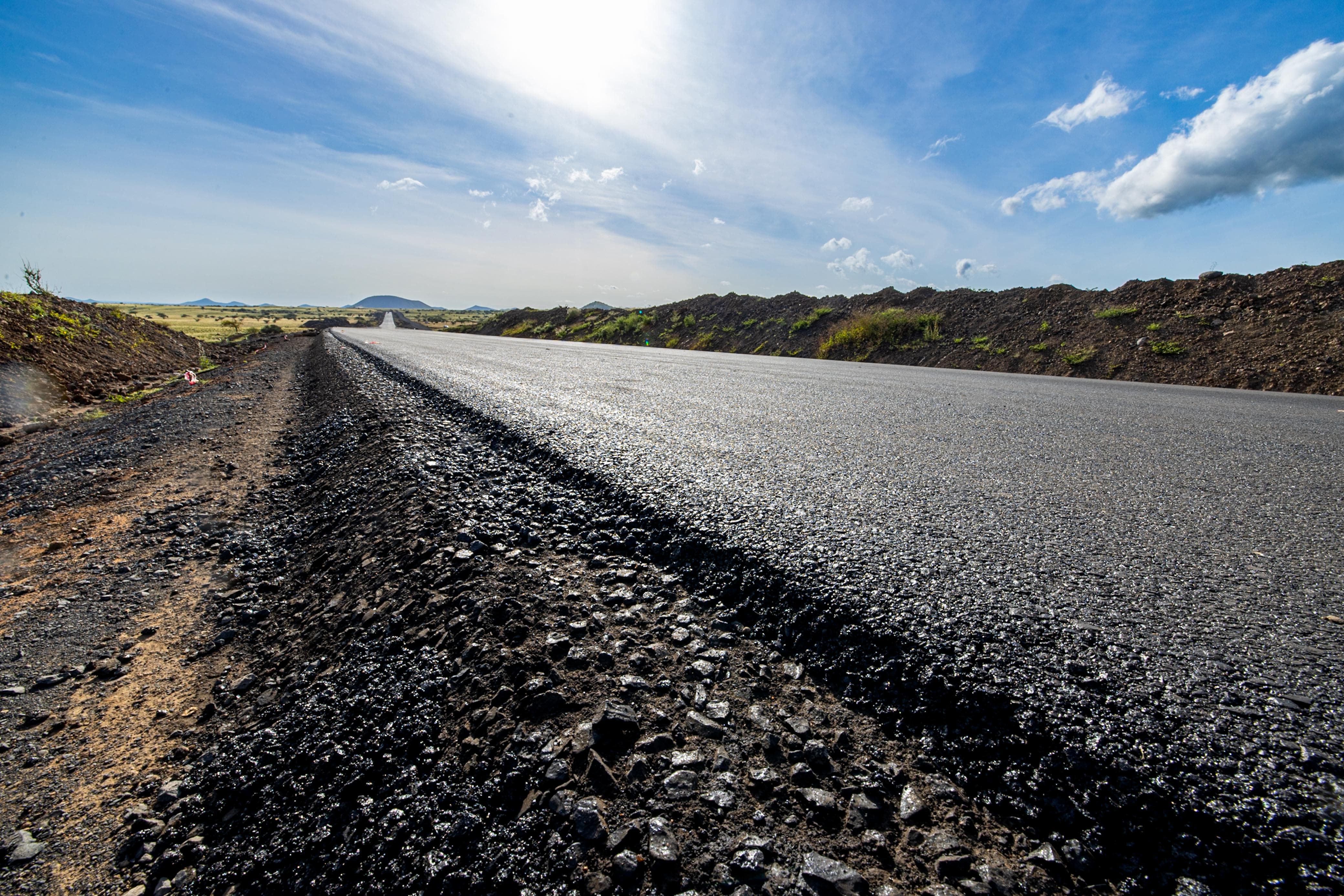
President William Ruto appears poised to silence critics as the Kenya National Highways Authority moves to fast-track the Rironi-Mau Summit dual carriageway.
The authority’s Tuesday announcement revealed bids from two Chinese firms – China Roads and Bridges Corporation (builder of the Standard Gauge Railway) partnering with the National Social Security Fund and Shandong Hi-Speed Road and Bridges International Engineering Company Ltd.
The development comes just three weeks after Ruto’s Beijing visit, where he negotiated a Sh650 billion infrastructure package.
KeNHA, adhering to Treasury disclosure rules, also confirmed plans to expand the Rironi-Maai Mahiu stretch through to Naivasha – currently a designated truck route.
This is the road used by commuters going to Kisii and the greater southern Nyanza region.
“The project will involve upgrading, dualling and expanding the 175km Rironi-Mau Summit road and rehabilitating the 58km Rironi-Maahi Mahiu road for tolling under the Design, Build, Finance, Operate, Maintain and Transfer model,” stated KeNHA Director General Kungu Ndungu.
The authority confirmed land acquisition is complete, with any additional requirements to be handled legally.
The project would be built under the Public-Private Partnership arrangement, with contractors set to charge tolls to recover their costs. It is estimated to cost about Sh250 billion.
A French contractor consortium had sought to build the Nairobi-Mau Summit stretch at Sh180 billion.
For President William Ruto, the development could not have come at a more critical time.
The Rironi-Mau Summit highway is not just another infrastructure project.
Political observers have termed it a political lifeline, a chance to seal his administration’s legacy and shore up public confidence.
The stakes are even higher as Ruto is in the second half of his first term. With elections just 26 months away, its progress could make or break his re-election bid.
The project cuts through Ruto’s Rift Valley stronghold while serving Western and Nyanza, which are key 2027 constituencies.
Political commentator Javas Bigambo observes: “Dualing this road, combined with the proposed Mombasa-Nairobi expansion, could cement Ruto’s infrastructure record, surpassing even Kibaki’s Thika Superhighway.”
During the campaigns and recently, Ruto promised to deliver the project on time starting July 1.
It is a legacy project and one with a huge implication on his following.
“If President Ruto duals that road, and ensures the commencement and finishing of the proposed Mombasa-Nairobi dualling, he may have secured his placed as the president who has overseen high impact infrastructure development, outdoing Mwai Kibaki and Uhuru Kenyatta,” Bigambo said.
President Ruto’s critics led by his former deputy Rigathi Gachagua have dismissed his pledges as ‘hot air’ and labeled his big money investment plans as a campaign gimmick.
Gachagua allies, among them Embakasi Central MP Benjamin Gathiru, said Kenyans should ask what the country is giving away.
“There will be repercussions,” he said. But Laikipia East MP Mwangi Kiunjuri, a member of the National Assembly Transport Committee, defended the timeline.
He said, “Critics expected Rome built in a single day. There is nothing that happens in a day, only mushrooms bloom in a day, but they never last.”
“We have been progressing slowly by sure. By December most of the roads and other infrastructure projects will be commissioned,” the lawmaker said.
Kiunjuri said it won’t be a surprise if their competitors sue over the bids for what would be the country’s second toll road built under PPP arrangement.
“We are fond of opposing everything. Everyone knows what the people of Western, Nyanza, and parts of Rift Valley have gone through because of that road. They should be able to commend this government for the effort we have put,” he said.
Completing the critical link not only revives Kenya’s regional trade ambitions but also allows Ruto to claim victory where his predecessor, Uhuru Kenyatta, fell short.
The road is notorious for paralysing traffic snarls that leave travelers stranded overnight and serves as a vital artery connecting western Kenya to regional trade routes.
Delivering the road, which connects Kenya to Uganda, would fulfill Kenya Kwanza’s promise, with benefits not just to the locals but also the country’s neighbours.
Infrastructure projects are crucial to sealing legacy, as exhibited with Mwai Kibaki, who is remembered for the Thika Superhighway.
Uhuru’s term was also marked by significant highway, railway, and port upgrades notably Mombasa Port, Kenya Oil Terminal, SGR, Nairobi Expressway, and major link roads.
Beyond Rironi, President Ruto has also embarked on mega infrastructure upgrades, notably the 750-km Isiolo-Modogashe road.
The Sh100 billion road project has also been in the books for decades, and is now underway.
Deputy President Kithure Kindiki, while inspecting the progress of works yesterday, said the government was confident it would deliver.
“Step by step, Kenya is moving towards an inclusive economy and shared prosperity,” the DP said.
“Certainly, a flagship for Kenya’s transformation is underway.”
Behind the scenes of the RironiMau Summit project, high-stakes negotiations for the 30-year PPP agreement are underway.
Treasury officials, the Roads ministry, and transport agencies have held several closed-door meetings in Nairobi, scrambling to align the project’s financing and execution.
KeNHA has assured transparency, pledging to disclose contract details once statutory approvals are secured. Yet, skepticism lingers.
In a move likely to temper expectations, Ndung’u was quick to clarify that the announcement does not constitute final approval.
The involvement of Chinese firms is no coincidence.
Beijing’s footprint in Kenya’s infrastructure landscape is well-established, and Ruto’s administration appears to be leveraging this relationship to revive momentum.
China delivered the SGR and Nairobi Expressway, as well as a number of rural connectivity roads. If successful, the Rironi-Mau Summit highway could mirror the transformative impact of projects like the Nairobi Expressway, another Chinese-backed venture that has eased congestion in Nairobi.
Yet, challenges loom. Past PPP projects in Kenya have been marred by delays, legal battles, and allegations of impropriety.
The Public-Private Partnerships Committee must now navigate these pitfalls, ensuring that the procurement process withstands scrutiny.
A bid by Indian firm Adani Holdings to upgrade and operate Jomo Kenyatta Airport flopped for want of public disclosures.
Treasury recently drew rules mandating procuring entities to disclose every step of a project, from inception to implementation.
As such, bids by the two Chinese companies in the Rironi project would be subjected to an evaluation process before the contract award is announced, KeNHA said.
“This will be disclosed at the appropriate time upon conclusion of the statutory processes,” the notice by KeNHA director general Kungu Ndungu reads.
“It is to be noted by the general public that this disclosure doesn’t constitute any approval by the contracting authority, nor the National Treasury, or the PPP Directorate.”
In further disclosures, KeNHA said the toll rates will be determined in line with a tolling policy, which is under approval stages.
Meanwhile, motorists and traders along the route remain trapped in a constant fear of a gridlock, their patience to correct the situation wearing thin by the day.
For now, the government is betting on speed and spectacle, with the advertisement indicating that the wheels, at least, are finally in motion.
Whether they gain enough traction to escape the mud of bureaucracy and politics remains to be seen.