Kenya's local automotive industry primarily assembles, retails, and distributes motor vehicles. It is a relatively established sector with at least 11 major dealers today, with a history dating back to the 1960s, when the Volkswagen Beetle was locally assembled.
Successive governments have been keen to grow the sector, actively working with the private sector to boost the automotive industry, aiming to increase local production, reduce reliance on imported used vehicles and create jobs. However, 85 per cent of vehicles on the Kenyan roads are still imported second-hand cars.
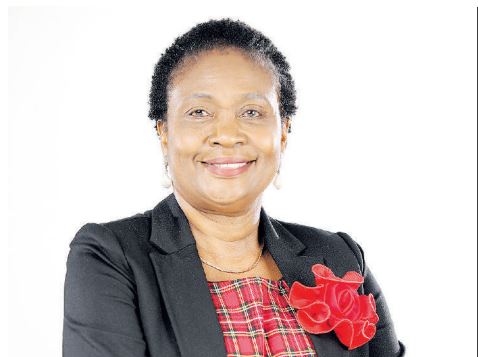
The Star spoke to Isuzu East Africa board chair and Managing Director Rita Kavashe on her journey in the automotive industry and the future of the sector as Kenya undergoes a growth-intended policy shift.
When and how did you end up in the automotive industry?
My first job after university was with a small computer company, which was a startup. After two years, I realised I was made for more. I went to Hawkins and Associates, a recruiting firm. I told them I was looking for a job in a multi-national company where I can be able to grow.
They got me a job as a sales representative with General Motors East Africa Limited in 1995. Over the years, I held several key positions in sales and marketing here in Kenya and South Africa. In 2011, I was appointed as Managing Director of General Motors East Africa Limited.
This role later transitioned to Isuzu East Africa in 2017. I took over the company in 2011 when our market share was approximately 23 per cent. 14 years later, we have grown to about 55 per cent, firmly establishing ourselves as the industry leader.
This journey demanded strategy–increasing our aftersales network, localisation of pickup trucks, growing our exports and deepening customer intimacy. Equally vital has been having a strong team aligned to the purpose and vision of the company, committed to driving success together.
As the CEO of Isuzu East Africa, how many markets do you oversee?
Kenya, Uganda, Tanzania, Rwanda and Burundi. We are also supporting Isuzu Motors International FZE (IIF) to build markets in other countries such as the DRC and South Sudan.
How would you define Kenya’s automotive industry vis-à-vis EAC and the African market?
East Africa remains one of the few regions in the world with an open-door policy for second-hand vehicle imports, despite the adverse impact on the environment and the local automotive industry. Currently, second-hand vehicles account for 85 per cent of new vehicle registrations in the region, and within that challenge lies a significant opportunity for scale.
This overwhelming dominance of used car imports has severely constrained the growth of the automotive sector. With only 15 per cent of the market comprising new vehicle sales, local assembly operations have struggled to gain traction. As a result, the region continues to miss out on valuable economic benefits, including job creation, industrial expertise, increased government revenues, and overall GDP growth.
Kenya is punching well below its weight in terms of automotive manufacturing and assembly on the continent. Countries such as Morocco and South Africa have managed to leverage sound government policies.
For instance, South Africa’s Just Energy Transition (JET) plan (which aims to produce its first electric vehicle by 2026) and Morocco’s automotive industrial zones to positioning themselves as industry leaders on the continent.
Africa's automotive industry is today worth $21.55 billion (Sh2.8 trillion) and is expected to grow to roughly $27.63 billion (Sh3.6 trillion) by 2030. This illustrates the potential opportunity for our country.
Unlike Kenya, a net importer of used vehicles, South Africa and Morocco have highly developed and robust local manufacturing capabilities. South Africa, for example, is not only a significant consumer market but also a major global production hub, with well-established facilities and export networks. Kenya’s local assembly remains limited and market growth is predominantly fueled by imports.
Within the East African region, Kenya stands as the largest and most influential automotive market.
While it serves as the regional gateway for used vehicle imports, its new vehicle segment has been contracting. In 2023, new vehicle sales in Kenya declined by 15 per cent, totaling 11,370 units, down from 13,352 units in 2022.
In 2024, the industry experienced a further decline of 2.74 per cent, selling 11,059 units. This downturn was attributed to factors such as new taxes, a weakening currency, and reduced consumer demand. Despite these challenges, growth opportunities remain in the local assembly sector.
As a company, we are urging EAC regulatory bodies to establish mechanisms against the unrestricted importation of second-hand vehicles to the market.
The EAC committee on Industrialization has in the past recommended harmonising the age limits of used vehicles to eight years.
With a lack of harmonised standards, we are experiencing non-tariff barriers (NTBs) whereby goods are blocked from accessing partner states because of minor deviations from standards, notwithstanding that the goods qualify for access according to the Rules of Origin.
Eliminating NTBs in the EAC will boost regional trade, similar to what we see in agriculture. The automotive industry needs to work together with policymakers to give consumers affordable,e locally assembled vehicles.
This will accelerate the development of automotive capacity in East Africa, enhancing the region’s manufacturing and job creation.
Isuzu is the market leader in the country’s new vehicle space. What are you doing right?
We focus on delivering dynamic transport solutions, genuine parts, quick turnaround times, and cost-effective solutions.
With 80 per cent of our customers requiring financing to purchase our vehicles, we have been at the forefront of driving accessibility through innovative financing partnerships with banks.
For example, in March 2024, we partnered with Co-operative Bank and CIC Insurance to offer 95 per cent financing on selected vehicle models and 100 per cent financing for school buses, empowering schools and businesses to meet their mobility needs affordably.
As the largest motor vehicle assembler in the region, we have the plant capacity to respond to customer needs.
In June 2023, Isuzu EA launched a Sh500 million Electro-Deposition Paint Plant aimed at increasing the assembly capacity for the local automotive industry. The Paint Plant has increased Isuzu’s production capacity by more than 60 per cent from 11,000 vehicles to 18,000 vehicles per year.
Our country-wide dealership network forms a key pillar in our ‘Route to Customer’ strategy, enhancing customer loyalty and confidence in Isuzu products.
This is further supported by a dedicated field engineering team that engages directly with customers, offering hands-on education on product maintenance and servicing to ensure long-term satisfaction and optimal vehicle performance.
Through initiatives such as Isuzu Connect, we enhance real-time data access and customer communication, further strengthening the service quality at every touch point. To expand our service reach, we have introduced satellite workshops and mobile service vans, making maintenance and repairs more accessible.
There have been mergers and acquisitions in the industry in recent years. How is this shaping the industry and do you feel threatened by competition?
Industry mergers reflect the impact of a challenging operating environment marked by high interest rates, inflation, and declining incomes, all of which have affected the new vehicles market. In response, Isuzu East Africa’s 2024 partnership with UD Trucks was a strategic step to strengthen our market position by assembling and selling UD trucks across the East African region.
What are your thoughts about the high second-hand car imports in the country?
In Kenya, approximately 80 per cent of newly registered vehicles each year are second-hand imports. This trend continues to undermine the growth of local vehicle assembly, resulting in lost revenue for the government, diminished industry expertise, fewer employment opportunities, and stunted GDP growth.
One of the most effective interventions to reverse this trend is the restriction of used motor vehicle imports, particularly in vehicle segments where local assembly capacity already exists.
The KS1515 Standard was introduced in 2019 with this goal in mind—to boost the share of locally assembled trucks in the 3.5 to 30-ton range. If fully enforced, this policy could more than double the production of commercial vehicles from the current 12,000 units annually to 24,000 within just two years.
Kenya is home to three major vehicle assembly plants: Associated Vehicle Assemblers (AVA) in Mombasa, Kenya Vehicle Manufacturers (KVM) in Thika, and Isuzu East Africa in Nairobi.
Together, these facilities boast a combined production capacity of 41,000 units annually, positioning Kenya to adequately serve the entire EAC market,t including the DRC with commercial trucks. However, this potential remains largely untapped, as current capacity utilisation stands at just 30 per cent.
The government has been pushing to expand the local automotive industry with little impact. What are we doing wrong?
Failure to implement policies. The National Automotive Policy, developed in 2019, provides incentives to the local assembly industry to reach its full potential, increase production and create jobs in the economy. However, it is yet to take effect.
Over the last four years, our industry engagements with the government have focused on the full implementation of the National Automotive Policy, which supports the growth of locally assembled vehicles. This will stimulate full utilisation of local assembly capacity and encourage increased technological investment in the sector in line with the “Buy Kenya, Build Kenya” vision.
How many jobs has Isuzu created?
Isuzu has created meaningful jobs for 575 direct employees, up from 250 employees when I took over as the Managing Director in 2011. Indirectly, Isuzu EA has created jobs for more than 5,000 Kenyans through its value chain comprising authorised dealers, body builders, and suppliers.
Isuzu East Africa had a drop in new car sales in 2024. What happened?
The sale of new vehicles was largely impacted by high interest rates affecting business and consumer spending. Customers were forced to hold off on new investments, leading to lower sales numbers in the year.
What is your forecast for this year?
We are optimistic about production volumes and sales increasing in Kenya this year. In fact, Q1 2025 has been the best period of the year that Isuzu EA has ever recorded, registering 1,648 sales. We anticipate an upward trend in the coming quarters if the critical issues, such as liquidity challenges, pending bills and access to credit facilities, are addressed.
What can stimulate the new car market in the region?
Looking at opportunities within the East African Community (EAC) region, the full implementation of the 25 per cent duty on imported vehicles as per the EAC’s Common External Tariff (CET) would unlock tremendous benefits for the auto industry in the region.
In May 2017, the second East African Manufacturing Conference held in Kigali, resolved to champion a five-year limit on all second-hand vehicle imports in East African Community member countries by 2021. The EAC Committee on Industrialization recommended harmonising the age limits of car imports to eight years. While Kenya already has an eight-year age limit, the other Partner States sought more time to consult.The EAC Rules of Origin gazetted on the 23rd January 2015, grant duty-free market access to all locally assembled CKD vehicles. However, we have experienced some challenges with NTBs (Non-Tariff Barriers) where local vehicles have been assessed with duty at some EAC borders.
In your view, what makes leadership and governance work within an organisation?
Leadership and governance are about making decisions that align with core values. Leaders must lead by example, ensuring that they not only communicate their values but also live by them.