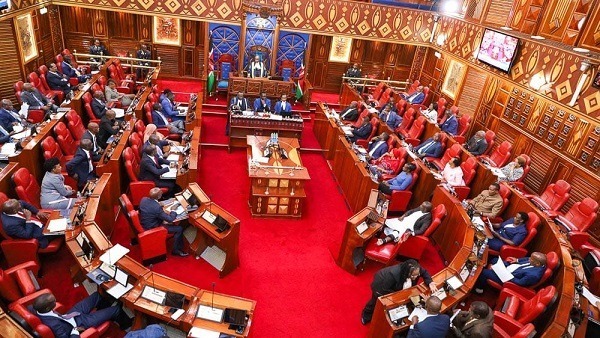
Kenya’s creative industry is poised for a major breakthrough after senators rallied behind the Creative Industry Support Bill, 2024.
The proposed law seeks to provide grants and structured support for artists, content creators, and cultural workers.
Sponsored by Migori Senator Eddy Oketch, the Bill proposes a comprehensive framework to financially support individuals and organisations in the creative sector through county and national government mechanisms.
“The creative industry has not yet become commercially viable to the point where young people can achieve economic well-being from it,” Oketch said.
“This Bill seeks to change the mindset that creativity is a last resort and instead promote it as a legitimate, thriving career path.”
It outlines the creation of a Creatives Fund, appropriated by Parliament, from which grants will be issued to qualifying individuals and entities in the sector, based on criteria set by the Cabinet Secretary.
In addition, the Bill proposes the establishment of a Creative Industry Guild. This body will protect artists’ interests, conduct labour market surveys, manage intellectual property rights, and oversee royalty distribution.
It also mandates both county and national governments to foster a supportive environment through policy, infrastructure investment, and entrepreneurial education in higher learning institutions.
A key educational reform in the Bill calls on the Cabinet Secretary for Education to ensure the creative arts are integrated into curricula through the Kenya Institute of Curriculum Development (KICD).
During the Senate debate, lawmakers expressed strong support for the legislation, emphasising the importance of recognising and investing in Kenya’s creative talent.
Tana River Senator Danson Mungatana noted that creatives form a vital part of the economy and asked, “How do we rate and pay traditional dancers, MCs, DJs, or acrobatic performers who entertain us? This Bill creates a system to recognise their work and ensure they can earn a living.”
Senate Majority Leader Aaron Cheruyiot added that the Bill addresses a long-standing gap in government policy.
“We have so many talented people — filmmakers, actors, musicians and more — who lack channels to grow. This Bill ensures they receive the necessary support to thrive,” he said.
Nandi Senator Samson Cherargei pushed for national recognition of creatives, suggesting roads, buildings and public spaces be named after distinguished contributors.
“Even those who composed our national anthem deserve such honours,” he said, highlighting the President’s recent push to monetise content on platforms like TikTok, Facebook, and X.
The proposed law also obligates the Education CS, in consultation with the National Treasury, to establish tax incentives and other fiscal benefits for creatives. However, these will be available only to registered members of the Creative Guild.
Oketch argued that for years, creatives have been marginalised in state priorities, despite their significant contributions to the economy.
“The creative economy leverages human innovation and ideas for economic development. Yet, systemic gaps — such as complex payment systems and lack of institutional support — have hindered its commercial potential,” he explained.
He further urged that responsibility for the creative industry should shift from the Ministry of Gender, Culture, the Arts and Heritage to the Ministry of Investments, Trade, and Industry, to elevate its economic profile.
According to a 2021 Kenya National Bureau of Statistics report, Kenyans spent Sh278 billion on entertainment — a figure that underscores the sector's economic significance.
“This Bill is not just a support structure; it is a recognition of the creative economy as a serious, job-creating sector. It’s time we gave creatives the same attention we give to agriculture and finance,” said Mungatana
The Bill, now in its second reading in the Senate, is widely expected to receive bipartisan support as it moves through the legislative process.