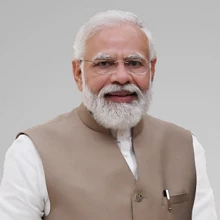
In a nationally televised address on May 12, Indian Prime Minister Narendra Modi laid out a dramatic shift in New Delhi’s security and diplomatic approach towards Pakistan.
This follows the April 22 terror attack in Pahalgam, Jammu and Kashmir, that left 26 civilians dead—many of them tourists and children.
Describing the assault as an attack on the “soul of India,” Modi signalled what he called a “new normal” in India’s counter-terror policy—one where military retaliation, diplomatic isolation and zero-tolerance rhetoric converge to form a hardened national posture.
The Pahalgam attack is widely viewed as an attempt by terrorist groups to derail the relative calm and development seen in Jammu and Kashmir since the revocation of Article 370 in 2019.
With more than 20 million tourists visiting the region last year alone, the Indian government has touted this surge as proof of restored normalcy.
Modi said targeting of tourists, who were reportedly asked their religion before being killed, was designed not only to disrupt peace but also to incite communal tensions.
An unstable Kashmir, many argue, serves Pakistan’s interests—drawing international attention and undermining India’s domestic narrative of integration.
India’s military retaliation—Operation Sindoor—was launched on the night of May 6–7, targeting nine identified terror camps in Pakistan and Pakistan-occupied Kashmir (PoK).
According to Indian officials, the coordinated strikes killed more than 100 militants. The operation’s name, 'Sindoor,' symbolised national grief, reflecting the emotional toll on the country following the deaths of innocent civilians and families.
Modi's hardline message: No talks amid terror
Prime Minister Modi’s address made clear that India’s diplomatic approach to Pakistan has fundamentally changed. Declaring that 'terror and talks cannot go hand in hand,' he stated that future engagement would be limited strictly to terrorism and Pakistan-occupied Kashmir.
Broader bilateral issues are now off the table unless Pakistan demonstrably dismantles its terror networks.
A major feature of this 'new normal' is the bold stance India has taken against Pakistan’s long-standing 'nuclear bluff.' Modi warned Islamabad against leveraging nuclear threats to deter Indian military responses. This declaration is seen as an assertion of India’s strategic confidence and willingness to escalate, if required.
In a significant diplomatic move, India also suspended the Indus Waters Treaty (IWT)—a 1960 agreement mediated by the World Bank that governs the sharing of rivers originating in India and flowing into Pakistan.
The treaty has survived wars and crises and its suspension marks a powerful signal that India is willing to use even foundational agreements as leverage.
The diplomatic shift was further highlighted by Modi’s pointed silence on US. President Donald Trump’s claims that the country helped broker the May 10 ceasefire between India and Pakistan.
The Pakistani government, including Prime Minister Shehbaz Sharif, heaped praise on Trump for his supposed intervention.
Yet, Modi made no mention of any foreign mediation, implying that the decision was unilateral and internal. This non-recognition underlines India’s assertion of strategic autonomy.
As tensions simmer, Modi’s speech marks a watershed in India-Pakistan relations, indicating that New Delhi will no longer adhere to the traditional playbook of restraint.
While India continues to enjoy global support in its fight against terror, the emphasis is now on self-reliance and proactive deterrence. Whether this shift leads to prolonged stability or sparks further confrontations remains uncertain. What is clear, however, is that the rules of engagement have changed—perhaps irreversibly.
Mureithi is an international affairs commentator