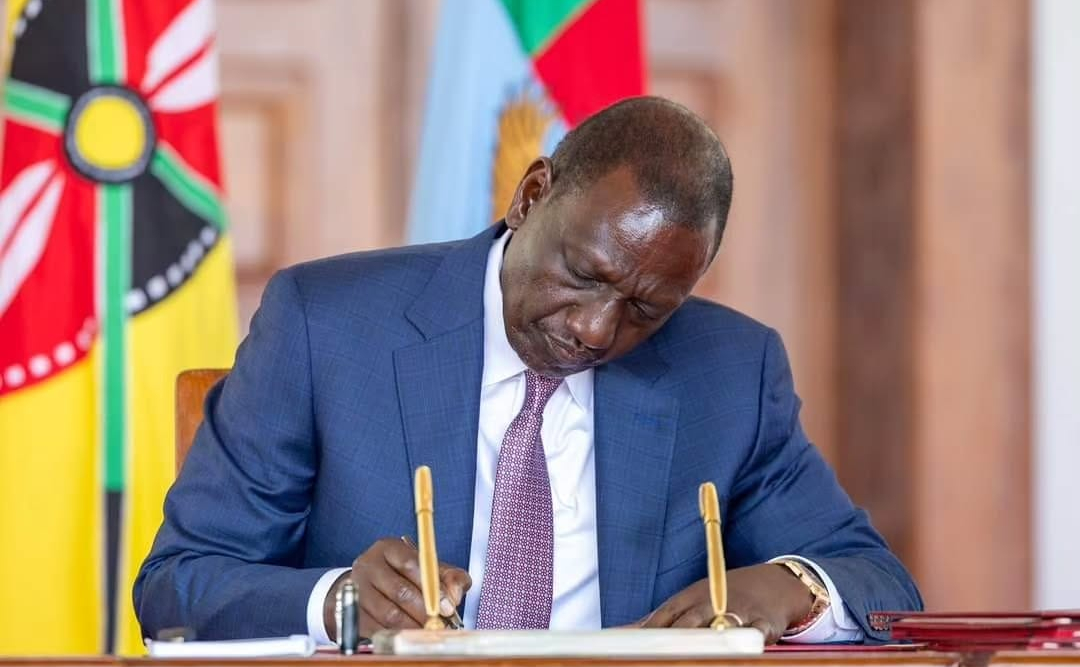
 President William Ruto
The move by President William Ruto to lease state-owned sugar mills is facing opposition as MPs from the regions now demand a relook at the deals.
The government last week unveiled its leasing programme, handing over four public sugar factories to private players.
Under the deal, Nzoia Sugar will be managed by West Kenya Sugar Company, Chemelil by Kibos Sugar and Allied Industries, Sony Sugar by Busia Sugar Industry Ltd and Muhoroni by West Valley Sugar Company.
The move has ignited widespread protests across the country’s sugar belt with some leaders demanding the revocation of the transfer to allow for a more transparent process.
But Agriculture CS Mutahi Kagwe and Kenya Sugar Board defended the leasing process terming it above board.
“I dismiss assertion that the process was opaque considering all stakeholders were involved. We are ready to submit any document for scrutiny by Parliament and the general public,” Kagwe said yesterday.
Also at the centre of the protests is the fate of the inherited workers and identified private partners – leaders have raised concern on some of the players identified.
In Kisumu, MPs James Nyikal (Seme), Onyango Koyoo (Muhoroni), Aduma Owuor (Nyakach), Shakeel Shabir (Kisumu East), Joshua Oron (Kisumu Central) and Women Representative Ruth Odinga demanded that Ruto issues an executive order stopping the ‘irregular’ leasing process of Miwani, Muhoroni and Chemelil.
The leaders said they are not against leasing but the entire process.
Nyikal is the chairman of Duol – an informal platform bringing together all Luo MPs.
In a joint press statement, the leaders cited lack of transparency, disregard for public input and threats to local livelihoods.
“What is being meted on the hundreds of households who depend on cane production for a living is an affront to their rights. In fact, it is warfare to decimate a whole community," Nyikal said.
"We the elected leaders of Kisumu county, completely reject the leases and affirm calls by farmers and other stakeholders that the sugar factories and assets be returned to the good people of Kenya until such a time that there will comprehensive consultation on the leasing process."
Similar scenes were witnessed in Western where anti-riot police dispersed a motorcade led by Trans Nzoia Governor George Natembeya, who opposed the move.
The leaders including DAP-K party leader Eugene Wamalwa and several other leaders attempted to access Nzoia Sugar Company, one of the four factories recently leased to private operators.
“We will do everything possible to ensure we stop that illegal leasing,” Natembeya vowed.
The sugar industry is a key economic driver in the larger western Kenya, supporting thousands of farmers, factory workers and auxiliary businesses.
The public mills in question have long been central to the region’s economy, but years of mismanagement and under-investment have left them struggling.
“The sugar economy in Kisumu is a multi-billion shilling industry. These factories support thousands of households. You cannot hand them over in secrecy and expect the people to accept it,” said Nyikal.
Muhoroni MP James Koyoo expressed fear for the future of factory workers many of whom are his constituents saying they have not been informed about their employment terms under the new leases.
He also criticized Chemelil Sugar Company for its poor industrial relations track record, fearing that employees could be rendered jobless or exploited.
“There is no clarity on the duration or conditions of employment under the leases. These are people with families and responsibilities,” said Koyoo.
The leaders demanded that the Cabinet Secretary for Agriculture immediately submits himself to an open and exhaustive dialogue with regional leaders, sugar cane farmers and Workers at the factories so as to come up with pre-leasing agreements in the various areas of concern to them.
They also demanded that the cabinet Secretary makes public the secretive leasing documents.]
Kenya Sugar Board boss Jude Chesire also defended the government’s decision to lease out some state-owned sugar factories to private investors.
Speaking during a meeting in Nairobi, Chesire said the leasing model was designed with farmers at the core.
“Farmers come first. If investors leasing sugar factories fail to modernise mills, support cane development or pay farmers weekly as agreed, the government will revoke their leases, simple,” he said.
He explained that the 30-year term is only justified by the heavy capital injection expected and that if they do not deliver, the agreements will be terminated and handed over "to those who truly prioritise our farmers.”
Chesire added that lease and concession fees from the four selected investors will directly benefit farmers, with annual bonuses based on the volume of cane supplied.
“This is not just reform; it is a game changer,” he stated.