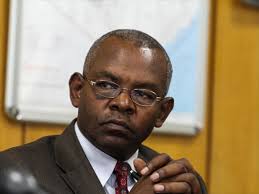
The Central Bank of Kenya is facing scrutiny from the Senate over ethnic disparities in its workforce, with revelations that members of the Kikuyu and Kalenjin communities make up nearly half of the institution’s employees.
CBK’s current staff headcount stands at 1,311.
Of these; Kikuyus are 325, Kalenjin are 258, Luos 139, Kambas 123, Luhyas 113, Kisiis 90 and Merus 66.
The revelations emerged during a meeting between the Senate National Cohesion, Equal Opportunity, and Regional Integration Committee and CBK governor Kamau Thugge.
The committee questioned Thugge over the disproportionate representation, especially in light of constitutional provisions on inclusivity in public service.
Committee chairperson and Marsabit Senator Mohammed Chute raised concerns that the bank has consistently sidelined minority communities—even in internship placements.
“From your presentation, the Kikuyu and Kalenjin communities take up almost 50 per cent of CBK jobs. Even internship positions are being disproportionately given to the Kalenjin community. This is unacceptable,” Chute said.
CBK has 325 employees from the Kikuyu community followed by Kalenjin (258), Luo (139), Kamba (123), Luhya (113), Kisii (90), Meru (66), Maasai (31), Taita (30), Mijikenda (25), Embu (17), Kenyan Somali (13) and Borana (7).
Kuria, Mbeere and Turkana have five employees each, while Ilchamus, Kenya Arabs, Pokomo, Swahili, Taveta, Teso and Tharaka each have four employees at CBK.
Thugge admitted the imbalance and committed to redressing it through upcoming recruitment.
He said 455 staff members—nearly 35 per cent of the workforce—are aged between 51 and 60 and will soon retire.
“We acknowledge that the positions have been skewed in favour of two dominant communities. We will address the employment of other communities in subsequent recruitment processes,” Thugge said.
He said CBK currently employs staff from 31 ethnic groups—about 67 per cent of Kenya’s 46 recognised ethnic communities—aligning with Article 232 of the Constitution and the bank’s own diversity policies.
Senators Okiya Omtatah (Busia) and Dan Maanzo (Makueni) pressed for transparency on promotions and regional leadership.
“We want to know the spread of the heads of CBK’s seven branches—Kisumu, Kisii, Mombasa, Nyeri, Eldoret, and Nakuru—and their ethnic composition.
"Also, how are recruitments and promotions handled?” Omtatah posed.
In response, Thugge promised to furnish the committee with a list of branch heads and details of all promotions over the past 16 months.
He also assured lawmakers that CBK would work with local authorities and the National Council for Persons with Disabilities (NCPWD) to ensure inclusive hiring.
He said the bank’s recruitment process involves six panellists, including external human resource professionals, to promote fairness and transparency.
To address concerns about an aging workforce, CBK has rolled out a succession plan and intends to launch a mentorship programme targeting young professionals.
According to Thugge, 26.4 per cent of the workforce is aged between 41 and 50, suggesting the need for strategic knowledge transfer and institutional continuity.