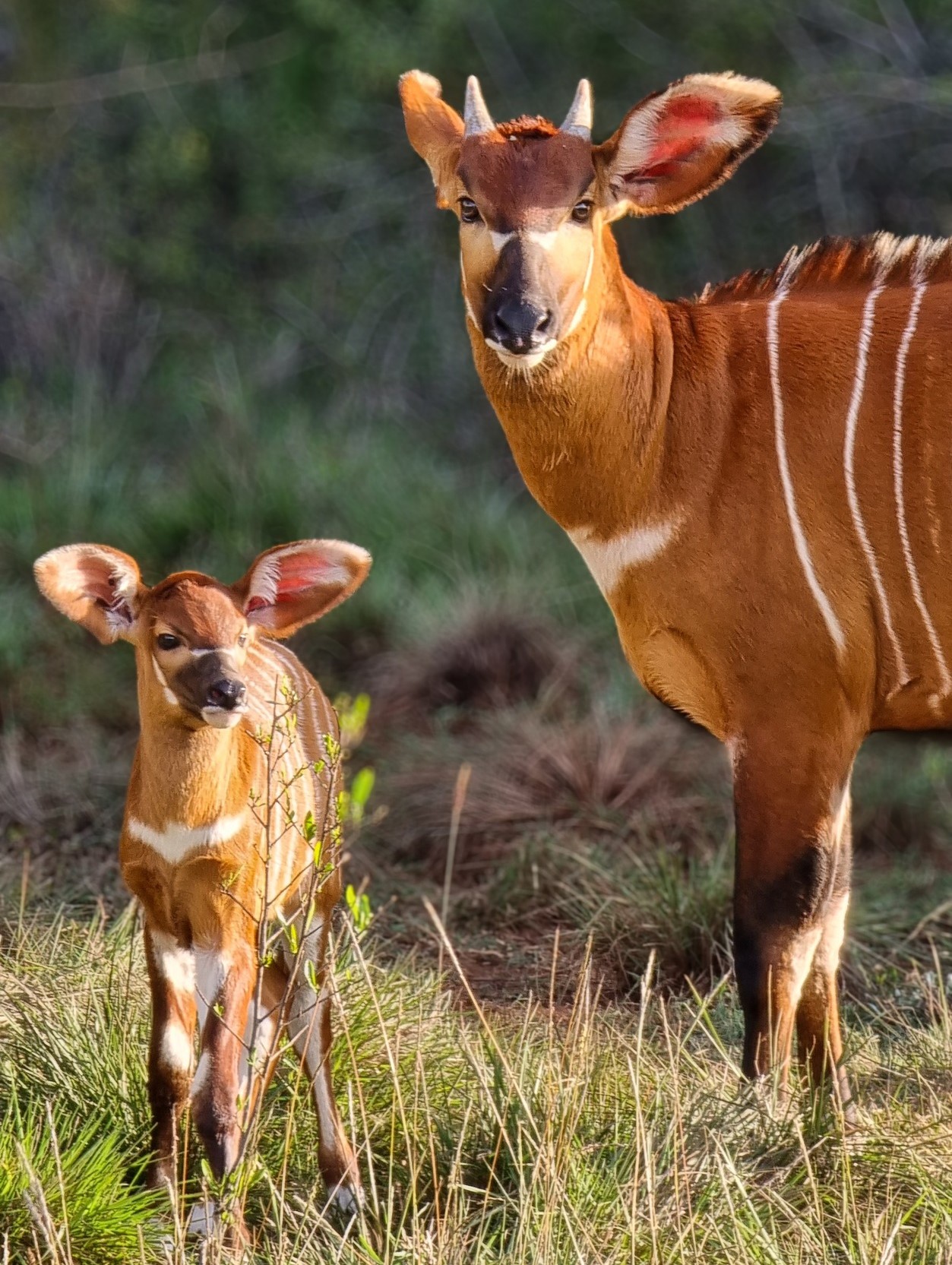
 A Mountain Bongo with her calf at the Mount Kenya Wildlife Conservancy in Nanyuki, Laikipia County on May 12, 2025./PHOTO: GEORGE OWITI
In the shadows of Africa’s second-highest mountain, a technological transformation is taking place that could redefine the future of wildlife conservation in Kenya.
At the Mount Kenya Wildlife Conservancy (MKWC) in Nanyuki, Laikipia County, conservationists are harnessing the power of artificial intelligence to protect endangered species—especially the critically endangered Mountain Bongo.
For decades, Kenya has battled to protect its rich biodiversity from multiple threats: poaching, habitat destruction, climate change, and human encroachment.
Government agencies such as the Kenya Wildlife Service and the Kenya Forest Service have worked to safeguard the country's natural heritage, but challenges persist.
Turning to technology
It is in this context that MKWC, a non-profit trust, has taken a bold leap by integrating artificial intelligence (AI) into its conservation efforts.
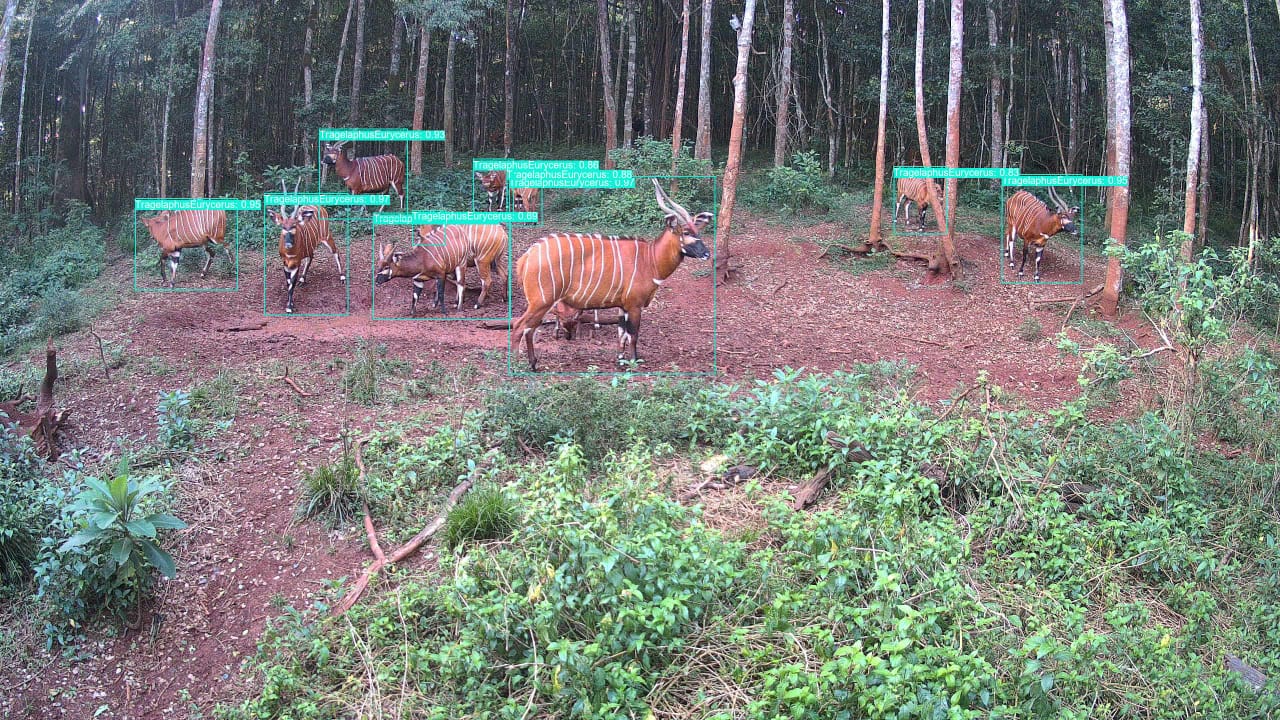 Some of the Mountain Bongos captured by AI cameras at Mountain Kenya Wildlife Conservency in Nanyuki, Laikipia County/HANDOUT
“We began testing AI technology last year,” Aruho told journalists during a media tour of the conservancy.
“It allows us to track and monitor endangered species like the Mountain Bongo more efficiently, accurately, and without disrupting their natural behaviour.”
Smarter, faster, and less intrusive
Previously, wildlife monitoring at MKWC depended heavily on human observation and labour-intensive patrols.
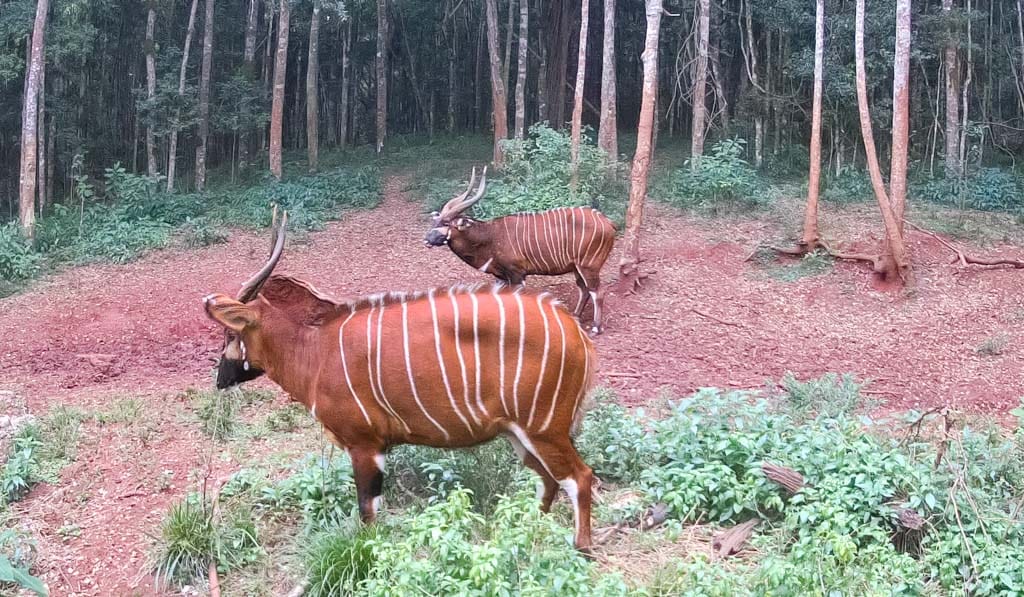 Some of the Mountain Bongos captured by AI cameras at Mountain Kenya Wildlife Conservency in Nanyuki, Laikipia County/HANDOUT
“With AI, we’ve revolutionised how we work,” said Jane Wathika, a research scientist at MKWC.
“We’ve installed AI-enabled cameras throughout the conservancy and in parts of Aberdare National Park, that can detect and differentiate the Mountain Bongo from other wildlife.”
Wathika explained that these smart cameras operate around the clock and have drastically reduced the time and resources needed to locate and monitor animals.
“Before, we could spend six hours searching for a single animal. Now, we can track them before we even leave the office,” she said.
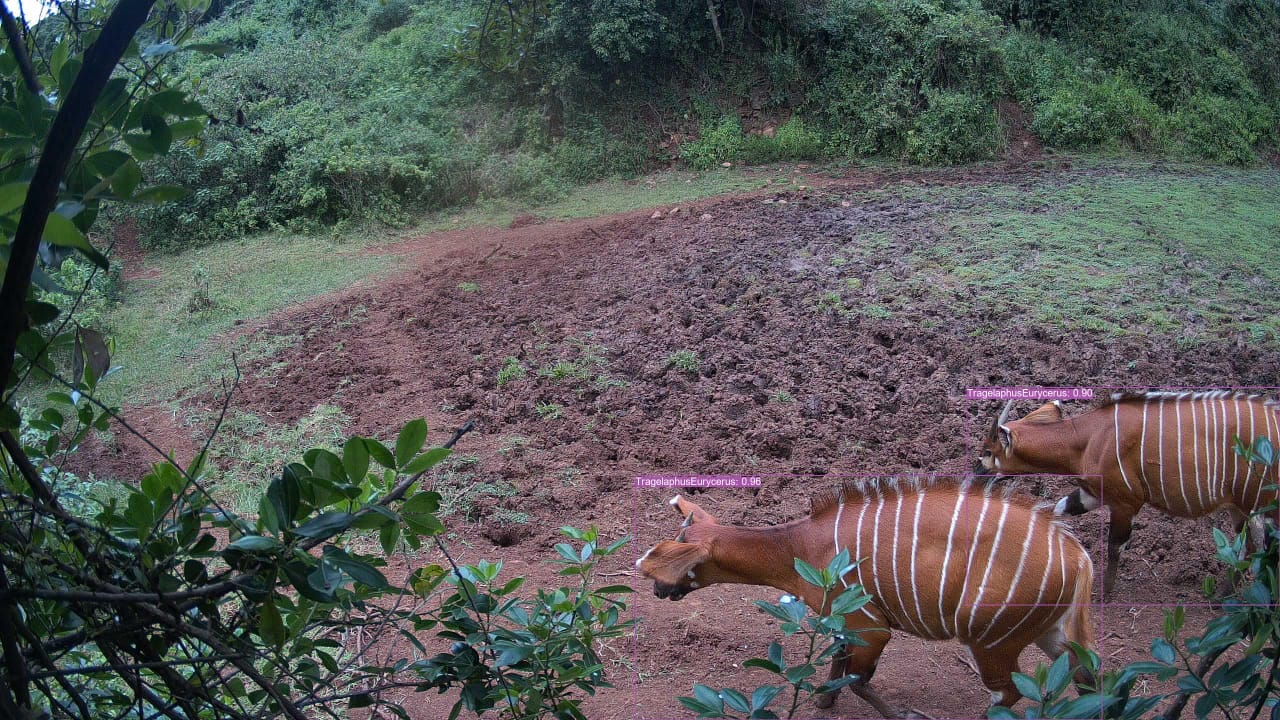 Some of the Mountain Bongos captured by AI cameras at Mountain Kenya Wildlife Conservency in Nanyuki, Laikipia County/HANDOUT
The Mountain Bongo is an iconic antelope native to Kenya’s montane forests. But its numbers have plummeted over recent decades due to poaching, disease, and habitat loss.
Today, fewer than 100 remain in the wild, and the species is listed as critically endangered by the IUCN Red List.
MKWC began a dedicated breeding and rewilding program in 2004, starting with 18 bongos imported from the United States.
Over time, the conservancy has successfully bred more individuals, gradually restoring the population.
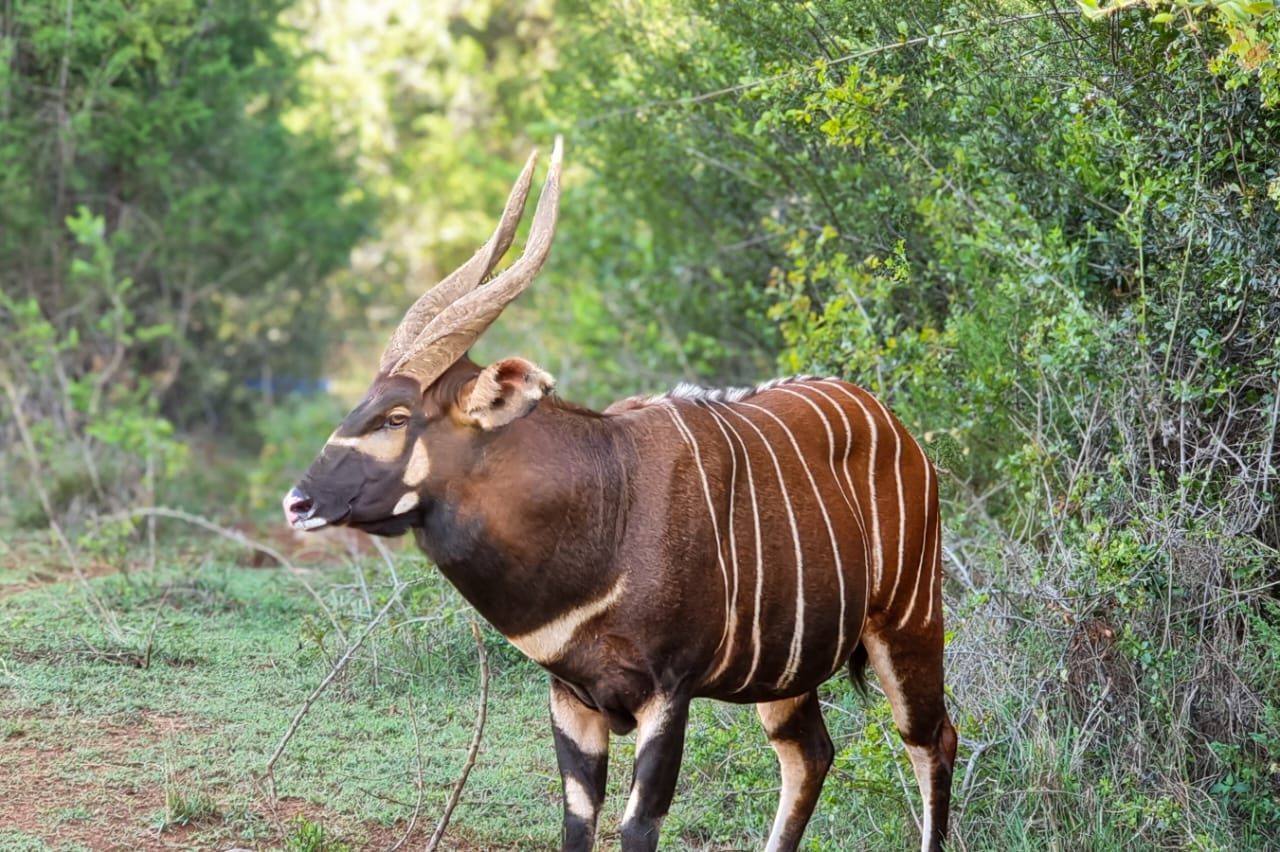 A Mountain Bongo captured by AI cameras at Mountain Kenya Wildlife Conservency in Nanyuki, Laikipia County/HANDOUT
“They have adapted well,” said Aruho. “They’re breeding in the sanctuary, and we see hope for restoring their population in the wild.”
The world’s first Mountain Bongo sanctuary
The Mawingo Sanctuary is a collaborative effort between MKWC, the Kenya Wildlife Service, and the Kenya Forest Service.
It is the world’s first and only sanctuary dedicated to the Mountain Bongo. The aim is to create a secure and expansive habitat where the species can learn to survive in the wild once again.
“By successfully breeding and restoring the Mountain Bongo, we hope to raise awareness for other species that are on the brink,” said Aruho.
Restoring more than wildlife
MKWC’s impact goes beyond one species. The conservancy protects 1,250 acres of land and is home to more than 30 wildlife species. Since 2018, more than 40,000 indigenous trees have been planted to restore habitats.
An animal orphanage at the conservancy offers care to injured, abandoned, or abused animals, with the goal of returning them to the wild. Meanwhile, more than 3,000 local community members have participated in conservation projects.
“Community engagement is key,” Aruho emphasised.
“When local communities understand the importance of wildlife and benefit from conservation, they become its strongest allies.”
How AI is changing the game
The conservancy’s AI-enabled cameras are placed at strategic wildlife hotspots: near trails, water sources, and sleeping areas. These cameras are not just passive observers—they are wired to recognise specific species and track their movement patterns.
“This technology helps us understand how animals move, when they eat, where they rest, and how they behave during different times of the day,” Wathika said.
The system offers real-time monitoring, including at night, which enhances response times in case of emergencies and helps map animal behaviour across a 24-hour cycle.
“It simplifies data collection and analysis. We can see how animals spend their entire day, without ever interrupting their routine,” she added.
Partnerships and challenges
The AI initiative is supported by Chester Zoo and Liverpool John Moores University in the UK, who provide technical support and research collaboration. But challenges remain—chief among them, poor internet connectivity.
“We currently rely on Safaricom and Airtel networks, but outages are frequent,” Aruho said. “We’re now considering satellite internet to solve this problem and ensure smooth operation.”
A Model for the future
Despite the hurdles, MKWC believes its efforts represent a model for conservation in the digital age.
By combining technology, science, and community engagement, the conservancy is showing how innovation can help save Kenya’s most endangered species.
“As we pioneer the use of AI in wildlife monitoring,” said Wathika,
“We’re proving that technology can be a powerful tool for conservation. It’s not just about data. It’s about saving species, restoring balance, and ensuring future generations experience the wonder of Kenya’s wildlife.”