A storm is brewing in the public sector after it emerged that civil servants could lose up to Sh6 billion in hardship allowances following a planned reclassification of hardship zones by the government.
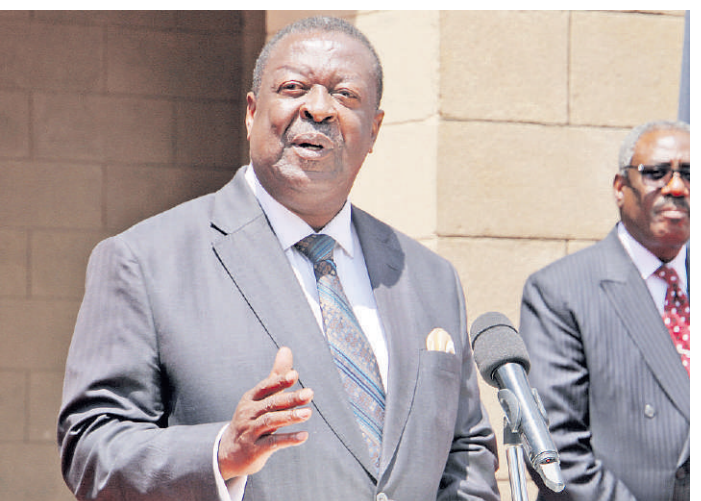
Prime Cabinet Secretary Musalia Mudavadi said the government is moving to implement findings from a report by the Inter-Agency Technical Committee, which reviewed areas currently designated as hardship zones.
According to Mudavadi, the proposal would result in the de-gazettement of 44 areas, reducing the government’s annual hardship allowance bill from Sh25 billion to Sh19 billion.
“I wish to inform the House that implementation of the Inter-Agency Technical Committee report will reduce the financial implication for payment of hardship allowances from Sh25 billion to Sh19 billion per annum,” Mudavadi told Parliament.
The Star has established that areas set for declassification include Kieni in Nyeri county, Makuyu in Murang’a, Wote in Makueni, Budalang’i in Busia, Nyakach in Kisumu, Chepalungu in Bomet and Chonyi in Kilifi.
The announcement has triggered uproar among civil servants and lawmakers, with senators demanding transparency and justification for the move.
Elgeyo Marakwet Senator William Kipsang raised concern that his county, plagued by persistent insecurity, is among those targeted for declassification.
“The implementation of this report stands to affect thousands of civil servants serving in areas previously recognised as hardship zones,” he said, clarifying the criteria used to determine hardship status.
“We need to know the indicators or benchmarks used to determine whether a region qualifies as a hardship zone.”
The Kenya Union of Post-Primary Education Teachers has rejected the planned reclassification and threatened legal action. The union argued that the report lacks legal standing since it has not been gazetted or subjected to public scrutiny.
“The categorisation of hardship areas is clearly spelt out in law and must be based on empirical evidence from the Kenya National Bureau of Statistics,” Secretary General Akelo Misori said.
Chairman Omboko Milemba also criticised the proposal, arguing that living conditions in many of the affected regions have deteriorated due to insecurity and marginalisation.
“Instead of reducing, the number of hardship areas should be increased,” he said.
The Inter-Agency Committee report, completed in 2019, has been dormant for years. It reviewed the criteria for classifying hardship areas and how allowances are distributed to public servants across various sectors.
Mudavadi said the team undertook wide consultations and found that several regions previously listed as hardship areas no longer meet the threshold, particularly after the 2013 transition to devolved governance.
According to the review, some of these areas have experienced notable improvements in infrastructure and service delivery—including access to water, healthcare, roads and education—thereby making them ineligible for hardship status under current standards.
The report has since been submitted to the Salaries and Remuneration Commission, which is expected to set new rates based on the revised classifications.