More than 343,485 registered teachers remain unemployed by the government, even as Kenya faces a critical shortage of tutors in public schools across the country.
This revelation comes as Education Cabinet Secretary Julius Ogamba came under fire from senators over the skewed recruitment process, where graduates from recent years are being hired ahead of those who completed their training over a decade ago.
According to data presented to the Senate, of the 343,485 unemployed teachers, 134,914 are trained in Early Childhood Development Education, 124,061 for primary schools, and 84,510 for post-primary institutions.
While ECDE teacher employment is a responsibility of county governments and not the Teachers Service Commission, at least 208,571 teachers qualified for primary and post-primary schools remain jobless under the commission’s jurisdiction.
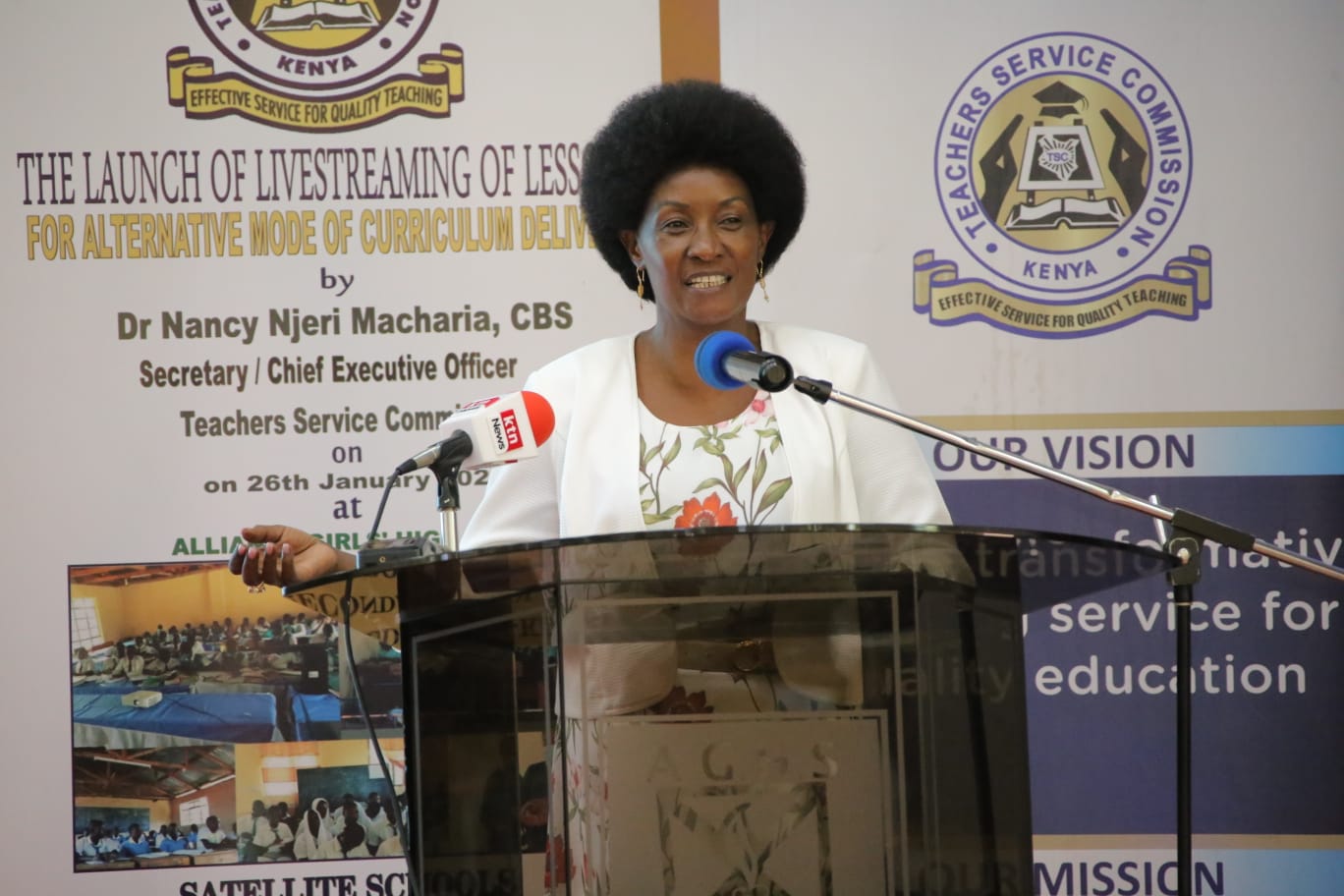
In a report compiled by TSC CEO Nancy Macharia and presented by CS Ogamba, it was revealed that the country is currently facing a shortage of 98,261 teachers, a number expected to rise with the rollout of senior secondary schools next year.
Macharia attributed the shortfall in teacher recruitment to inadequate budgetary allocations, despite increasing classroom demand.
Speaking before the Senate plenary on Wednesday, CS Ogamba said TSC had established an online teacher registration portal to streamline and enhance the efficiency of teacher registration and data management.
He emphasised that recruitment is subject to availability of funding and existing vacancies within authorised staffing structures.
“An analysis of the teacher register indicates that 343,485 registered teachers are not employed by TSC. This number includes those working in private institutions or those who have pursued alternative careers,” Ogamba stated.
He admitted that TSC was yet to compile comprehensive data on ECDE teachers employed by counties or provide a county-by-county breakdown of unemployed registered teachers, but said the process was underway.
However, senators challenged Ogamba over the lack of transparency and fairness in recruitment, noting that some teachers who graduated over 10 years ago remain unemployed while recent graduates have already secured positions.
Senate Majority Leader Aaron Cheruiyot (Kericho) called on the ministry to provide employment data categorised by year of graduation and region.
“TSC’s absorption programme appears to favour certain regions. In some areas, graduates from as recently as 2017 or 2018 have been absorbed, while in others those who completed their studies as far back as 2010 are still waiting. Can the minister provide a detailed breakdown by county?” Cheruiyot posed.
He warned that some unemployed teachers were nearing retirement age without ever securing a teaching post.
Nominated Senator Margaret Kamar pointed out that the hiring system prioritises parameters beyond graduation dates.
“If a 2015 graduate scores higher on TSC’s criteria than a 2010 graduate, the 2015 graduate gets hired. That’s how the formula works. But on the ground, this is viewed as deeply unfair,” she said.
She called on the ministry to consider prioritizing long-waiting graduates before they become ineligible due to age.
CS Ogamba admitted the system had failed to uphold that priority.
“The process should indeed favour older graduates, but that hasn’t worked as intended. We frequently hear of people who graduated 25 years ago and are still unemployed. It’s frustrating,” he said.
Ogamba pledged to champion an affirmative action policy that would enable the TSC to prioritise long-waiting teachers without requiring them to meet all competitive benchmarks.
“We need to mop up older graduates through a special recruitment drive so that we don’t have people retiring before ever getting employed. I give my commitment that this will be done.”
He added that in recent recruitment efforts, the TSC has tried to give preference to long-term unemployed graduates to promote fairness and reduce joblessness among teachers.
INSTANT ANALYSIS
The Teachers Service Commission is facing a severe teacher shortage, with the current deficit standing at 98,261, a number expected to grow by 2026 as the country implements senior secondary schools under the Competency-Based Curriculum. The situation is exacerbated by budget constraints that could impede the recruitment and promotion of teachers, further straining Kenya’s education system.