State agencies and ministries face substantial cuts in their expenditures for the 2025-26 financial year as President William Ruto moves to instil significant fiscal tightening measures across multiple sectors.
A review of the recurrent expenditure estimates for the year starting July 1 reveals a pattern affecting all key government agencies as well as the country’s top offices.
The Executive Office of the President has been allocated Sh3.8 billion, which is Sh600 million less compared with the Sh4.5 billion it was allocated last year.
Deputy President Kithure Kindiki’s office has also been affected and is tipped for Sh200 million less compared with the current fiscal year’s allocation.
Musalia Mudavadi’s office of the Prime Cabinet Secretary is also tipped for Sh24 million less and Sh280 million in respect of allocations to State House.
Among losers in the reduced State House budget are former President Uhuru Kenyatta, whose retirement perks have been slashed by Sh95 million. He received Sh371 million in the current fiscal year.
Former Prime Minister Raila Odinga’s perks have been equally slashed by Sh24 million from this year’s Sh87 million, Moody Awori and Kalonzo Musyoka have been allocated Sh21 million and Sh29 million.
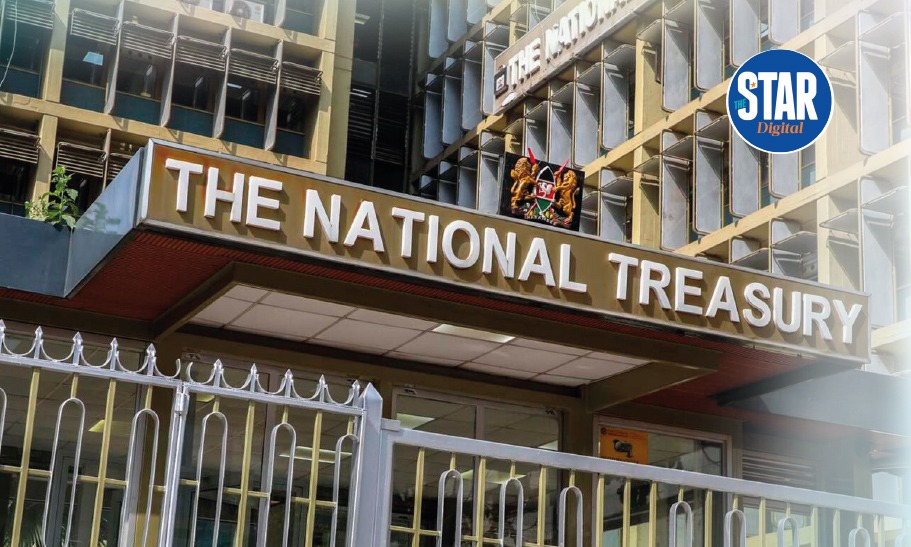
The National Police Service and Basic Education face the largest reductions of Sh9 billion each, while National Treasury is set for Sh8 billion less.
The cuts paint a picture of a government implementing austerity measures with potentially severe consequences for service delivery and economic growth.
This is amid revelations that taxpayers would spend about Sh2 trillion towards debt repayment, besides having to set aside Sh4.67 billion for compulsory salaries and Sh234 billion for pensions and gratuity payments.
Counties have also been allocated Sh405 billion, at a time the government is also grappling with pending bills, which are way past Sh700 billion.
The State Department for Tourism has seen its gross allocation slashed by Sh2.45 billion, from Sh13.6 billion in 2024-25 to Sh11.15 billion in the coming fiscal year.
Social protection programmes also bear some of the deepest cuts, with the State Department for Social Protection and Senior Citizens Affairs losing Sh3.82 billion or 11.5 per cent of its net budget.
This reduction from Sh33.35 billion to Sh29.53 billion comes when inflation pressures have made social safety nets more crucial for vulnerable populations.
The newly created State Department for Children Welfare Services has an allocation of Sh11.37 billion, leaving questions on whether it would compensate for the broader reductions in the social sector.
The State Department for Petroleum budget is set to shrink by Sh35.6 million to Sh295 million, while Mining has a dramatic 40 per cent net cut from Sh1.03 billion to Sh613 million, cuts which stand to affect key drivers of economic growth and job creation.
State Department for Investment Promotion's net expenditure estimate has fallen by 39 per cent from Sh1.04 billion to Sh636 million.
This contradicts Kenya's urgent need to attract foreign direct investment to counterbalance economic headwinds and currency pressures.
Similarly, the Labour and Skills Development department suffers a 16 per cent net funding reduction at a time when youth unemployment remains stubbornly high.
The State Law Office is experiencing a 10 per cent net reduction while the newly created State Department for Justice has been allocated Sh1 billion.
For security agencies, the trends are contradictory, with the National Intelligence Service absorbing a 7.5 per cent net budget cut from Sh55.65 billion to Sh51.45 billion, while the National Police Service Commission is set to have 38 per cent increase.
The Ethics and Anti-Corruption Commission has been allocated a modest three per cent boost, pushing its allocation to Sh4.2 billion.
For Environmental programmes, the Climate Change initiatives are tipped for a 5.6 per cent net increase, while Forestry has suffered a 14 per cent cut.
The uneven approach calls into question the government's commitment to environmental protection and climate change mitigation strategies.
The Auditor General and Controller of Budget have received modest increases of 2.4 per cent and 17.6 per cent, respectively, while the Salaries and Remuneration Commission faces a 7.6 per cent reduction.
The education sector emerges as one of the few clear beneficiaries, with the Teachers Service Commission's net budget growing by 6 per cent to Sh386 billion.
The difference of Sh21 billion is to cater for the recruitment of teachers, of whom Ruto said more than 20,000 would be hired this year.
Polls agency IEBC also has part of the biggest jumps from Sh3.9 billion to Sh9.6 billion to cater for the new commissioners whose names were forwarded to Ruto on Tuesday.
EACC is also tipped for a Sh120 million funding boost, Sh340 million for the National Land Commission, and Sh180 million for the Auditor General.
INSTANT ANALYSIS
Kenya faces immense pressure from the International Monetary Fund and the World Bank to live within its means. The institutions have been urging Kenya to curb its growing debt and cut public spending by significant margins.