President William Ruto’s government has hinted at a plan to lower taxes on building and construction materials in a move likely to boost his campaign to construct 200,000 housing units every year.
According to the Finance Bill, 2025 seen by the Star, the National Treasury has proposed to reduce the Export and Investment Production Levy on a number of construction-related products, including semi-finished products of iron or non-alloy steel, bars, and rods of iron from the current 17.5 per cent to five per cent.
Although the easing of the tax regime is likely to open gates for imports, the proposal, if it sails through, is likely to increase supply in the local market, potentially reducing construction costs.
The tax relief is coming at the time the government is keen to achieve the affordable housing agenda and implement various mega construction projects, including the dueling of the Rironi-Mau Summit highway, the Nairobi-Mombasa Road, and the extension of the Standard Gauge Railway from Naivasha to Malaba.
In 2023, the state introduced the levy on several imported products, including construction-related materials like cement clinker, steel, and paper, to boost local manufacturing, increase exports, and create jobs.
While the levy has been credited with positive impacts like the reopening of steel mills and job creation, construction companies and experts have chided it for increasing costs and hindering competitiveness.
Ironically, instead of lowering imports, data from the Kenya National Bureau of Statistics (KNBS) shows that more construction materials were shipped into the country despite the high levy.
According to the Observatory of Economic Complexity (OEC), total iron ore imports in 2022 from Uganda, South Africa, India, the United Kingdom, and China were worth approximately Sh4.8 billion. This, however, increases in 2023, defying the levy.
According to the Kenya Ports Authority (KPA) database, our iron ore imports were approximately 418,500 MT (excluding Uganda's) between March 13, 2023 and March 3, 2024, valued at approximately Sh6.4 billion.
Even so, the construction sector's growth has been sinking over the years, hitting a 22-year low in the first nine months of 2024.
According to KNBS, the sector continued its negative growth in the third quarter, shrinking by 2.9 per cent in the period between July and September and two percent.
According to data from the Kenya National Bureau of Statistics, the construction sector growth in 2015 was 13.9, 2016 was 9.2, 2017 was 8.4, 2018 was 6.9, 2019 was 6.4, 2020 was skipped due to Covid-19, 2021 was 6.7, 2022 was 4.1, and 2023 was three per cent.
Last year, the country's economy grew by five per cent, a decline from the 5.5 per cent growth recorded in 2023, with the Central Bank of Kenya (CBK) attributing the drop to sluggish growth in transport, industrial, and construction sectors.
This slowdown was reflected in significant decreases in key inputs, including a 12.7 per cent drop in cement consumption and a 32.4 per cent decline in bitumen imports.
The rise in the cost of construction materials has pushed up the overall cost of house ownership in the country too.
The latest industry data by Integrum, a construction consortium and management firm, shows construction costs average Sh48,750 to Sh122,860 per square meter for residential, commercial, retail and industrial buildings.
This translates to around Sh4,529 to Sh11,414 per square foot. In 2021, the standard cost of building a square meter in the country was Sh33,650.
This means the average cost per square meter has increased by at least Sh15,100 in the past three years.
Construction experts who spoke to the Star have welcomed the National Treasury’s proposal, with the majority saying that it will open ways for the construction and real estate sectors, bringing job creation.
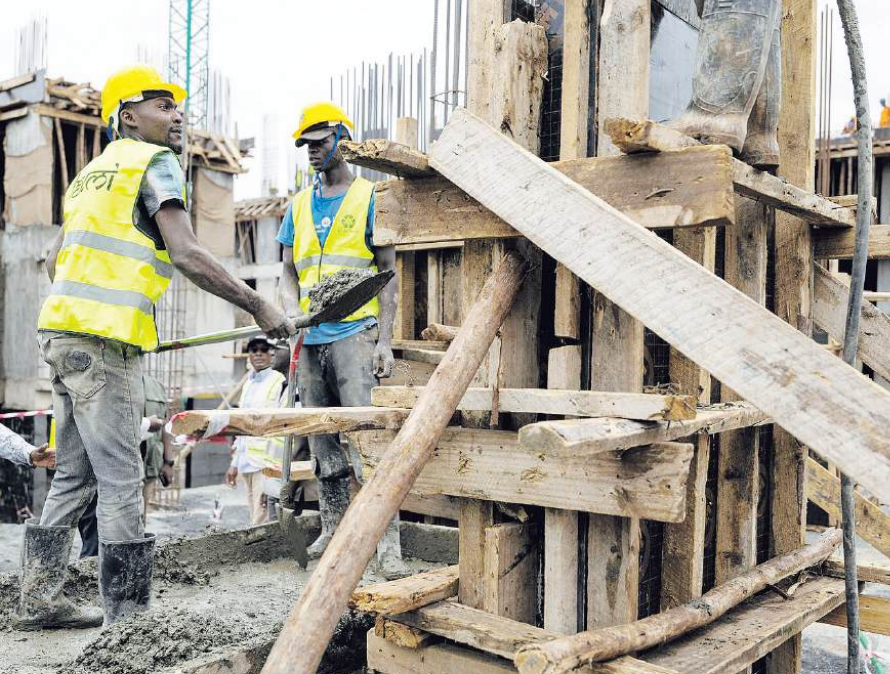
Currently, the construction sub-sector is estimated to employ 1.03 million people, the third largest employer of youth, after retail and wholesale trade, which employs about 2.4 million, and agriculture, where 3.7 million Kenyans currently work.
John Sitati of Nuts and Bolts construction in Kakamega told the Star that while it is good to safeguard local manufacturers, they don’t have the capacity to meet the huge demand for construction material, pushing up the cost.
‘’I fully support the proposal in the Finance Bill, 2025. Cheaper cost of materials is equal to high production, ensuring job creation and even taxes to the government," he said.
Jared Macharia of Kikuyu Pipes wants the MPs to pass the bill into law, terming it the most exciting part of the Finance Bill.