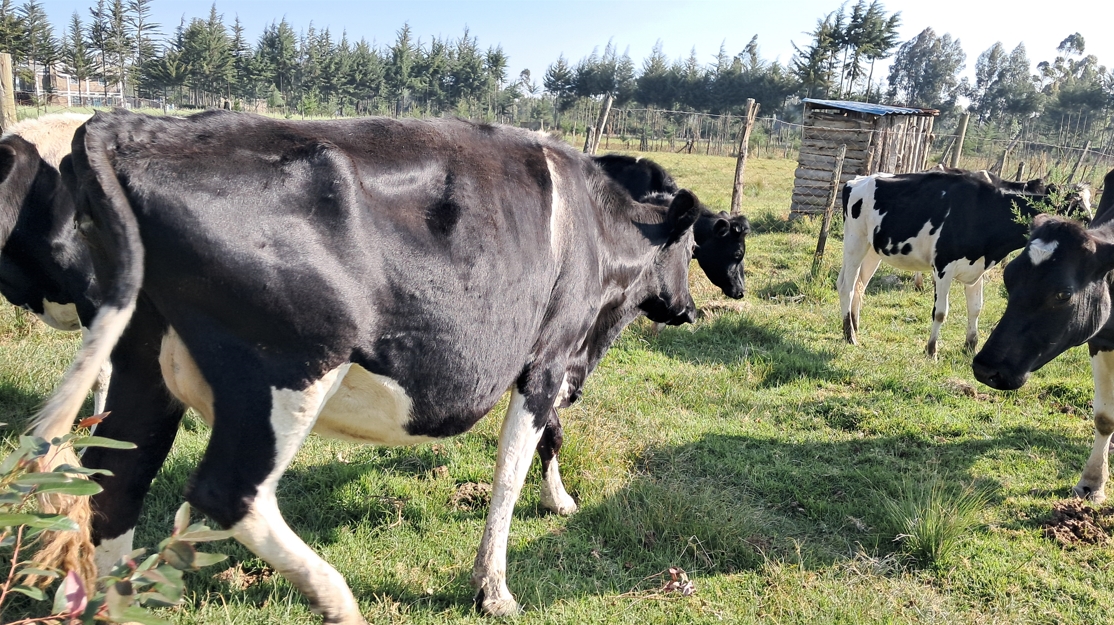
 Dairy Cows/HANDOUT.
Dairy farming remains one of the most promising agricultural ventures, providing steady income and vital nutrition for millions around the country and globally.
Yet, success in this field requires more than just owning a few cows, it demands knowledge, planning, and consistent care.
From being able to select the right breeds, through observation of the physical appearances, health management, and marketing strategies, every step plays a crucial role in how to indulge in successful dairy farming practices.
According to Dairyverse agricultural expert Samson Kiarie, best practices of dairy farming are essential for both new and experienced farmers.
Karie notes that the first tip is to accustom the calves to faster growth by tripling their birthweight through weaning.
This, he says, will ensure they are fully mature at 15 months of age while eliminating the calf’s risk of developing a pot-belly, rough coats and diarrhoea.
“Heifers should be served at the age of 15 months. At 15 months, the heifers should have attained 75 per cent of mature body weight, show heat signs, and conceive,” he says.
“In calf heifers and cows should also be well prepared. Your cows and heifers should be properly taken care of.”
He says that the processes of drying off, steaming up, and transition cow management should be done correctly.
The expert notes that the cow should be in good condition.
He says a good way to identify the essence of the cow is by observing their physical appearance and whether it’s appealing.
“A colourful herd is always certain. For instance, are the cows’ coats smooth or rough? Cows with smooth coats produce more milk and have a higher value,” he says.
“When looking at the Udder Profile, cows and heifers that are close to giving birth should have a well-formed udder for high yields.”
Another aspect, he explained, of key observation is regarding the heat process on cows.
Kiarie notes that the worst enemy to the progress of your dairy business is poor fertility, which can lead to low milk yield.
Heifers and cows that fail to show heat signs, he says, may lead to losses.
Additionally, he says cows should maintain consistent milk production throughout their lactation cycle, with minimal dry periods.
“When you are feeding your cow, you should make sure the trough is clear and there is minimal wastage of fodder.”
Proper nutrition, health care, and breeding practices help ensure steady milk flow year-round.
In summary, achieving a lucrative dairy business requires disciplined feeding practices, careful health management, and constant monitoring.
By prioritising these habits, you can lay the foundation for a thriving, sustainable dairy operation where farmers maximise productivity and profitability.