Each time the headlines announce the death of a woman or a child under suspicious circumstances, Kenya momentarily is jarred to attention.
The story circulates rapidly. Grief is expressed. Outrage follows. But just as swiftly, the public loses interest, and the country resumes what amounts to a deadline routine as if nothing happened.
In these cycles of horror and amnesia, a troubling truth is revealed: Kenya is becoming dangerously desensitised to ‘normalised’ violence, especially against women and children.
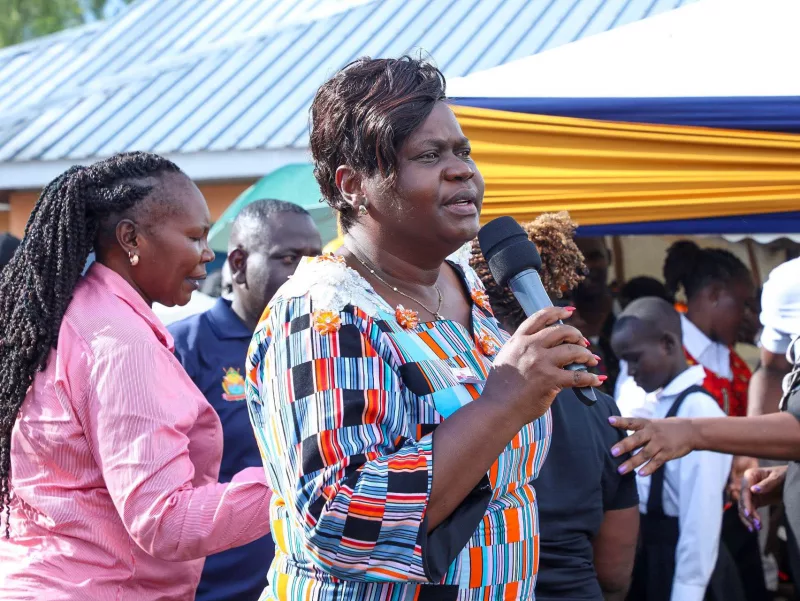
Notably, on November 20 last year during a press briefing at State House, Nairobi, President William Ruto addressed the issue alongside some women leaders. In his remarks, the President described femicide as a “pressing and deeply troubling issue”, and emphasised thegovernment’s commitment to addressing the crisis.
He highlighted the fact that four out of five women killed fall victim are victims of intimate partner violence, underscoring the urgency of the situation.
He called it a “national shame” and directed investigative and security agencies to act decisively in bringing perpetrators to justice. There’s a deeper problem. It’s not only about the need for more dedicated and aggressive policing and prosecution.
The real issue is the collective complicity of a society, a patriarchal society, that has grown comfortable ignoring warning signs of violence against women until it is too late.
Femicide does not begin with murder. It begins with the silent erosion of dignity and autonomy in the lives of women and girls. It begins when emotional abuse is excused as passion.
When stalking is romanticised. When men are socialised to see control as love, and women are encouraged to endure mistreatment in the name of preserving relationships and ‘the family’.
Every time we fail to challenge these harmful narratives, we are preparing and watering the soil for violence to take root and flourish.
The killing of women and children is not simply a criminal matter. It is a moral stain on the soul of a nation.
In 2024 alone, there have already been multiple high-profile cases of young women murdered in urban lodgings, their last hours spent in terror.
In one tragic case, a mother and her two children were found lifeless after a domestic dispute. The tragedy is compounded not only by the loss of life but by how society responds — often with victim-blaming, moralising, or silence.
For every woman who is killed, there are countless others living in the shadow of fear. Police records, hospital logs, and community whispers reveal a pattern of abuse and intimidation that precedes many of these deaths.
Too often, these signals are dismissed or suppressed. Families may urge women to keep quiet for the sake of appearances.
Friends may hesitate to intervene. Even the law, at times, can seem remote, slow to respond, or indifferent to ‘personal disputes’. There is also a parallel epidemic that demands attention: the killing of children, sometimes at the hands of parents, guardians, or trusted adults.
Children are found abandoned, strangled, drowned, or beaten. The very individuals who should be their protectors become their perpetrators. Yet thepublic discourse on these killings is alarmingly muted.
As a nation, we have failed to demonstrate the urgency demanded by this moral crisis. Kenya has laws. The Protection Against Domestic Violence Act, the Children’s Act, and several constitutional safeguards speak clearly about the rights of women and children.
The challenge is not the absence of statutes but the presence of social apathy. Laws cannot protect where society chooses not to see.
The work of justice must begin in the hearts of ordinary citizens —in homes, schools, churches, matatu stages, and markets. We must also reject the cultural framing that casts these killings as tragic but isolated incidents. They are not.
They are connected by common threads: a pervasive mindset of patriarchal entitlement, women’s ‘natural’ economic dependency, emotional repression, and a culture of silence. A boyfriend who stabs his partner because she wanted to leave him is not just a man who ‘snapped’.
He is the product of a system that never taught him how to manage loss without violence. We must teach our sons that a woman’s life is not their possession. That love is not control. That conflict is not resolved through rage. And we must teach our daughters that their safety is not negotiable.
That silence is not strength. That leaving is not weakness. The media, too, must shoulder its share of responsibility. The language used to report these tragedies must be reformed. A woman is not ‘found dead’, as though by accident; she is killed.
Her name should not be lost behind terms like ‘mistress’ or ‘estranged lover’. She was a person with a life, a family, and dreams, and her death should be reported with the dignity she was denied in life.
Religious leaders must speak with moral clarity. It is no longer acceptable to preach submission without boundaries or to encourage suffering in silence. Faith must never be used to endorse abuse or to shame victims into staying in dangerous situations.
The writer
is a political
commentator