President William Ruto’s recent high-stakes tour of China may have targeted a lot more than just strengthening ties with the Asian giant.
Pundits read a calculated political masterstroke that may, in the long run, secure his path to re-election in 2027 if implemented as planned.
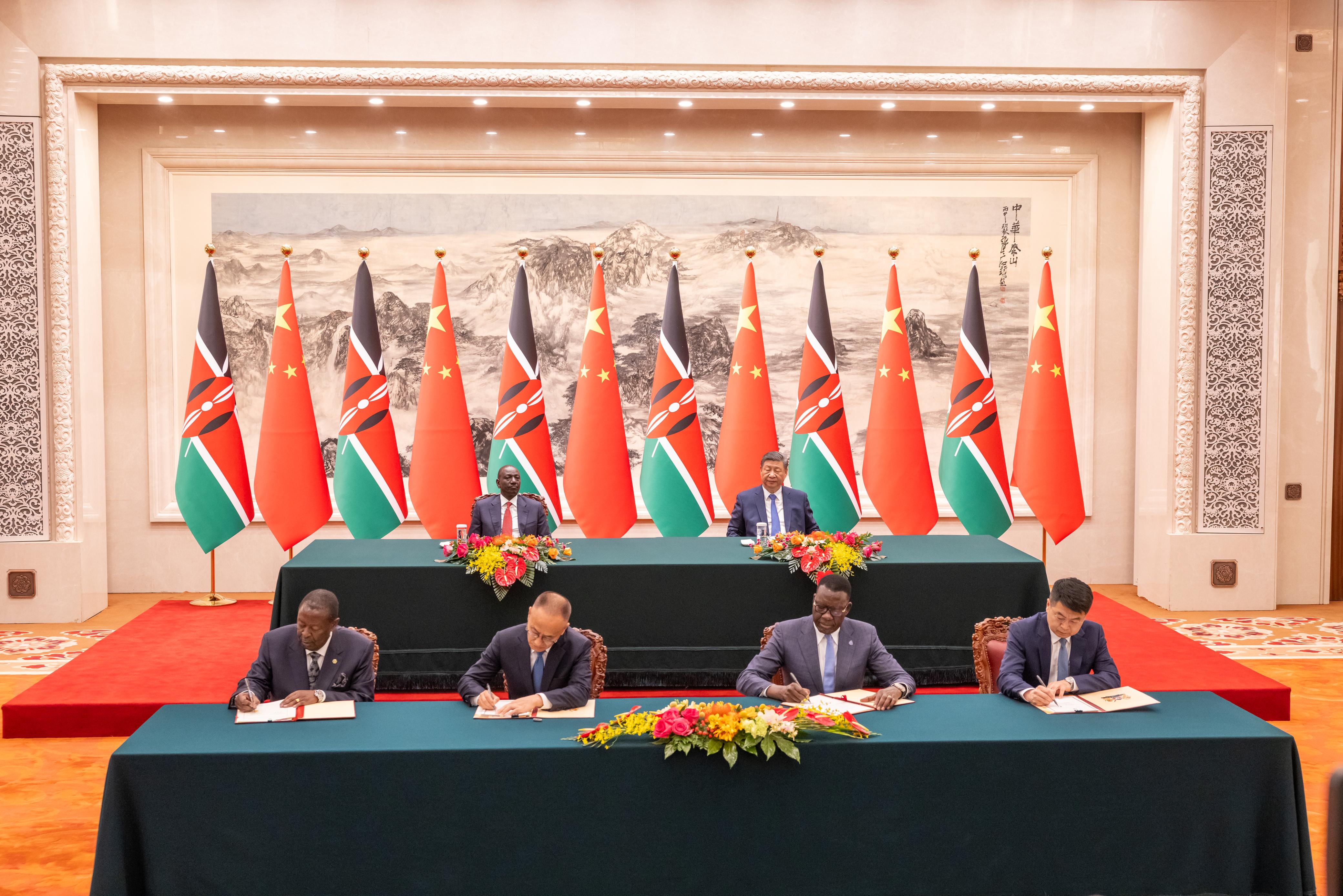
Facing mounting economic pressures, a restless electorate, and an opposition eager to prey on his struggles, President Ruto is pressed for time to deliver “The Plan”. In his campaigns he made a plethora of promises, only to be confronted with the reality that there is no wiggle room to expand state spending. His former deputy, Rigathi Gachagua, told Kenyans who cared to hear him then that, “We found empty coffers.” Ruto is in the second half of his first term. With elections just 27 months away, a second term is a high-stakes affair, as his critics double down that there is nothing to show for his time in office so far. Kenya Kwanza's Bottom Up plan has ideas that are capital-intensive, while Kenyans demand visible growth as a mark of performance. There is a live threat from his estranged allies that they’ll ensure he makes history as the first sitting President to be sent packing after a single term. After months of vain efforts to secure resources to deliver the promise, Chinese leader Xi Jinping laid the red carpet for Ruto. In their meeting, as per a communiqué from the deliberations, the two agreed to elevate the countries’ cooperation under the Belt and Road Initiative. Following what State House billed as a successful trip, Ruto returned from Beijing with a multibillion-shilling package of infrastructure deals that could reshape Kenya’s economic landscape—and, crucially, his own political fortunes. At the heart of the agreements is the extension of the Standard Gauge Railway from Naivasha to Malaba on the Uganda border. Completing this critical link not only revives Kenya’s regional trade ambitions but also allows Ruto to claim victory where his predecessor, Uhuru Kenyatta, fell short. Equally significant is the deal to transform the Rironi-Mau Summit highway into a six-lane dual carriageway under a Public-Private Partnership arrangement. Set to begin in June, the project, cutting through the heart of Ruto’s Rift Valley political stronghold, is also hailed as a potential tangible marker of his delivery capabilities. Desperate journeys taken on the route, especially during the festive seasons, have demonstrated this urgency. Last year, travellers spent nights in the cold after an impossible gridlock cut short their journeys to the festivities. The grand question on the lips of many then was why the government appeared less concerned. Infrastructure has always been a potent political tool in Kenya, and by fast-tracking the railway, Ruto appears keen to change this story before the next election cycle. “It is these visible infrastructure projects that will highly impact his legacy,” political analyst and governance specialist Javas Bigambo said. “For this reason, bilateral agreements with China, and the attendant credit will unavoidably railroad his legacy as President.”Victor Marende, leader of ODM’s action group MDD, agrees.
“This (the projects) is a game changer. The population going to western is huge. If he can complete it to Malaba, he will be supported in a manner that pleases God,” he said. He told the Star on Friday that the projects stand to positively change the perception of the Ruto presidency. “The President is being fought because they don’t see what he is doing. One good project fixes your name in the history of the country,” Marende said. He gave the examples of Mwai Kibaki being associated with the Thika Superhighway, and Uhuru’s SGR and Nairobi Expressway signature projects.Ruto also secured funding for the long-awaited Nithi Bridge, a project he pledged in the 2022 campaign but which had remained unfulfilled, leaving room for criticism.
With Chinese funding now secured, it stands to neutralise potential fodder for his rivals who have accused him of empty rhetoric. Tigania East MP Mpuru Aburi said, “The bridge and the other projects, if implemented effectively, will benefit Kenyans.“There is no country without a loan. No one can escape loans. We support him, and whatever he has brought must be put to good use,” the NOPEU party leader said.
President Uhuru Kenyatta launched and took a first ride on the SGR passenger service – christened Madaraka Express - a few weeks to the 2017 general elections. Perhaps Ruto’s most politically strategic of all the deals are the upgrades to the Kiambu and Northern bypasses into dual carriageways. These projects are tailor-made to regain favour in the restive Mount Kenya region, where Ruto’s support shows signs of erosion. President Ruto also secured funding for major roads in Eldoret as well as 15 unspecified rural roads, a move likely designed to shore up grassroots support. Additionally, the 26 deals signed include an intelligent traffic management system for Nairobi, with the potential of easing the pain of residents frustrated by traffic jams. Critics, however, warn of the risks of deepening reliance on Chinese financing, pointing to debt challenges. “What we should ask is, what are we giving away? There will be repercussions. Remember we said we wouldn’t borrow, but we have overdone it,” Embakasi Central MP Benjamin Gathiru alias Mejadonk, a Gachagua ally, said. For the lawmaker, the electorate, “united in poverty”, have already made up their mind, and there is no guarantee the projects would offer Rut a political lifeline. For Ruto backers, the timing is perfect and allows the President to shift the narrative from economic hardship to grand infrastructure revival. With this, they hold that he can position himself as a leader who can secure external investment against the odds. “If construction progresses smoothly, nothing stops him from campaigning on a record of delivery,” Baringo North MP Joseph Makilap said. He said by locking in these deals now, his party leader has tangible projects to showcase before the next election. Besides the roads, Chinese firms are expected to lease Hilton and Intercontinental hotels, presenting an aura of hope to the struggling iconic hospitality facilities. Several manufacturing lines for solar panels, chicken feed, textiles, and steel, as well as smart transport, are also planned. For the President’s men, the immediate relief is that Ruto has given himself a fighting chance, much as it remains to be seen if the deals will be enough to secure him a 2027 lifeline.