The lights above me blurred as the anesthesiologist said, “Cornelius, just relax and breathe normally, we’re putting you to sleep now.”
That was the last thing I heard before darkness covered me—and surgeons opened my chest. "I woke up to a breathing tube down my throat, my chest feeling split in two. And in that moment, I realised I had survived.
I was in the ICU at Mater Hospital. I now had a new mechanical aortic heart valve. I could hear the steady beep of a heart monitor—and a blur of tubes, wires, and the mechanical rhythm of survival. I felt like I was surfacing from a deep, dark ocean.
Moments after I regained consciousness, my surgeon arrived, accompanied by two other surgical cardiologists. Their faces, familiar from the pre-surgery meetings, now bore smiles of satisfaction that spoke volumes.
“Good morning, Cornelius. I’m glad you’re awake,” the lead surgeon began warmly.
“The procedure went well, and you should be able to go home in about six days. For now, you’ll remain in the ICU as we monitor your progress before transferring you to the general ward.”
The doctor’s words filled me with inner joy, though I couldn’t express it verbally—the breathing tube and oxygen mask kept me silent, yet grateful.
On February 19, 2025, a day before the operation, the surgical team had explained the delicate intricacies of the procedure. Terms like heart-lung machine, heart palpitations and severe aortic regurgitation were used—phrases that lingered in my mind even as their exact meanings eluded me.
All I could think about was making it through the ordeal and going home. Period.
A brief session with a counseling psychologist that same day helped somewhat in managing my emotional and mental health. While my positivity never wavered, I can't pretend that fear didn’t raise its ugly head.
As the surgery drew nearer, the enormity of what lay ahead became more real—and it wasn’t something I could run away from. Waiting for the inevitable. The mountain was right in front of me. Open heart surgery. And I had to climb it.
After two days in the ICU, I was cleared to transfer to the general ward. The contrast was overwhelming. In the ICU, despite the heavy name and the constant beeping of machines, I felt strangely protected—sheltered by technology, medication, and round-the-clock monitoring.
There, pain was something distant, muffled by powerful drugs and the sterile calm of critical care. But now, in the general ward, the reality of an open chest hit me with full force. The pain was sharp, persistent, and deeply human.
Every breath, every movement felt like a reminder of the trauma my body had endured. It was raw, real, and a battle I wasn’t quite prepared for. This was, without a doubt, the hardest part.
The recovery journey continued in the ward— slow, challenging, but hopeful. The nurses and doctors were incredibly caring, constantly checking in and managing the web of IV lines that delivered a cocktail of medications.
Despite their efforts, the nights were the hardest. Sleep was elusive, and the pain intensified when I tried to turn or sit up in bed. Trips to the toilet felt like a battle, each step heavy with discomfort.
My appetite was almost gone, but the heavy doses of antibiotics were non-negotiable — a necessary shield against infection. The painkillers helped, but they couldn’t dull the deep ache in my chest.
Thankfully, family and friends visited often, bringing comfort, laughter, and a sense of normalcy, even if only for a little while.
DISCHARGE FROM HOSPITAL
Six days after surgery, just as my lead surgeon had predicted, I was cleared to go home. My condition had improved steadily, and the moment I was told I could leave, a wave of joy washed over me — a feeling like no other.
Family, prayer partners, and friends gathered to escort me home, their presence a true blessing. What made it even more special was that my daughter, who's in high school, happened to start her mid-term break on the same day.
Seeing her there, smiling beside me, crowned my happiness. Now back home, armed with packets of medications, I felt the overwhelming relief of leaving behind the sterile hospital corridors, the constant hum of machines, the parade of medics in uniform, and the endless pokes of IV lines.
But a new challenge began — adjusting to life without the comfort of an adjustable hospital bed. My wife had now taken over the role of my nurse, doing her best to make me comfortable. Nights were long and restless.
There was no call button to press, no medical staff on standby. We tried using every pillow in the house to find that elusive position of comfort, but nothing quite matched the support of a hospital bed. Recovery continued — just in a different, more personal setting.
DECADE-LONG JOURNEY
It all began on March 2, 2015, during my birthday, when I left the newsroom at Radio Africa Group, and rushed for a checkup at the nearby AAR clinic at Sarit Centre after experiencing flu-like symptoms. During the examination, the doctor unexpectedly detected a heart murmur while listening to my chest. She explained that murmur was a whooshing or rasping sound between the heartbeat sounds.
This is caused by noisy blood flow within the heart. In that moment, fear gripped me. I had the sudden urge to step outside and consult Dr Google about what a heart murmur really meant.
"I can hear a murmur in your heart. The heart murmur might indicate an issue with your heart,” she said, looking me straight in the eyes.
“I recommend seeing a cardiologist to find out what it could be but before then, let’s do an ECG.”
The ECG, or electrocardiogram, is a medical test that records the electrical activity of the heart. It helps doctors diagnose and monitor various heart conditions by visualising the heart's electrical impulses.
The results revealed irregular rhythms and an enlarged left ventricle—clear signs of an underlying issue.
Two days later, I met a cardiologist who performed an echocardiogram (ECHO), a test that uses ultrasound to evaluate the heart’s muscles and valves.
After the examination, he delivered the life-changing diagnosis: “Your aortic valve isn’t closing properly. This causes blood to flow back, forcing your heart to work harder and faster to compensate. At some point, we’ll need to replace the valve.”
The news hit me like a thunderclap. My world felt as though it was crumbling. That moment marked the beginning of a decade-long journey of further tests, close monitoring, and eventual preparation for surgery.
Absorbing that reality wasn’t easy — it took time. By the time the news truly sank in, I was already on hypertensive medication. Still, I sought second and third opinions, hoping for different answers. But the conclusion was unanimous: while surgery was inevitable, I was fortunate that the condition had been diagnosed early.
Thanks to the general physician who picked the heart murmur. My heart function was still moderate, and it wasn’t yet the right time for the operation.
I was placed on a management plan with regular medication, and my doctor advised that we do annual ECHO tests to monitor the valve. That I did. Religiously. Over time, I got used to this routine. Life returned to normal.
I didn’t show any major symptoms — I could walk, laugh, and even exercise without the usual fatigue many heart patients face. Occasionally, I would experience abnormal heartbeats — arrhythmias, as doctors call them — but they were manageable.
This routine went on for nine long years, until June of last year. After my usual annual ECHO, my doctor took me aside. I can still remember the moment vividly. “Cornelius, the time has come. We need to replace the valve while you’re still strong. Your heart muscles are at risk. You now have severe aortic regurgitation — we can’t afford to wait any longer,” the doctor said.
In that instant, time seemed to freeze, and everything I thought I knew about my life shifted.
The doctor gave me six months to prepare—both mentally and financially. Hoping for a bit more time, I asked, “Can we do it before February, Doc?” He chuckled softly and replied, “Yes, Cornelius. Let me know when you’re ready — but let’s not push it beyond February 2025.”
He reassured me that, with a strong heart and minimal symptoms, the surgery would likely yield a positive outcome. We weighed treatment options, both locally and abroad. But I felt confident—thanks to my cardiologist—that Kenya is home to highly skilled surgical cardiologists.
COSTThe cost, however, presented a whole new mountain to climb. Depending on whether you opt for a public or private hospital, a valve replacement could set you back anywhere from Sh1.5 million to Sh2.2 million. For the average Kenyan—especially someone like me, a journalist from a modest background—that's an overwhelming sum.
Despite undergoing treatment amid a nationwide outcry over challenges facing the Social Health Insurance Fund, managed by the Social Health Authority, I found myself a beneficiary of its newly enhanced coverage for open heart surgery and specialised treatments.
The scheme now offers packages with various public and private hospitals, some covering up to Sh952,000—more than Sh450,000 above what was previously available under the National Hospital Insurance Fund (NHIF).
Thanks to this, combined with my employer’s insurance and generous contributions from family and well-wishers, I was able to raise up to Sh2 million required for the surgery and post-operative care.
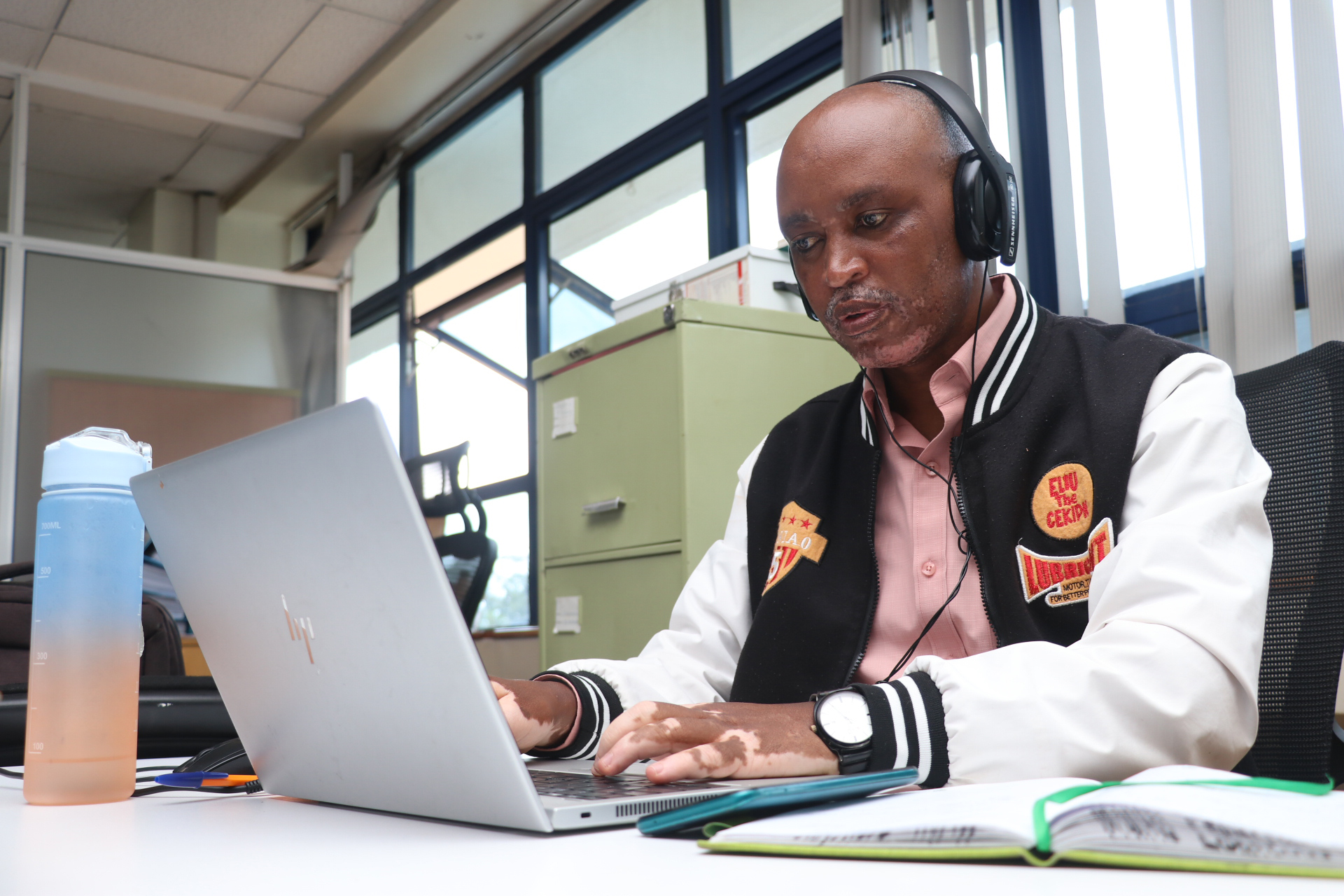
Six weeks after the life-changing procedure, I was back at work—virtually, of course. The pain in my chest had subsided significantly.
I dedicated myself to getting as strong and healthy as possible before the surgery. Now, two months later, I’m still fighting—pushing every single day to become even stronger and healthier post-surgery.
Though I must rely on lifetime blood thinners to prevent clotting in my mechanical valve, I’ve conquered open heart surgery. I am a fighter.