The National Assembly Security Committee has rejected a controversial bill seeking to impose stringent restrictions on public demonstrations.
The House team declared the proposed law incompatible with international treaties, conventions and best practices governing the conduct of assemblies.
In a report presented to the plenary, the committee recommended the complete deletion of the Assembly and Demonstration Bill, 2024.
The committee, led by Narok West MP Gabriel Tongoyo, argued that any legislation regulating protests should instead be developed through a broad and inclusive consultative process.
"The committee, having considered the Assembly and Demonstration Bill of 2024, recommends the deletion of the Bill,” it said in a report before MPs.
"There is a need to formulate legislation and guidelines for the conduct of assemblies and demonstrations through a broad and inclusive process."
The Bill, sponsored by immediate former Mbeere North MP Geoffrey Ruku—now the Public Service CS—sparked fierce opposition from civil society groups due to its far-reaching limitations on the right to protest.
Among its most contentious provisions is a requirement for demonstrators to obtain licenses before holding assemblies, with organisers compelled to submit their full names, addresses and details of marshals tasked with managing the protests.
Additionally, demonstrations would have been restricted to specific hours—between 6 am and 6 pm—with participants confined to pre-approved routes and locations stipulated in their license applications.
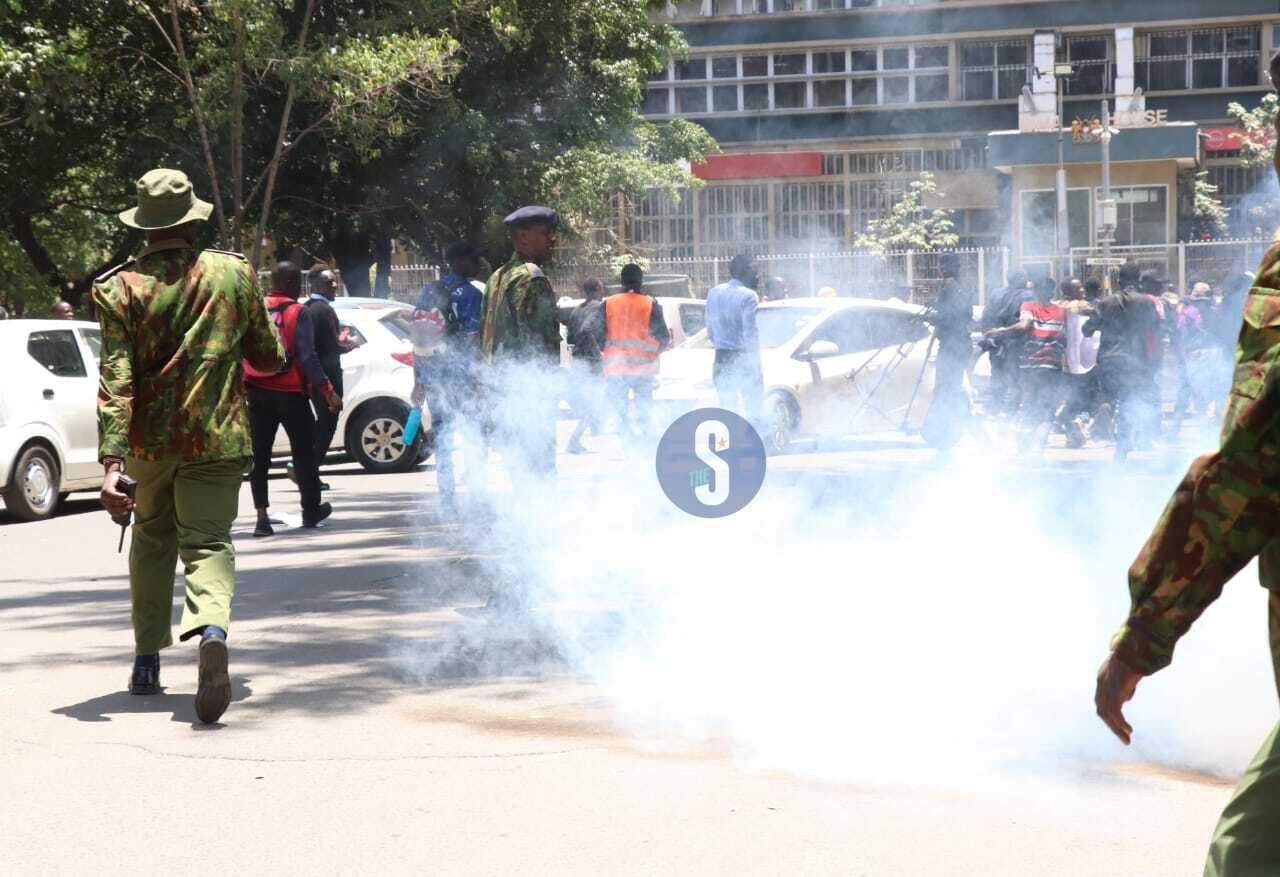
The proposed law also granted sweeping powers to law enforcement, allowing police to prohibit protests outright if they deemed them unauthorised or a potential threat to public order.
Authorities could forcibly disperse gatherings and prosecute individuals who defied dispersal orders.
Protest organisers, meanwhile, would have been held legally responsible for ensuring public safety, cleaning demonstration sites and covering any damages to property.
The Bill further imposed strict controls on protest materials, banning the use of masks, clothing resembling security uniforms and offensive weapons.
It also sought to regulate protest banners and language. Violators risked fines of up to Sh100,000, a year in prison or both.
Critics argued that the Bill’s provisions effectively criminalised spontaneous protests, as failure to notify authorities in advance would render demonstrations illegal.
Moreover, civil society organisations and human rights advocates warned that the legislation granted police unchecked discretion to suppress dissent, undermining constitutional freedoms.
The committee echoed these concerns, emphasising that existing laws, particularly the Public Order Act, could be amended to align with international standards rather than introducing an entirely new framework.
"The Public Order Act is the primary legislation regulating public order. Amendment to the Public Order Act to align with international law is more appropriate instead of the enactment of a new separate legislation to regulate assemblies and demonstrations only," the report reads.
The committee said criminalisation of failure to give notice indirectly prohibits spontaneous assemblies and demonstrations.
The committee’s findings were informed by submissions from various partners, including the Independent Policing Oversight Authority, the National Police Service Commission, the Law Society of Kenya and advocacy groups such as Transparency International and Article 19 East Africa.
While 50 individuals expressed support for the bill, an overwhelming majority—415 respondents—urged its rejection, citing its potential for abuse and its erosion of democratic rights.
Ipoa took issue with the requirement for demo organisers to apply for licenses, saying it would go a long way to making spontaneous protests illegal.
LSK said the proposed law watered down constitutional protections on the right to assemble and demonstrate. “The proposal is inconsistent with the constitutional standards.”
Kenya National Commission on Human Rights said the limitations as suggested in the Bill were broad and subject to abuse.
“Organisers and participants intending to hold a peaceful assembly may still be limited under the guise of public law and order grounds,” KNCHR said.
Katiba Institute wants the legal sanctions spelt in the bill removed, saying it is the sole responsibility of the state to maintain peace and order.
![Hamisi Mwaguya [in coulored baseball cap] at the Kings Arena at Khadija estate in Nyali subcounty on Tuesday / BRIAN OTIENO](https://cdn.radioafrica.digital/image/2026/10/340e650a-21d8-475b-b658-a429e82e9367.jfif)