President William Ruto and several of his close allies appear to have resumed large-scale harambee donations, triggering memories of the youth-led protests against ‘political benevolence’ that almost brought the country to its knees last year.
President Ruto is deeply religious and has said he will never stop giving to worthy causes for churches and religious institutions and other organisations dedicated to helping Kenyans.
This generosity persists despite Ruto’s directive outlawing participation in any form of harambee by state officials after questions were raised on the sources of the millions.
In the heat of the Gen Z revolt last year, the President ordered that no state officer would be allowed to participate in fundraising activities. Protesters said the source of the donations was often unclear but the money was clearly intended to win hearts and buy votes.
“In that regard, it is notified that His Excellency the President has directed that ‘No State officer and public servant shall participate in public collections (harambees) henceforth," head of Public Service Felix Koskei said in a memo dated July 7, 2024.
To further demonstrate the seriousness of the issue, the Public Fundraising Appeals Bill was crafted and is being processed in Parliament. The bill is meant to mainstream fundraising but many legislators have opposed it, saying it is their right to contribute to good causes.
But Ruto is adamant that he is not about to scale down his donations.
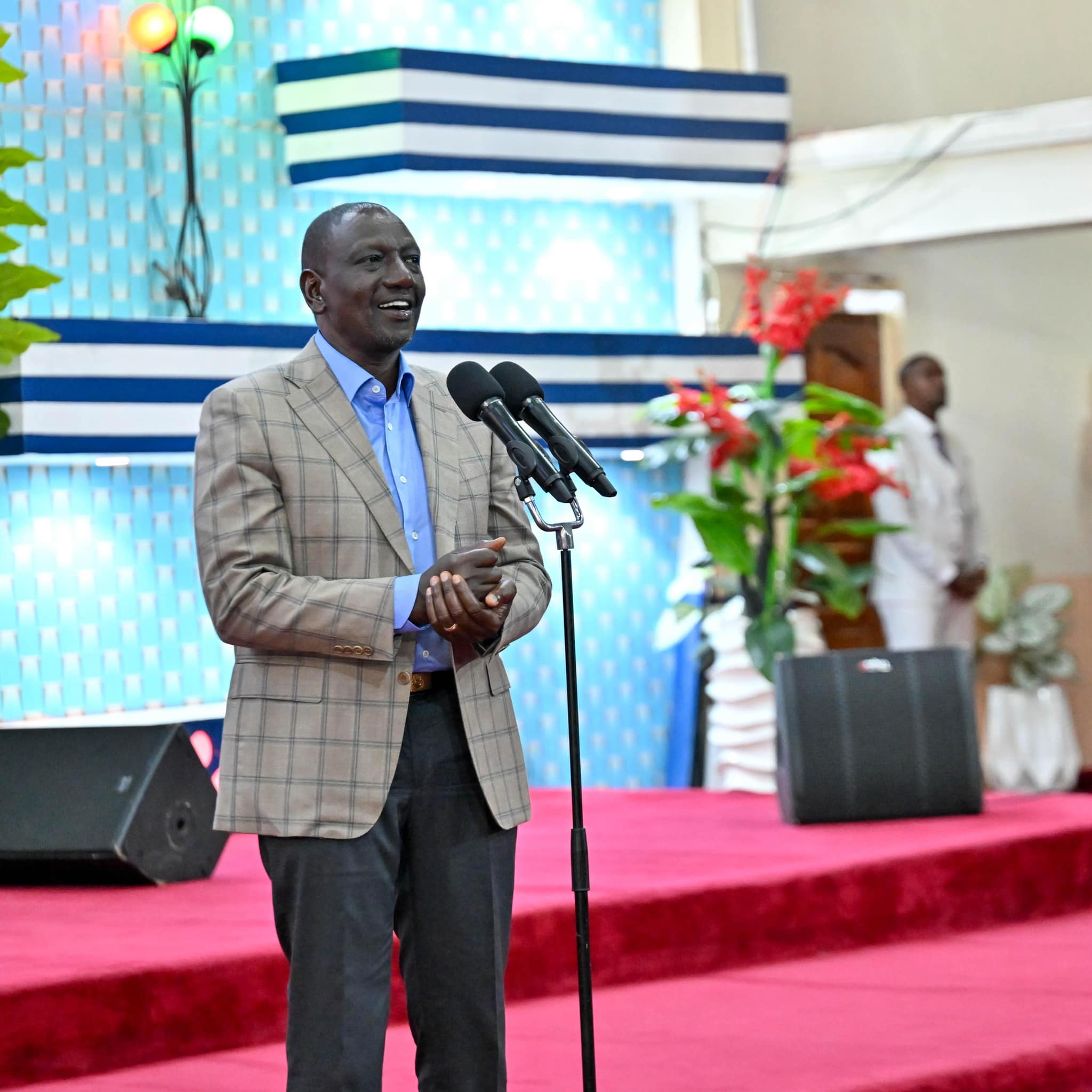
“We cannot forget to build God’s house. I cannot be constructing affordable housing units, markets and even State House, and leave out the church,” a defiant President said on Thursday at St Nicholas AIPCA Church, Kithaku, Meru county.
Ruto himself, long known for blending faith with politics, has appeared at multiple services—sometimes offering generous "personal contributions" to harambees.
Recently, he has been involved in big-money pronouncements, the latest being in Siaya where he pledged Sh20 million to upgrade Ramba High School in honour of Raila Odinga's long-time bodyguard, personal aide, and friend George Oduor, who died in hospital in early April.
During his Nairobi tour on March 10, the President gave Sh5 million to Zawadi Primary School to renovate classrooms.
On March 2 at Jesus Winner Ministry, Roysambu, the President donated Sh20 million towards completion of church’s construction project.
The following Sunday, the President was in his Eldoret backyard where he gave Sh20 million for building the AIC Fellowship Annex Church.
After public uproar over the Roysambu donation, the President has lately avoided making his donations public, only promising the church leadership that he will intervene when needed.
His allies have not been left behind. Led by Kapseret MP Oscar Sudi, lawmakers have been traversing the country especially Rift Valley, Western and Central, making huge donations on the pulpit.
On April 13, the vocal lawmaker led pro-government MPs to a funds drive in PCEA Gathaithi Church in Kiambu.
On the same day, they joined Deputy President Kithure Kindiki to raise funds for the boda boda and Mama Mboga Groups Economic Empowerment in Karuri High School, Kiambaa.
The previous Sunday, Sudi had made a personal donation of Sh2 million to a church in Eldoret.
Sudi’s team also conducted a big harambee at Moi's Bridge, Eldoret, where millions were donated.
Opposition leaders expressed dismay and alarm over the return of ‘money politicos’, a number of them making publicised donations.
Speaking to the Star on the phone, Mukurweini MP John Kaguchia said the revived trend is worrying, especially when Kenyans are facing serious economic hardship.
“People are stealing money from government and they do money laundering. It is clear that some of these systems the government is trying to put in place are money-siphoning systems such as SHA,” Kaguchia said. The administration says SHA is a reform to enable the universal healthcare system and Kenyans are benefiting, ‘teething problems’ are being dealt with.
“You have seen money that has been collected from e-visa is being collected in a foreign account in Switzerland. You have also seen lot of corruption in the country,” he said. “So this money is the one that is being brought back to Kenyans and being removed from the development agenda.”
The first-term lawmaker said it was unfortunate that big money was prioritised at the expense of Kenyans’ very pressing needs.
“This government has preferred doing political shenanigans and political bribery to focusing on things that would help Kenyans,” Kaguchia said. “You will find that monies for those shenanigans are so much available, but money for real development and services to the citizens is not available.”
This resurrected donation trend, observers say, signals the full-fledged return of "big money Sundays" — an era when politicians used church fundraisers to flex financial muscle and woo voters.
Critics argue that the millions in untraceable cash, while the government pushes austerity measures, raise both eyebrows and red flags.
Political analyst Daniel Orogo told the Star the church donations were here to stay, saying they were the ‘life blood’ of national politics.
The analyst said the President cannot make the ‘mistake’ of abandoning one of the very important activities that contributed to his 2022 victory.
“It was a temporary break; there is no way politics can exist without the church. It is only a tactic being used in most of the Central Kenya places,” Orogo told the Star on the phone.
“It (harambees) is for political capital,” he said “I think Ruto has sensed that maybe he is not getting the support he needs, and he is just ensuring that he cements that support by going to church. Church played a big role in his election.”
“He knows very well that if he loses the pulpit, he loses political power. For him that is a mileage.”
Churches, particularly in rural Kenya, serve as political battlegrounds where politicians find already mobilised and ready crowds. In contrast with chaotic rallies, congregants listen respectfully to every word from the speaker.
Activists and opposition leaders have faulted the President, accusing him of hypocrisy and misplaced priorities following a series of high-profile church donations at a time ordinary Kenyans struggle under what they call hard times. The administration is quick to point out improvements in the economy, rising prices for farmers and lower prices of some commodities.
Veteran human rights defender Suba Churchill condemned what he termed as a "disturbing resurgence" of unchecked political showmanship in religious spaces, warning that the President’s extravagant church offerings signal a return to impunity.
This is happening as key sectors such as healthcare, education, and public service stagnate.
He said Ruto is weaponising religion to sanitise political interests, even as his administration fails to address pressing national issues.
“He (Ruto) grew up in politics of handouts, that is the school of politics President William Ruto has known throughout the years,” Suba told the Star.
“If we were to remove those donations and handouts, President Ruto’s politics would grind to a halt. He is torn between the heartbeat of his politics and political survival, the only thing he seems to do with ease and in which he believes.”
President Ruto and his allies have attended over a dozen church services across the country since the beginning of the year, many accompanied by large cash donations, often hand-delivered to pastors or bishops.
While some church leaders have welcomed the donations as part of community development and spiritual partnership, others are beginning to voice discomfort with the trend.
Several denominations are now discussing internal policies to cap political donations amid pressure from the public, especially the Gen Zs.
On March 9, dozens of police officers were deployed to the Jesus Winner Ministry Church in Roysambu in Nairobi where Ruto had pledged to donate Sh20 million towards church construction.
Last month, the National Council of Churches of Kenya directed all churches under its umbrella not to publicise any money donated by politicians.