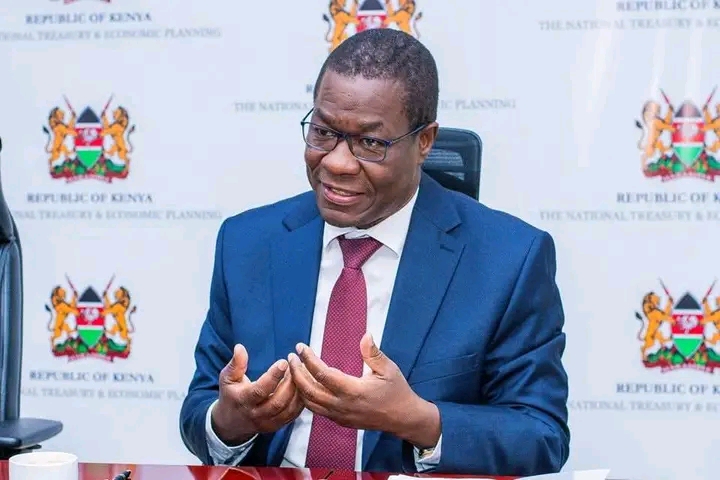
As Kenya grapples with soaring electricity costs and stalled energy projects, Opiyo Wandayi, Energy Cabinet Secretary, is steering contentious reforms.
His mandate is fraught with challenges, including reviving cancelled transmission deals, renegotiating costly Independent Power Producers contracts and stabilising fuel prices under the controversial government-to-government (G-to-G) scheme.
Wandayi’s tenure has become a litmus test for balancing profitability with public interest, especially as Kenya Power announces a record Sh20 billion annual profit while industries such as Devki Steel decry monthly bills of Sh900 million.
Critics question whether his allegiance to collective responsibility, as stated in his vow not to “criticise the government from within,” undermines his past crusades against cartels.
Yet, his ministry insists that professionalising Kenya Power and diversifying energy distribution will curb inefficiencies. He addressed these key concerns in an interview with this writer.
Kenya Power projects a Sh20 billion annual profit amid complaints from industries such as Devki’s Sh900 million per month bill. Is this profit morally justifiable and how will your ministry address high costs for heavy consumers?
The KPLC profits in 2023-24 financial year were driven largely by book-value revaluation of loans after the shilling strengthened against the dollar. Professional management has eliminated past inefficiencies that required Treasury bailouts. Cost-reflective tariffs ensure long-term viability without burdening taxpayers. To ease costs for heavy users, we have introduced Time of Use (TOU) tariffs and the Energy and Petroleum Regulatory Authority will enhance these incentives in the next review.
You pledged to complete stalled projects such as last-mile connectivity and transmission lines. What steps are taken to revive works lost in the cancelled Adani contract? How will you prevent future disruptions?
Delays stem from procurement hurdles, court cases and logistics. However, the government is committed to completing all the projects. For the Gilgil-Thika-Malaa-Konza line, we’re engaging the World Bank to fund a Private Public Partnership (PPP) adviser. Local investors such as insurance schemes and pension funds will be prioritised for the Thurdibuoro substation. The Menengai-Rumuruti and Rongai-Chemosit lines will be assigned a new PPP adviser by end of year.
President William Ruto suspended the four transmission lines/substations deal hours after you assured Parliament it will go on. Were you misled or was this a policy clash?
There was no contradiction whatsoever. I am sure you understand how the government works. A presidential pronouncement takes precedence and supersedes any other official communication. Moreover, the President was very clear that his decision was based on some new information that had been made available to the government. So, the matter is closed.
Independent Power Producers (IPPs) are paid even when their power is not used, costing billions. When will power purchase agreement (PPAs) renegotiations begin and what terms will change?
Capacity payments ensure plants are available to meet peak demand, avoiding blackouts. Payments are tied to actual availability. A joint committee is reviewing “Take or Pay” clauses, tariffs, LNG conversions and risk-sharing. They will also discuss term extension, currency of payment and credit periods, security and partial risk guarantee arrangements for more risk to the private sector, conversion of thermal plants to LNG to reduce costs and emissions, and fuel procurement process for thermal generators.
Epra plans to end Kenya Power’s import monopoly. How will this impact IPP contracts and what safeguards exist to prevent price manipulation?
Existing PPAs remain intact under bilateral contracts and also spot/forwards contracts are cleared through the market. New distributors and retailers will be regulated by Epra's tariff oversight in the applicable charges to customers.
Tullow Oil’s promises remain unfulfilled. What’s the status of crude exports and are there plans to auction new oil blocks?
Kenya’s aspiration to export crude oil has faced delays. Tullow’s 2023 field development plan awaits financing and approvals after partners withdrew. Ten new blocks will be auctioned this year. Tullow Oil submitted the South Lokichar Integrated Project FDP in 2021 and revised edition in March 2023 to Epra. It outlined Tullow’s proposed commercialisation and development of the South Lokichar oil fields. Whereas Epra ascertained the FDP as technically acceptable, its operationalisation is subject to regulatory approvals and project financing. The withdrawal of joint venture partners TotalEnergies and Africa Oil Corp in May 2023 slowed down the process. My ministry is working closely with the investors to realise the export dream.
The G-to-G fuel deal was meant to stabilise prices and save forex. Why have costs remained volatile and is the deal sustainable?
The deal solved dollar shortages for imports, aiding exchange-rate stability. Global oil prices and taxes drive volatility. We had a crisis of unavailability of dollars to make upfront payments of fuel consignments. The G-To-G fuel deal was designed to deal with was security of supply. It is working fine.
Critics argue Ketraco, Rerec and Epra duplicate roles. Should they be merged to cut costs?
No. Each has distinct roles—regulation, transmission and rural electrification. Merging would reverse unbundling gains. Unbundling of KPLC was meant to end the monopoly in the sub-sector. Epra is the industry regulator, Ketraco constructs high voltage transmission lines, GDC's focus is on generation while KPLC's is retail and commercial activities.
Is privatising Kenya Pipeline or selling more Kenya Power shares viable to reduce debt and improve services?
Plans are underway to float KPC shares at the NSE to help fund government/public sector development programmes. Similarly, ceding more KPLC shares for public purchase remains a viable option. This is part of the larger privatisation programme GoK started to improve service delivery and enhance efficiency.
Q10: You vowed not to criticise the government from within. How do you reconcile this with your past anti-cartel stance?
World all over, the success of any government demands submission to a single vision and collective responsibility. It would therefore be tantamount to double speak if as a cabinet secretary, I publicly differed and contradicted our collective position. If I have a contrary opinion, I will voice it at the Cabinet level and not in a public baraza.
Your AUC remarks suggested some leaders sabotaged Raila Odinga. Does this tension affect your ministry’s operations?
There is absolutely no relationship between Raila’s AUC bid and my ministry’s operations. My view was and, still remains, that patriotism is very important for national development. It was very distasteful for some Kenyans to openly decampaign Raila in foreign capitals when the whole country was expected to unite and rally behind his AUC bid.