As Kenya inches closer to the 2027 general elections, a quiet but potent battle is ensuing between religious institutions and the state.
Faith groups, once seen as moral arbiters and peacemakers, are increasingly leveraging their influence to shape electoral outcomes. This shift has raised critical questions, with the state and politicians grumbling that some faith groups have weaponised the pulpit.
At the top of the concerns is that clergy are now openly criticising government policies, appear to endorse candidates and even threaten to mobilise believers against certain leaders.
These developments have triggered a huge debate that religious settings have become avenues for political competition rather than spiritual nourishment.
In some cases, sermons have transformed into thinly veiled campaign rallies, with pastors framing political choices as divine mandates. This trend has intensified as 2027 approaches, with some churches positioning themselves as kingmakers.
President William Ruto’s dalliance with religious groups ahead of the 2022 elections sparked heavy criticism. Faith institutions are accused of neglecting their spiritual and social advocacy roles, a perception some say they are keen to change.
Some of those who gave the President, then as DP, audience amid a state clampdown have lately been at the fore in calling out his administration's excesses.
The religious leaders now argue they are merely holding Ruto accountable for unfulfilled promises, legal violations and political interference.
Elias Agola, chairperson of the National Council of Churches of Kenya, explained why some religious groups are hard on the President.
“We don’t see a stable ground when it comes to governance issues,” he said in an interview. “We are not going to be silenced by anybody; we are going to be the voice of the voiceless and the conscience of society.”
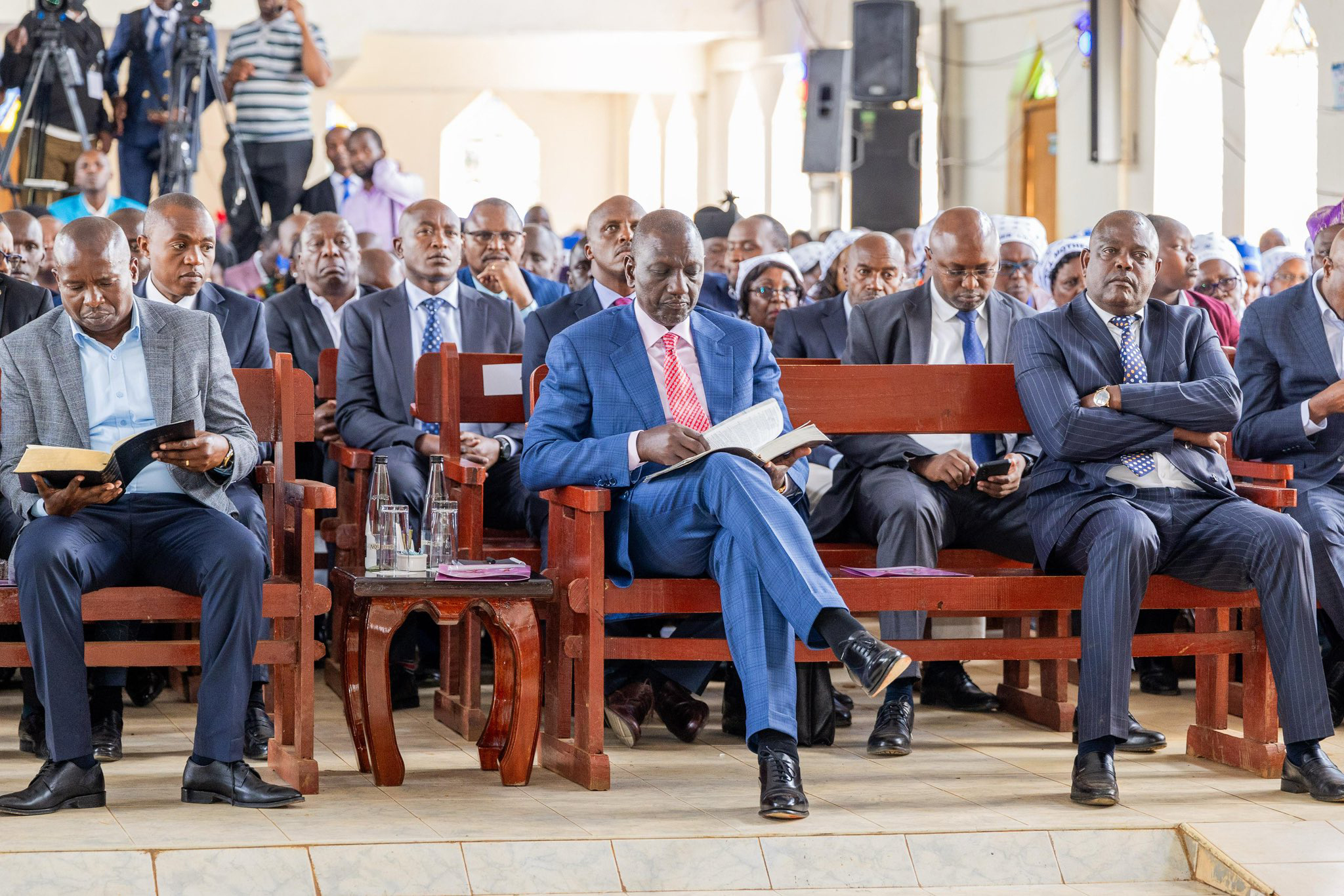
Last month, the Anglican Church of Kenya's Archbishop Jackson Ole Sapit banned politicians from addressing congregants in ACK churches, declaring they would only be acknowledged if they attended services. This move triggered sharp reactions, particularly from politicians accustomed to using churches as campaign platforms.
Sapit also discouraged ACK bishops from accepting large donations from politicians, a practice that has become increasingly common.
The Catholic Church has taken a similar stance, barring politicians from its sanctuaries and rejecting donations perceived as politically motivated.
In November last year, Soweto Catholic Church handed back a Sh5 million donation from the President, with Archbishop Philip Anyolo citing ethical concerns and the need to protect the church from political exploitation.
Months later, Ruto’s Sh20 million donation to Jesus Winner Ministry sparked protests and a nationwide uproar, further highlighting the tension between faith groups and the state.
Nyeri Catholic Diocese Bishop Antony Muheria has also been vocal in criticising the government, particularly over delayed payments to faith-based hospitals.
The council has raised additional concerns, including Kenya Kwanza’s dominance in the National Assembly and the opaque nature of political donations to churches.
“If you have donations for us, why not institutionalise that money? Why give it as a handout?” Agola asked.
“The issue of people going to churches and showing off is unacceptable. It’s not a favour to Kenyan citizens—it’s corruption and an early campaign gimmick.”
The NCCK has also questioned the government’s failure to fulfil its pledge to increase Judiciary funding and accused the executive of overstepping its mandate by interfering with autonomous institutions like the IEBC.
Agola further noted that Ruto’s administration appears to be implementing its agenda outside the Vision 2030 framework, with policies that, while potentially beneficial, suffer from poor coordination and communication.
Hassan Ole Naado, chairperson of the Supreme Council of Kenyan Muslims, supported the move to restrict political speeches in places of worship.
“Imagine people abusing one another in church, using the very podium meant for spiritual guidance,” he said. “Correcting a mistake shouldn’t become a mistake. The church is doing the right thing by protecting its sanctity from political abuse.”
The government, however, insists there is no conflict between church and state, framing religious leaders as partners in national development.
Deputy President Kithure Kindiki recently addressed over 4,500 pastors, describing the church as a “companion and complementary institution” in improving Kenyans’ lives. “Please correct us when we go astray,” he said. “What we plead is that you correct us in love. We are a listening government.”
Despite these assurances, the line between moral counsel and political endorsement has blurred in recent years. Certain denominations have strategically aligned with political factions, offering them platforms to influence voters.
Mega-churches, particularly those with wealthy congregants and media reach, have become key battlegrounds for political influence. Their leaders command loyal followings, making them attractive allies—or formidable opponents—for politicians.
The government, aware of this sway, has alternated between courting clergy and attempting to regulate their influence. Recent debates over the taxation of churches and proposed oversight of religious organisations reflected the state’s unease with their growing political clout.
Some churches have even resorted to doomsday messaging, exploiting congregants’ fears to drive political mobilisation.
While mainstream churches like the Catholic and Anglican denominations have been more cautious, evangelical and Pentecostal leaders have filled the vacuum, leveraging their fervent, personality-driven approach for political ends.
Behind the scenes, money and patronage fuel this uneasy alliance, raising concerns about the integrity of both faith and governance.