Public universities in the country are teetering on the brink of collapse, struggling to stay afloat amidst chronic underfunding, with Technical University of Kenya the latest to admit it is on its knees.
Across the 35 public universities, the once vibrant lecture halls echo with uncertainty as the future of higher learning hangs in the balance.
In recent years, a number of public institutions have reported budget shortfalls in millions, forcing deep cuts to academic programmes and massive layoffs to save the difficult situation.
TUK vice chancellor Benedict Mutua has publicly admitted that the institution has not been able to pay full salaries to staff for 12 years.
The institution is set to embark on retrenchment to stay afloat
The layoff plans come just days after Moi University kicked off a similar cost-cutting measure.
Moi, a former giant with several campuses, has been on free fall.
The cash crunch raises questions about the quality of learning and research, which require heavy investment.
The financial decline has been fueled by a combination of factors including declining public funding, skyrocketing operational costs, and the new funding model that stakeholders believe has caused confusion in the institutions.
Education expert Dr Emmanuel Manyasa, however, blamed the woes bedeviling the universities on mismanagement and the government policy that saw proliferation of universities in the early 2000s.
“People with absolutely no vision of taking universities anywhere found themselves leading those institutions. What that meant was that they were running universities like they were running a high school, where you collect fees and you spend,” the Usawa Agenda executive director told the Star.
“We had people who had mindsets of headmasters as vice chancellors running universities and hoping to sustain them on school fees and that contributed to the current problem.”
“The government policy of starting universities everywhere resulted to many of which are not even worth their names.”
Technical University of Kenya is among the universities that have publicly admitted they are on their knees.
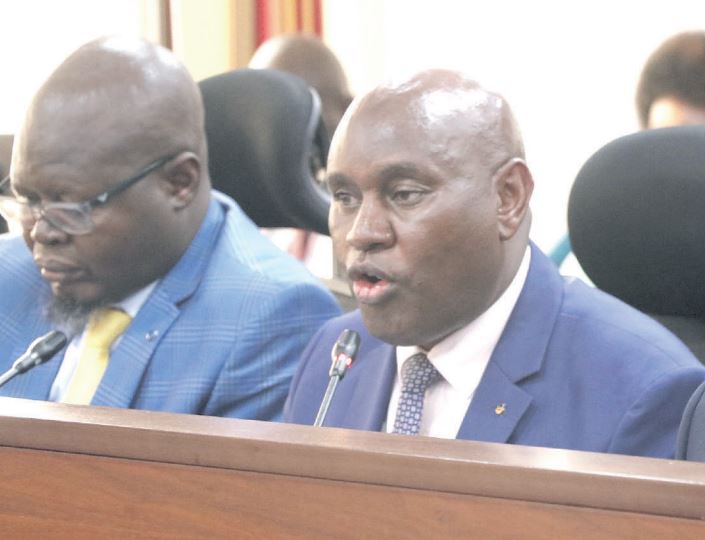
Appearing before the National Assembly’s Public Investment Committee on Education and Governance, vice chancellor Mutua told MPs the institution has not been able to pay full salaries to the staff for 12 years.
This means TUK has not been remitting statutory deductions including Social Health Authority, NSSF, housing levy and Sacco obligations of staff.
“From 2013, under the former vice chancellor, the staff has not been paid their gross salaries. The money we got could not support gross salaries as well as enable us to pay salaries,” Mutua told the committee chaired by Bumula MP Wanami Wamboka.
According to the VC, the university has been receiving Sh63.3 million against staff wage requirement of Sh272 million.
Mutua, in a bold move to steady the ship, recommended staff rationalisation, saying the current establishment of 1,820 employees against 14,200 students is bloated and unmanageable.
Apart from TUK, a number of reports on the universities by both Auditor General Nancy Gathungu and Controller of Budget Margaret Nyakang’o point to institutions that are on their knees.
Gathungu in a string of reports has indicated that the number of universities in financial distress seems to grow by the day.
Some of the institutions in the red include Moi University, University of Nairobi, Kenyatta University, Jaramogi Oginga Odinga University, Jomo Kenyatta University of Agriculture and Technology and Egerton University.
A report by the Parliamentary Committee on Education released in July 2022 showed that many public universities could end up insolvent unless the government increased financial allocation to them.
“The committee has, however, not been able to fully intervene in tackling systemic challenges facing the higher education sector, especially public universities,” the report stated.
“Most of the public universities are in dire need of finances to sustain their operations and the envisaged university reforms being undertaken have been inordinately slow,” it added.
But National Assembly’s Education Committee chairperson and Tinderet MP Julius Melly downplayed the situation, saying the government was doing all it could to ensure no university collapsed.
“We have given money (especially TUK), they will not collapse,” Melly told the Star on Thursday.
According to Nyakang’o’s recent report for the 2023-24 financial year, public universities and national polytechnics are sinking in Sh67.81 billion debt that they are unable to pay.
The University of Nairobi, Kenyatta University and Jomo Kenyatta University of Agriculture and Technology have accumulated the highest amounts of debts.
Kenyatta University owes Sh12.38 million to statutory bodies such as NSSF, KRA, pension bodies and suppliers and contractors.
“Pending bills include payments due to contractors/projects, suppliers, unremitted statutory and other deductions, and pension arrears for Local Authorities Pension Trust,” the report states.
The University of Nairobi – the country’s oldest and most prestigious institution of higher learning – on the other hand, owes Sh12.22 billion.
The Technical University of Kenya and Jomo Kenyatta University of Science and Technology owe Sh9.26 billion and Sh9.13 billion, respectively.
The huge debt is threatening the smooth running of the institutions, and could compromise the quality of learning.
Moi University, which has been in the limelight in recent months following a lecturers' strikes, has accumulated a Sh7.83 billion debt.
The university was closed for three months as teaching and non-teaching staff downed tools following months of nonpayment.
The state pledged to pump in Sh2.9 billion to jump-start the institution headquartered in Eldoret City.
“Some Sh300 million will go towards scholarships this October, in addition to Sh217 million disbursed in August,” National Assembly Education Committee chairman Melly said during the panel’s visit to the facility last year.
“Another Sh219.9 million will cover tuition adding to the Sh127.2 million allocated in August while Sh89 million will be allocated as capitation for current students, complementing the Sh269 million disbursed in August,” he added.
Masinde Muliro University of Science and Technology owes Sh1.25 billion, Tom Mboya University has yet to clear Sh832.21 million, Kisii University owes Sh1.04 billion, and Maasai Mara University has accumulated Sh805.09 million in debt.
Nakuru-based Egerton University owes a mind boggling Sh7.69 billion.
Kibabii University owes Sh455.31 million, Meru University of Science and Technology has yet to pay Sh426.69 million, Laikipia University owes Sh283.60 million, and Taita Taveta owes Sh415.17 million.
The University of Kabianga has not cleared its Sh466.52 million debt, with South Eastern Kenya University owing Sh320.385 million.
Other universities with huge debts are Jaramogi Oginga Odinga University of Science and Technology (Sh215.62 million), Kaimosi Friends University (Sh46.88 million) and Karatina University (Sh35.84 million).
Others are Murang'a University of Technology (Sh711.68 million), Turkana University College (Sh10.82 million), University of Eldoret (Sh43.43 million) and Chuka University (Sh902 million).
Garissa University owes Sh112.51 million, Allupe University (Sh16.29 million), and Co-operative University of Kenya (Sh86.26 million).
In many cases, the institutions have turned to staff retrenchment with the hope that they will savage the institutions from sinking.
INSTANT ANALYSIS
In the audit report for 2022-23 financial year, Gathungu casts doubt on the sustainability of a number of universities, which the report indicates are operating on negative capital. The worrying trend will likely compel the Treasury to fork out more public cash to get the universities out of financial ICU.