There is renewed public scrutiny over multibillion-shilling technology contracts, amid concerns over exorbitant charges and skewed deals that favour the vendors and leave the government exposed.
The fresh concerns come after it emerged that billions of shillings collected by the government from the e-visa system was wired into a Swiss bank account.
The e-visa system, officially known as Electronic Travel Authorization Services (eTA), was introduced last year by President William Ruto’s administration.
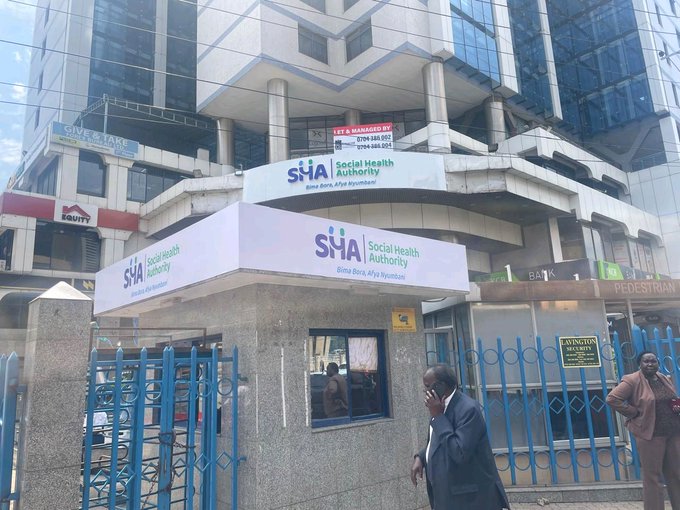
Apart from eTA, there are also controversies surrounding the Social Health Authority (SHA), E-Citizen, the National Education Management Information System (Nemis) and the Integrated Financial Management Information System (IFMIS).
Tetu MP Geoffrey Wandeto, an IT specialist and member of the National Assembly’s ICT Committee, described the digitisation bid as “organised looting”
While the systems are designed to streamline service delivery, concerns are rife that they have settings that leave the government with little operational control.
Parliament recently debated lopsided agreements that grant private contractors excessive power over system access, maintenance, and upgrades.
Despite massive public investments, the government has no full administrative rights, hence is unable to independently modify or even fully audit the platforms.
Contractors, therefore, dictate the terms, delay crucial updates, and even hold sensitive public data hostage while continuing to draw hefty maintenance fees.
Auditor General Nancy Gathungu has also red-flagged the state’s lack of control of the Social Health Authority system.
It emerged that the Sh104 billion healthcare information technology digitisation system, which carries Kenyans’ health data, is in the hands of private individuals.
The private individuals behind the contract will be making Sh11 billion a year, collecting 2.5 per cent from every contribution members make.
They also make five per cent from claims by health facilities and 1.5 per cent in charges for tracking and tracing records, translating to about Sh30 million daily.
While at it, the government has been barred from developing another system or a product with similar capacity and function.
President Ruto’s flagship e-Citizen platform, which is used to process billions in government revenue, remains equally vulnerable.
The suppliers of e-Citizen raked in more than Sh1.5 billion in service fees in the period to June 30, 2024.
While the platform has revolutionised access to government services, its underlying contract has been criticised for ceding excessive control to the vendor.
Insiders say the government cannot make basic adjustments without the supplier’s approval, creating bottlenecks in service delivery.
Worse, the ownership of critical components, including the intellectual property, remains murky.
The contractors - M/S Webmasters Kenya Limited, Pesa Flow Limited, and Olive Tree Media Limited- can fold the system anytime.
In what points to how the situation may not change soon, Immigration PS Belio Kipsang told MPs that the contract is set to run until 2026.
He disclosed that the government was billed Sh50 million for standardisation, and could pay up to Sh1 billion annually for maintenance.
“Basic services can attract up to Sh1 million while complex services cost between Sh3 million and Sh5 million,” the PS stated.
The PS, however, dismissed claims of lack of control, saying the government continuously monitors the system.
MPs have complained about the systems and have sought termination of some of the problematic systems.
“Some of these arrangements are scary when looked at from the lens of national security,” Homa Bay Town MP Peter Kaluma said.
President Ruto’s Hustler Fund system is also exposed to such weaknesses, with the government having no oversight on loan disbursements.
Loan repayments, savings and withdrawals are controlled by service providers, posing the risk of data manipulation and loss of public funds..
According to Wandeto, the problem stems from procurement flaws.
He argued that the government could avoid the queries if it consulted widely on the viability of the systems it seeks to install.
“As an expert in this field of information technology, the issues point to the dirty tricks that go into these agreements,” Wandeto said.
The MP argued that the costs of the systems are exaggerated, adding that some cheaper solutions are ignored in favour of the big money suppliers.
Victor Omondi, an IT specialist and entrepreneur, also pointed to insufficient public participation and the tendency of the government to rely on foreign experts.
He said there was sufficient expertise in the country to help the state, especially in the wake of the heightened political and economic uncertainty.
“There has been insufficient public participation and stakeholder engagement on the transition.
“There's a need for an all-round more proficient transitional team that will tackle the key pain-points and determine how to eliminate the risks, and align the systems to the government’s agenda,” Omondi said.
Details recently emerged of how billions collected by the government from the e-visa system were first wired to a Swiss bank account.
It emerged that the eTA system supplier takes away about 23 per cent of the proceeds. From August last year to February alone, the supplier made Sh1.5 billion.
Government spokesperson Isaac Mwaura said in a statement on Monday that the transactions were part of the pilot phase of eTA.
The Integrated Financial Management System, designed to bring transparency to public spending, has also become a conduit for fraud.
Auditors discovered unauthorised accounts created within the system leading to unexplained losses.
The reviews have reported persistent discrepancies between IFMIS records and official financial statements, pointing to deliberate manipulation.
Then there is Nemis, which handles multibillion shillings for free education, which auditors have said operates without clear government ownership.
Auditors found the Education ministry could not produce copyright documents, administrator lists, or even basic system documentation.
The government cannot independently verify the accuracy of records or perform system upgrades without the contractor’s involvement.
This became glaringly apparent during recent school funds disbursements when discrepancies emerged, yet ministry officials were powerless to rectify them.
The situation is even more dire with SHA, where healthcare facilities reported being locked out of essential functions unless the supplier approved access.
For IFMIS, which has been dogged by allegations of vendor overreach, sources say Treasury often requires the contractor’s permission to generate crucial financial reports.
The contracts are particularly problematic owing to their lack of exit clauses, with vendors allowed to maintain proprietary control indefinitely.
This means even when contracts expire, the government cannot simply migrate to another provider without risking system collapse.
State insiders hold that some of the contracts were negotiated without sufficient technical input, and are run with off-the-shelf software licenses.
There are also concerns that some of the contracts are reportedly inflated to accommodate kickbacks, choking provisions for service-level agreements.
Attempts to renegotiate some of the contracts have hit a wall, with vendors demanding a hefty fee increase to release administrator credentials.
INSTANT ANALYSIS
As pressure mounts, questions are being raised about who approved the skewed deals. Parliament recently demanded a forensic audit of all major tech contracts, with legislators accusing previous administrations of signing digital colonialism agreements. The Auditor General’s office has since flagged several contracts for violating procurement laws, including cases where single sourcing was unjustifiably used to favour well-connected firms.