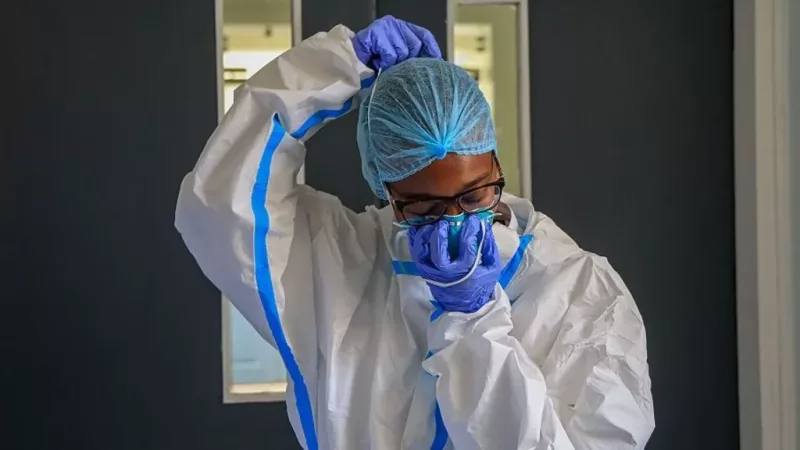
Mary Kemunto, a mother of three from Umoja estate has been working at an Export Processing Zone that deals in apparel manufacturing located in Lucky Summer, Nairobi for almost a decade now.
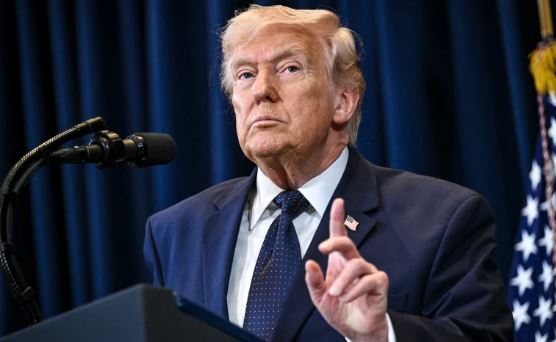
For her, she only hears of Donald Trump on television, but with the stroke of a pen, the American President has put her job on the line after imposing a 10 per cent baseline tariff on Kenyan exports to the US market.
The company she works for, Kemunto said, has indicated plans to reduce exports to the US meaning a number of staff will be laid off.
“The supervisor mentioned an impending downsizing but we are not sure how it will be handled. It is a wait-and-see,” Kemunto told the Star.
The apparel sector has a three-tiered structure: in the EPZ, there are approximately 36 large companies and outside the EPZ there are over 170 medium and large companies and more than 70,000 micro and small ones.
Kemunto’s fears are similar to Jackson who works at Afrimac Nut Company, an agro-food processing firm that deals in macadamia nuts and other products.
He is not sure how the Trump tariffs will impact the company’s operations as farmers and workers in the textile sector remain the most exposed with the move disrupting an industry with about 180,000 jobs.
Kenya's primary exports to the US are textiles and apparel, followed by coffee, tea and other agricultural products. Textiles and apparel account for more than 70 per cent of Kenya's total exports to the US.
Other significant exports include macadamia nuts, titanium ores and black tea. These exports have been benefitting from duty-free access under the African Growth and Opportunity Act (AGOA).
Last week, Central Bank of Kenya governor Kamau Thugge estimated Kenya’s exports to the US to drop to $100 million (Sh12.9 billion) in value from $650 million (Sh83.8 billion).
He, however, played down the impact, saying the amount is not substantial enough to shake the economy.
At least 39 factories in the export processing zones in Kenya, employing thousands are directly affected by this tariff.
The US House Ways and Means Committee spotlighted Kenya as a key trade partner during a recent hearing, where US Trade Representative Jamieson Greer testified on President Trump’s tariff shift.
The discussions emphasised the importance of strengthening bilateral trade ties. Two weeks ago, Kenya’s Cabinet Secretary for Investment, Trade and Industry, Lee Kinyanjui, met with Greer in Washington, D.C.
According to the Kenya Association of Manufacturers, the recent tariff escalation by the US has potential impact on trade between the two countries.
United States International Trade Commission data shows Kenya’s 2024 exports to the US stood at $737.3 million (Sh95.5 billion), with apparel accounting for 72 per cent ($533 million). Other key exports included coffee, black tea, agro-produce, home décor, and crafts.
Kenya imported goods worth $782.5 million (Sh101.3 billion) from the US, primarily petroleum products, capital goods, aircraft and parts, machinery and pharmaceuticals.
“Over the years, AGOA has had a significant economic and social impact in Kenya, creating over 58,000 direct and approximately 100,000 indirect jobs within the apparel sector alone. On the other hand, American consumers and brands have enjoyed access to an alternative supply chain, addressing their key economic and social needs. While tariffs are a commonly used trade policy tool, they have both positive and negative implications,” KAM CEO Tobias Alando said.
The new 10 per cent tariff adjustment, he said, presents challenges that could disrupt Kenya’s export market and affect trade dynamics while offering opportunities to scale up trade and investments between the United States and Kenya.
KAM sees the tariff reducing price competitiveness, as Kenya’s exports to the US, previously duty-free under AGOA, will now be subject to additional costs, reducing their market competitiveness.
Contracts currently based on zero percent AGOA preferential treatment will be affected, potentially forcing Kenyan manufacturers to absorb extra costs.
“Kenya’s trade deficit with the USA, currently at $45.2 million may widen due to expected export reductions and loss of USA market share,” Alando said.
To mitigate these impacts and sustain Kenya’s economic gains, KAM urges continuous bilateral engagements, and extension of AGOA beyond its expiry in September 2025, ensuring continued benefits for Kenya, Africa, and the USA, through job creation, improved livelihoods industrial growth, and investment opportunities.
Manufacturers in the country also want a review of the 10 per cent tariff to maintain Kenya’s export price competitiveness in the US market and a provision of a transition clause for cargo currently en route to the US that was shipped based on the zero per cent AGOA preference.
The imposition of the tariffs came at a time that already the United States’ decision to suspend funding to Kenya through the USAID programme, has sent shockwaves through the country, jeopardising critical health, education and governance initiatives.
USAID has been a major partner in Kenya, investing an estimated $500 million (Sh64.76 billion) annually in programmes tackling HIV/AIDS, maternal health, food security, and democratic reforms.
The sudden halt has left NGOs and government agencies scrambling, with fears of stalled projects and job losses.
Hours after occupying the White House on January 20, President Trump ordered a sweeping review of almost all US foreign aid and tasked billionaire Elon Musk, who has termed the United States Agency for International Development a "criminal" organisation, with scaling down the agency.
Treasury Cabinet Secretary John Mbadi has warned that the United States' decision to freeze USAID funding will create a Sh52 billion deficit in Kenya’s 2024/2025 fiscal year, affecting key sectors such as health, education, and food security.
Under the Development Cooperation Framework Agreement signed in 2019, USAID’s contributions to Kenya had grown from $50 million to nearly $1.7 billion (Sh220 billion), with the agreement valid until September 2028.
According to Mbadi, USAID-funded programmes in Kenya include initiatives in education (Sh2.9 billion), governance (Sh1.1 billion), and food security (Sh16.5 billion).
Meanwhile, beneficiaries of USAID programmes, from smallholder farmers to HIV patients, face an uncertain future as Kenya grapples with the fallout.
The fallout from the 90-day US foreign aid freezes and stop-work order is hitting health workers across Africa, with thousands already laid off and many more at risk of losing their jobs.
In Kenya alone, around 54,000 healthcare workers could be cut as USAID-funded health programmes shut down, with some hospitals at risk of closure.
The Star talked to several people especially in the Non-Governmental Organisations and health sector who have already lost their jobs, most of them, family breadwinners.
“I was the one who was paying the school fees for my my children. The family was looking up to me. With that shock — now there’s no job at all,” said Martha Akoth, a caregiver at a community health facility supported by USAID said.
Jacob Aloo, who used to work at Liverpool VCT in Homa Bay, says life took a drastic nasty turn after he was handed a termination letter.
“I've just been in the house, figuring out what to do next. Putting my life in order and trying to encourage myself.”
Homa Bay County Health chief officer Kevin Osuri said, “We have implemented the stop work orders sending employees home.”
In Baringo, governor Benjamin Cheboi told Citizen TV that 51 health workers, who were working in hospitals under the payroll of USAID, have been terminated.